
Haglund's deformity (Haglund's disease): causes and treatments
Haglund's deformity, also called Haglund's disease, is a bony bump on the back of the heel that irritates the Achilles tendon. Causes and treatments.
By Dr. Luigi ManziUpdated on
Haglund's disease , or Haglund's syndrome , is a pathology that affects the heel.
It is recognized by the presence of an abnormal bony protrusion on the back of the heel itself which causes severe pain and a lot of discomfort.
In this post we will try to understand and study the symptoms and causes of this disease , also evaluating the action techniques.
Symptoms of Haglund's Disease

First of all, the most common and recognizable symptom of Haglund's disease is pain in the back of the heel.
This pain, sometimes excruciating, is due to inflammation of the affected area. If persistent, it may worsen, especially during physical activity or when wearing shoes that compress and irritate the heel.
Swelling and redness are two other typical symptoms of Haglund's disease which, combined with stiffness , cause the heel area to become annoyingly compromised.
These symptoms not only allow us to identify Haglund's disease but also significantly compromise the quality of life, making even daily activities difficult.
It is always best to consult a doctor for a timely diagnosis that will allow you to begin the most appropriate treatment as soon as possible.
Causes of Haglund's Disease

The causes of Haglund's disease are many and often related to each other.
Among the main causes we find:
- Conformation of the foot: for example, having a stiff Achilles tendon predisposes the development of this condition;
- Wrong footwear: shoes with too rigid support or poorly padded heel pads increase pressure and stress on the heel, thus contributing to the formation of the bony protrusion;
- Intense physical activitySports that put too much stress on the heels, such as running or jumping, can worsen the symptoms of the disease and increase the pain;
- Genetic predisposition: a family history of this condition may, for obvious reasons, increase the risk of developing Haglund's disease.
Diagnosis of Haglund's Disease
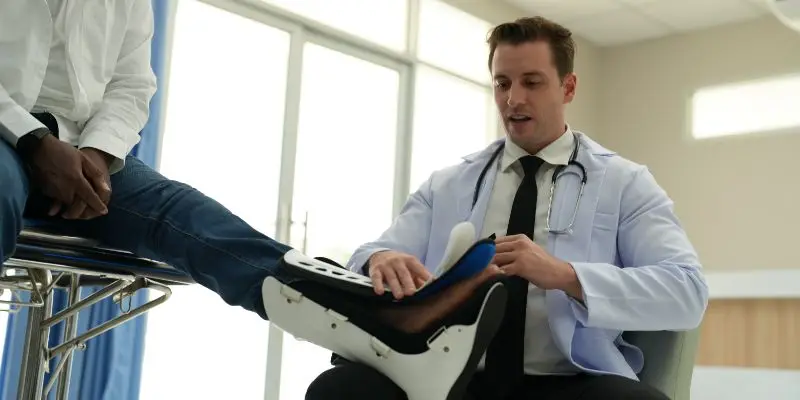
To diagnose Haglund's disease promptly and accurately, it is essential to consult a qualified doctor.
The doctor will begin the examination with a visual observation, followed by palpation of the heel , which serves to identify signs of inflammation and any bone deformities.
Subsequently, if the doctor feels that the problem needs further analysis, he or she may order an X-ray to confirm the presence of the bony prominence on the heel and thus assess the extent of the problem.
In some cases, a magnetic resonance imaging (MRI) may also be required to further evaluate the condition of the heel and determine if there are any further issues that need to be addressed.
Treatments for Haglund's Disease

Treatments for Haglund's disease vary depending on the severity of the condition and the individual needs of the patient.
There are several treatments which, for simplicity's sake, we will divide into two macro-systems: conservative treatments and invasive treatments.
Conservative treatments
So called because of their non-invasive nature and their ability to maintain the health of the heel compromised by Haglund's disease.
These treatments include:
- The modification of footwear: Wearing shoes with a soft heel counter and good padding can reduce friction and pressure on the heel;
- A physical therapy: Stretching and strengthening exercises for the Achilles tendon help reduce tension on the heel;
- The use of plantar prostheses: the use of customized insoles can help correct any foot abnormalities that contribute to and aggravate the problem;
- Taking anti-inflammatory drugs: Medications, such as ibuprofen, are helpful in reducing inflammation and pain.
Invasive treatments
Called this way due to their invasive nature, they contribute to solving the problem.
Among the most well-known and commonly used invasive treatments are corticosteroid injections. These are often recommended to reduce inflammation in the retrocalcaneal bursa.
The final option is surgery . Where conservative treatments fail, surgery can remove the bony prominence and repair any damage to the Achilles tendon.
Choosing to undergo surgery is always a cause for thought and reflection for the patient, who perhaps does not want to disrupt their routine too much due to physiotherapy and post-operative recovery.
Surgery, however, is also the definitive solution to a problem like Haglund's disease, which seriously compromises the patient's quality of life.
Prevention of Haglund's Disease

As with all pathologies, prevention is fundamental for Haglund 's disease too .
How can this painful and debilitating disease be prevented?
Wearing comfortable shoes that do not put pressure on the heel is essential to prevent the problem from developing.
Stretching exercises , which keep the Achilles tendon and calf muscles flexible, are equally important; stretching prevents tension in the affected area.
Another tip to prevent the condition from developing is to avoid physical activities that could put excessive strain on the heel. Obviously, each individual has their own unique physical structure and limitations, so it's important to know and understand your own body.
These are some precautions that can help not only avoid the development of Haglund's disease, but also help maintain overall foot health.
SmartHallux, Haglund's Disease, and Surgical Procedures

The surgical intervention for Haglund's disease , proposed by SmartHallux, differs from others, thanks to the use of precise osteotomies and advanced internal fixations when necessary , which allow for accurate correction of the bone anomaly.
This minimally invasive method reduces tissue trauma and shortens post-operative recovery times, with less pain than traditional procedures.
SmartHallux boasts a team of highly experienced and professional surgeons , specialized in the treatment of foot and ankle pathologies.
How to book an appointment with SmartHallux

Booking a consultation with one of the SmartHallux surgeons is simple and only takes one click.
By visiting the official SmartHallux website , you'll find the online booking form. Simply fill it out with your contact information and appointment preferences.
SmartHallux offers several consultation options , including in-office visits, telemedicine, and home visits, to meet the needs of all patients.
Trusting the specialists at SmartHallux is the best thing you can do to best treat foot and ankle conditions.