
Haglund's Disease Symptoms: What It Is, Causes, and Treatments
Haglund's disease symptoms: a bony bump at the back of the heel, pain and swelling. How to tell it from a heel spur or Achilles tendonitis.
By Dr. Luigi ManziUpdated on
Do you experience heel pain when wearing closed shoes? If you feel discomfort or swelling at the back of your heel, especially in tight or rigid shoes, you may be suffering from the symptoms of Haglund's disease , a condition often confused with heel pain or Achilles tendinitis. But unlike these, it has a specific cause: a small bone deformity.
In this article, you'll find out exactly what it is, how to recognize it, and what solutions exist to effectively resolve it.
What is Haglund's Disease?
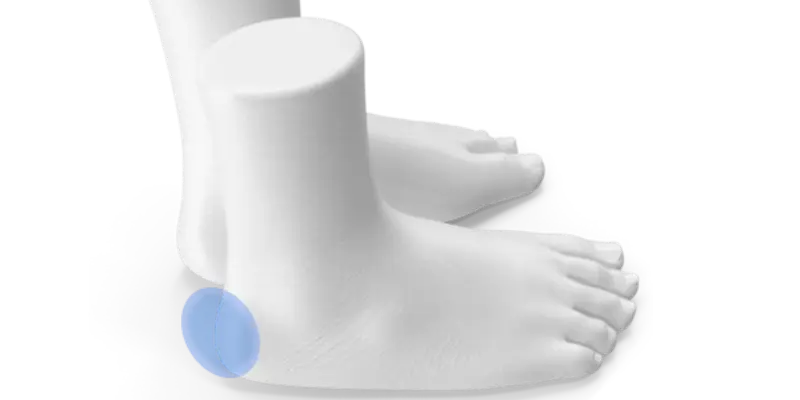
Haglund's disease is an abnormal bony growth that develops on the back edge of the heel, right where the Achilles tendon attaches . This protrusion, called the calcaneal tubercle , can irritate the surrounding tissue, causing pain, inflammation, and difficulty wearing closed shoes.
It is also colloquially called “ runner's bump ” because it is frequent in those who practice impact sports, such as running or football.
The most common symptoms

Haglund's disease presents with:
- Heel pain that increases with physical activity or wearing tight shoes
- Swelling and redness at the back of the heel
- Morning Achilles tendon stiffness
- Difficulty wearing shoes with a rigid heel counter
In the most severe cases it can cause retrocalcaneal bursitis or Achilles tendonitis.
Causes of Haglund's Disease

There is no single cause, but several factors can contribute to the development of the pathology:
- Stiff or high-heeled shoes
- Repetitive, high-impact sports activities
- Flat foot or with excessive pronation
- Calf muscles and Achilles tendon not very elastic
It is more common in active young adults and women who frequently wear non-ergonomic footwear.
How is it diagnosed?
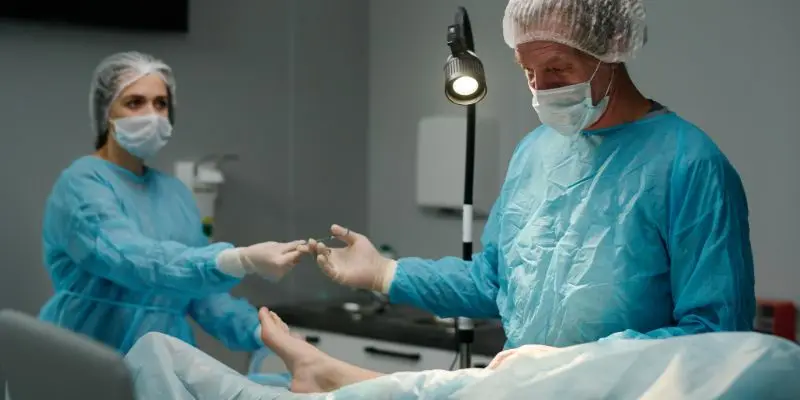
The diagnosis is based on a specialist examination with:
- Palpation of the painful area
- X-ray to evaluate bony prominence
- Any further tests such as ultrasound or MRI to exclude soft tissue injuries.
How to treat it
Conservative therapies
- Rest and temporary suspension of activities that aggravate the pain
- Ice and anti-inflammatory drugs
- Orthopedic shoes or plant your measure
- Physiotherapy to stretch the calf and decongest the area
Surgical treatment
When conservative treatments are ineffective, surgery may be considered to remove the calcaneal tubercle and reduce mechanical irritation. This procedure has excellent success rates and allows for complete recovery within a few weeks.
SmartHallux: Your reference for the treatment of Haglund's disease

SmartHallux specializes in foot and ankle surgery . With the support of Dr. Luigi Manzi, it offers:
- Surgeries minimally invasive with quick recovery
- Cutting-edge technologies
- Personalized treatments, even in telemedicine
- Orthopedic emergency room for emergencies such as a ruptured Achilles tendon
The SmartHallux team treats conditions such as hallux valgus , Morton's neuroma , and other deformities that cause foot pain. Providing comprehensive support throughout the treatment process, SmartHallux can be a winning choice for effective treatment tailored to your needs. Book your specialist consultation with the SmartHallux team now (opens in a new tab).
FAQ
What is growth failure?
Caution: It is often confused with Legg-Calvé-Perthes disease , a pediatric hip disorder. Haglund's disease , on the other hand, affects the heel and is linked to abnormal bone growth.
Which shoes should you avoid?
Shoes with a rigid heel, high heels, or without rearfoot support can aggravate symptoms.
When to consider surgery?
Only if conservative therapies fail to yield results after several months. The decision rests with the specialist, after a clinical and instrumental evaluation.