
Morton's Neuroma Surgery: The Best Solutions for Pain Relief
Morton's neuroma surgery removes or releases the thickened nerve between the toes when other treatments fail. How it works, recovery and when it is advised.
By Dr. Luigi ManziUpdated on
Morton's neuroma is a particularly painful condition. It affects the nerves in the foot, specifically the nerve located between the third and fourth toes. In this guide, "Morton's neuroma surgery," you'll understand when surgery is necessary and the possible solutions.
This problem is caused by thickening of the tissue around one of the nerves leading to the toes, causing pain, tingling, and a burning sensation.
There are several solutions to relieve the pain and discomfort caused by this pathology.
In this post, we will present and study what appear to be the best solutions for combating the pain caused by Morton's Neuroma.
Morton's Neuroma: Causes and Symptoms

Morton's neuroma occurs when the nerve between the bones of the toes becomes irritated or damaged, resulting in damage and swelling.
What are the causes and factors that lead to this disorder?
As with other pathologies and disorders, the use of inappropriate footwear , such as high heels and shoes that are too tight, can compress the nerves in the foot, stressing them.
Exercise is always recommended to stay fit, but excessive exercise, or sports unsuitable for your body type, can place excessive pressure on the sole of the foot, contributing to the development of neuroma.
Foot abnormalities , i.e. structural problems, also contribute to increasing the risk of developing this condition.
How to understand if you have Morton's neuroma?
The symptoms will have to be analyzed , which are:
- Pain between toes: which often worsens with activity and may be relieved by removing shoes or massaging the foot;
- Burning sensation: mainly between the third and fourth toes;
- Feeling of having a small mass under the sole of the foot;
- Tingling or numbness: which may extend to the toes;
- Changes in the sense of balance or stability while walking.
Conservative Treatments: What They Are and When They Are Useful for Morton's Neuroma Surgery

Before considering surgery, both out of fear and to avoid disrupting their routine, many patients try conservative treatments to relieve the pain.
What is meant by conservative treatments?
Conservative treatments are minimally invasive, non-surgical procedures designed to manage or resolve a medical or orthopedic problem. These approaches are recommended primarily for symptom reduction and improved foot function.
Conservative treatments are recommended primarily to avoid or delay surgery , when possible; thanks to these, in fact, patients find some relief, also improving their quality of life.
The most well-known and prescribed conservative treatments are:
- change shoes: why wearing wider, more comfortable shoes with good padding can reduce pressure on your nerves;
- the use of foot orthoses: better known as orthopedic insoles, customized supports that can help better distribute weight and reduce nerve compression;
- physical therapy: specific exercises can improve foot mobility and reduce symptoms;
- taking anti-inflammatory drugs: reduce pain and inflammation;
- taking corticosteroids: Taken as injections, these provide temporary relief by reducing inflammation around the nerve.
Surgery as an effective solution
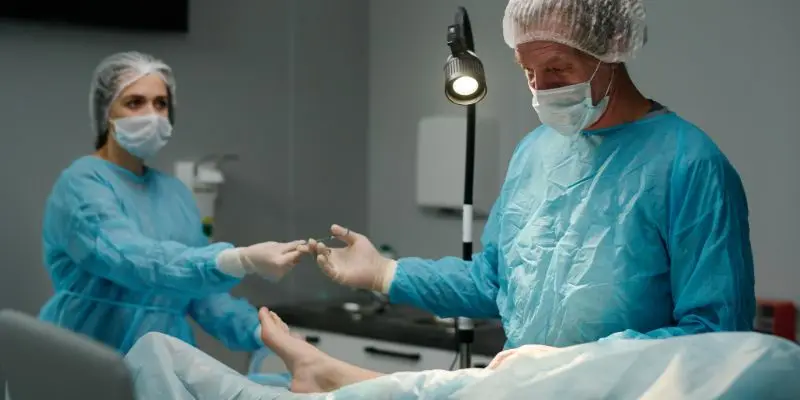
When the patient proceeds with conservative treatments, but these do not yield the desired results, surgery is usually recommended .
The goal of the surgery is to remove the neuroma and release pressure on the nerve.
Among the most performed and well-known interventions is the Neurectomy.
This operation's ultimate goal is to remove the neuroma . The surgeon makes an incision in the lower or upper part of the foot to access the nerve and remove the damaged tissue.
An equally valid and well-known procedure is ligament relaxation. This technique is preferred by some surgeons because it is considered less invasive.
Ligament relaxation involves cutting the affected ligament that is compressing the nerve, thus reducing the pressure.
Post-Operative Recovery
Recovery after Morton's neuroma surgery varies from patient to patient.
As with most conditions affecting the feet and ankles, after surgery for Morton's neuroma, the patient will have to go through various recovery phases.
Or:
- Rest and immobilization: the foot will have to remain immobilized for a few weeks to promote healing;
- Physiotherapy: a rehabilitation program will help restore strength and flexibility to the foot;
- Return to daily activities: Most patients can resume their daily activities within a few weeks.
Why choose SmartHallux for Morton's neuroma surgery?

SmartHallux is a clinic specializing in foot and ankle surgery.
A leader in the orthopedic sector, SmartHallux offers a high-quality service with a personalized approach, ensuring:
- Cutting-edge surgical techniques: I use the most innovative and least invasive techniques for the removal of Morton's neuroma;
- A highly qualified medical team: the team of surgeons and anesthetists is highly specialized in foot and ankle surgery;
- Quick and complete recovery: thanks to personalized rehabilitation programs, patients return to their daily activities quickly.
- Competitive costs: compared to other clinics, without sacrificing the quality of service.
Book your visit today
Don't let Morton's neuroma pain affect your quality of life.
Book your appointment with SmartHallux today and find out how we can help you restore your foot health. Click here to book now and start your journey.