
Minimally invasive surgery for Haglund's disease: a new frontier
Minimally invasive surgery for Haglund's disease removes the heel bump through small incisions. How it works and who it is suitable for.
By Dr. Luigi ManziUpdated on
Haglund's disease is a condition affecting the soft tissue around the heel, characterized by inflammation. In the past, treating Haglund's disease required complex and sometimes invasive surgery . Today, minimally invasive surgery is used for Haglund's disease , which has opened up new frontiers in managing this condition.
This methodology allows for a quicker recovery time and reduces post-operative pain . Therefore, patients now have a quicker and less traumatic solution than previous procedures. Let's see how minimally invasive surgery is transforming the treatment of Haglund's disease.
How does minimally invasive surgery work?
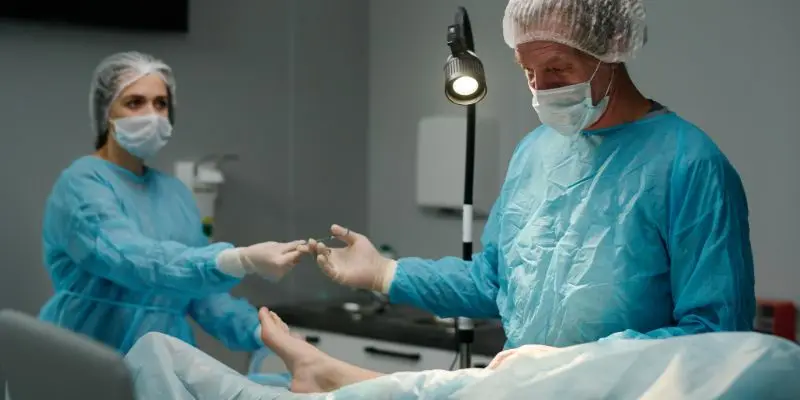
Minimally invasive surgery for Haglund's disease is performed through small incisions, rarely larger than a few millimeters. Using specialized instruments and advanced techniques, the surgeon can reduce the size of the inflamed bursa , located just behind the heel, through tiny incisions, also removing the excess bone that often causes the condition.
Often, the surgeon is guided by imaging techniques, such as ultrasound or magnetic resonance imaging . Both allow for precise localization of the area to be treated before surgery and ensure greater precision during the procedure.
Haglund's disease and non-invasive surgery: the advantages

The advantages of minimally invasive surgery are numerous. These include a significant reduction in postoperative pain , a lower risk of complications (damage to surrounding tissue, infection, etc.), and a faster recovery.
Furthermore, there is less blood loss during the procedure, allowing patients to return to their daily activities much sooner than expected. Another advantage is that the scars are much less visible, so there is no cosmetic disfigurement.
Main steps of minimally invasive surgery
Minimally invasive surgery for Haglund's disease involves several steps. First, the patient is administered local or general anesthesia , depending on the case. Next, the surgeon makes small incisions in the heel to access the inflamed bursa and excess bone (exostosis).
Using miniature instruments , the surgeon reduces or removes the inflammatory bursa and any other excess bone tissue that could cause friction against the shoe. Finally, the incisions are carefully sutured to make the scars less visible.
Recovery time and post-operative prognosis

Recovery times are usually rapid. Many patients are able to walk using special shoes the day after surgery. Full recovery, however, takes several weeks.
Follow-up includes regular visits to monitor the healing progress and ensure there are no complications. Most patients are able to resume normal activities without pain within a few weeks . As the months pass, the improvement will become increasingly evident.
Surgery for Haglund's Disease: Results and Studies

Several studies have demonstrated the effectiveness of minimally invasive surgery for the treatment of Haglund's disease. For example, in a study of thirty patients , 90% of them showed significant improvement in pain relief. These patients were able to regain mobility just thirty days after surgery.
Conclusions

This surgical method for Haglund's disease is undoubtedly innovative. The less invasive approach ensures a significant reduction in postoperative pain, greatly facilitating the recovery of mobility , as well as avoiding the risk of complications.
All this is due to advances in medical technology in general, but also to the skill and experience of surgeons. Opting for minimally invasive surgery to treat Haglund's disease is undoubtedly the best option for those suffering from this disabling condition.