
Rehabilitation after Haglund's disease surgery: What to expect
Rehabilitation after Haglund's disease surgery: the phases of recovery, when you can put weight on the heel, the exercises that help and when to resume sport.
By Dr. Luigi ManziUpdated on
Have you just had surgery for Haglund's disease? Or maybe you're considering surgery and want to know what to expect afterward? Let's talk about it, because rehabilitation after Haglund's disease surgery is a crucial part of the process. I won't deny that it's the question I get asked the most: "Doctor, how long will it take me to get back to normal?"
The truth is, every patient is different. I've seen people return to running after three months, and others who needed six months just to walk without pain. That's why it's so important to follow a personalized rehabilitation protocol.
What exactly is Haglund's disease?
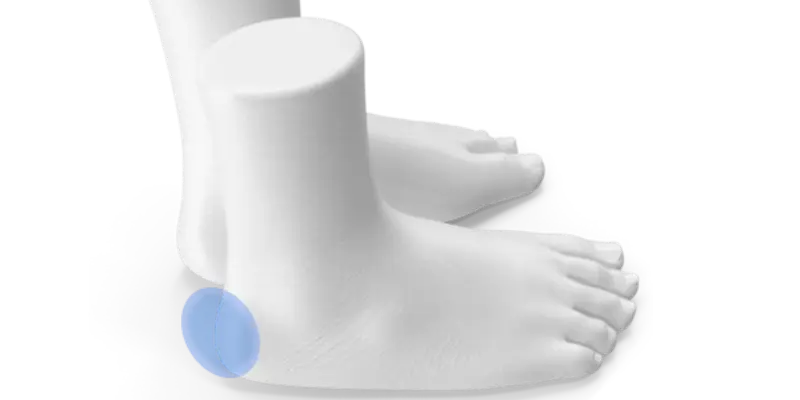
Haglund's heel is the bony protrusion that forms behind the heel. It's a kind of "hump" that presses against the Achilles tendon and bursa, causing inflammation and pain. You may have heard it called "sneakers heel" or "Haglund's heel."
The problem arises when this prominence becomes so large that it becomes impossible to wear normal shoes without pain. This is when surgery is often the solution. During the procedure, we remove the excess bone and reshape the surrounding soft tissue.
Why rehabilitation is so important
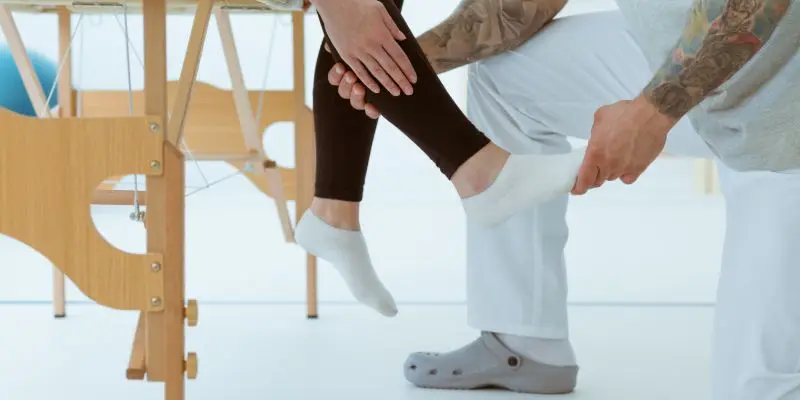
After surgery, you can't just get up and walk as if nothing had happened. Your Achilles tendon has been "disturbed," the tissues need to heal, and above all, you need to regain the strength and coordination you've lost.
Post-operative Haglund's syndrome requires patience. After all, we worked on a very delicate area of the foot, the one that supports the entire body weight while walking.
Let's look at the main goals we need to achieve: reduce pain and inflammation (obviously), restore ankle range of motion, rebuild calf muscle strength, improve balance and proprioception. And finally, get back to the activities you love.
The phases of rehabilitation: a step-by-step journey
Immediate phase (first 2 weeks)
The goal here is to protect the surgical wound. Avoid weight bearing on the operated foot for at least 10-14 days. I know, it's frustrating, but it's essential for proper healing. We use crutches and keep the foot elevated as much as possible to reduce swelling.
At this stage, we begin with small, but very gentle, ankle mobilization exercises. Only flexion and extension, without ever forcing.
Early stage (2-6 weeks)
We begin to gradually put weight back on the foot. First partially, then more and more. It's time to begin the actual physical therapy. Stretching exercises for the Achilles tendon become crucial, along with those for the plantar fascia.
I always tell my patients: "Listen to your body." If you feel pain during the exercises, stop. This is not the time to be a hero.
Advanced stage (6-12 weeks)
Here we enter the most active phase. Strengthening exercises for the calf muscles, proprioceptive work with wobble boards, and a gradual return to normal walking.
Exercises that really work
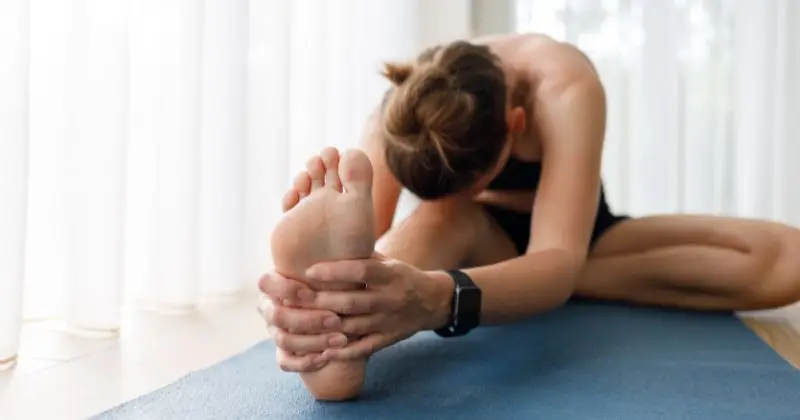
In my office, I often see patients who are afraid to move their foot after surgery. It's understandable, but controlled movement is your best ally.
Stretching exercises are essential. My favorite? Place your foot against the wall, keep your leg straight, and gently push up. Hold for 30 seconds, repeat 3 times. Simple but effective.
For strengthening, start with isometric exercises: contract the muscle without moving the ankle. Then move on to dynamic exercises with resistance bands and finally weights.
Proprioception is the sensation that tells you where your foot is in space. After surgery, you lose some of it, so you need to retrain it. Wobble boards are perfect for this.
When will you return to sports?

Here's the million-dollar question. Recovery times for Haglund's disease vary greatly, but generally speaking, for sports activities, we're talking at least 4-6 months. For high-impact sports like running or soccer, it's often even longer.
The return journey must be very gradual. First, a brisk walk, then a light jog, and finally a full run. And always with appropriate shoes that don't put pressure on the operated area.
Complications: What Can Go Wrong

I don't want to scare you, but it's important to know. Complications are rare, but they do exist. Wound infection, ankle stiffness, persistent pain, or, in very rare cases, problems with the healing of the Achilles tendon.
The most important thing is to scrupulously follow the post-operative instructions and not rush to return to normal activities.
My practical advice
Listen to your body, always. Pain is a sign that something is wrong. It's not normal to feel sore during a well-done rehabilitation session.
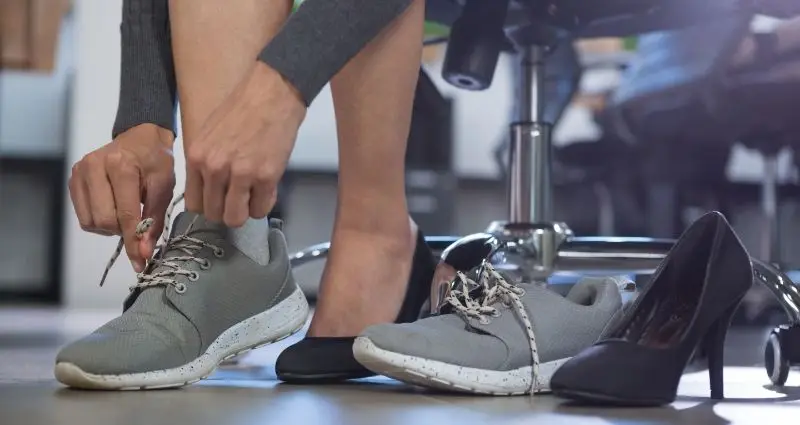
Shoes are crucial. Avoid those with rigid heel counters. Soft shoes or even open-toed ones are better for the first few weeks.
Ice is your friend, especially in the first few days. 15 minutes every 2-3 hours helps control swelling and pain.
SmartHallux: Where we can help you

Dr. Luigi Manzi, who has gained specific experience in this field, follows each patient with a personalized treatment plan using the most modern and minimally invasive techniques.
The SmartHallux team treats conditions such as hallux valgus , Morton's neuroma , and other deformities that cause foot pain. Providing comprehensive support throughout the treatment process, SmartHallux can be a winning choice for effective treatment tailored to your needs. Book your specialist consultation with the SmartHallux team now (opens in a new tab).
We never leave you alone during your rehabilitation journey. From the first day after surgery until your full return to normal activities, you'll be supported every step of the way.
FAQ
How long does it take to fully heal?
Post-surgery rehabilitation for Haglund's disease typically lasts 6-8 weeks for basic activities, but full recovery can take 3-6 months. It depends largely on how active you were before and how you respond to physical therapy.
What exercises should I do?
The most important exercises are Achilles tendon stretching, calf strengthening, and proprioceptive balance exercises. However, each patient has a personalized protocol.
Can I have complications?
Complications are rare but possible: infection, bleeding, persistent pain, or stiffness. Most patients recover perfectly if they follow postoperative instructions.