
How is Haglund's disease treated?
How Haglund's disease is treated: heel lifts, open-backed shoes, ice and physiotherapy first; surgery to remove the bony bump if the pain persists.
By Dr. Luigi ManziUpdated on
When the most common question arises: how to treat Haglund's disease , the most immediate solution is often to try home remedies. The first is to apply cold compresses to reduce swelling and pain. Another helpful ally is a foot pillow for support and comfort.
A healthy diet also helps combat the pain caused by this condition. Omega-3-rich foods like salmon and flaxseed are a must, while vitamins like C and D support joint health. Supplements, with the approval of your doctor, are also often very helpful.
The right exercises are like a balm for your heel. One of these is toe raises , a simple exercise that can strengthen the surrounding muscles. Stretching and gentle movements with a tennis ball under your foot help improve mobility and reduce heel pain.
Medical Treatments for Haglund's Disease
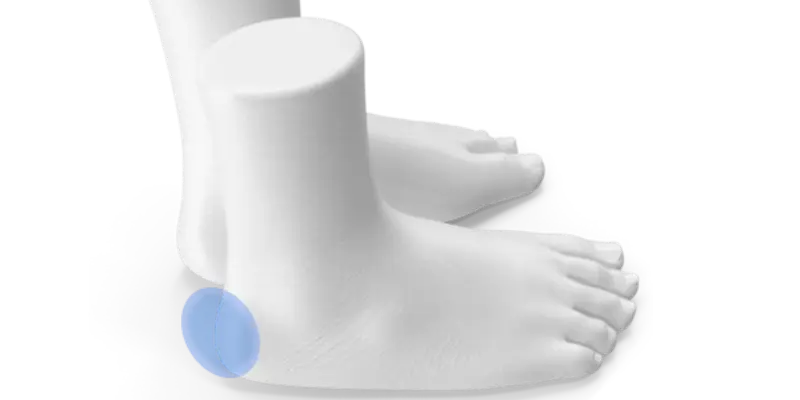
There are various options available to treat Haglund's disease . In addition to natural methods or more traditional remedies, the path to relief is well-established by professionals in the field. Let's take a look at these medical treatments.
Anti-inflammatory and analgesic drugs
Nonsteroidal anti-inflammatory drugs (NSAIDs) are often the most appropriate drugs for pain and inflammation. These drugs can relieve the pain caused by Haglund's disease. The most common are ibuprofen , naproxen , and celecoxib.
But be careful: like any medicine taken for a long time, NSAIDs also have their side effects , so it is advisable not to abuse them without a doctor's approval.
Professional physical therapies
While medications are essential allies, professional physical therapy is essential. They are specifically developed to improve foot function and reduce pain. The most common therapies are:
- Manual therapy: Trying to solve the problem by hand might sound like an old-fashioned approach, but the manual manipulation performed by an expert, it restores the balance of the soft tissues.
- Therapeutic ultrasound: this technique exploits low-frequency sound waves to penetrate deep tissues, often reducing inflammation.
- Stretching and strengthening exercises: Targeted exercises to stretch and strengthen the Achilles tendon can be very effective in treating Haglund's disease.
Relying on a professional physiotherapist means having someone who will take the reins of your recovery, suggesting personalized exercises adapted to your specific case.
Surgery for Haglund's disease: when is it necessary?

When all else seems to fail, it's time to consider surgery for Haglund's disease . While no one wants to go under the knife, sometimes it's the only way to say goodbye to the pain. Recovery times for surgeries range from weeks to months , but here are some key points:
- Removal of the bony prominence: Excess bone is often the main cause of pain and getting rid of it addresses the root of the problem.
- Achilles tendon repair: in some cases, the tendon may be affected by the friction caused by bony prominenceSurgery for Haglund's disease corrects and prevents future damage.
Ask SmartHallux for advice

Dealing with Haglund's disease isn't easy, but with SmartHallux, you have the solution at your fingertips. Our facility uses cutting-edge, minimally invasive techniques to effectively treat foot conditions, ensuring a quick and hassle-free recovery. Don't rely on home remedies that only offer temporary relief. With us, you'll receive personalized, professional treatment that aims to address the root cause of the problem.
Our advanced technology, combined with the experience of our specialists, ensures the best possible recovery. So, book a consultation now using the booking form on our website and discover how we can help you regain your well-being and freedom of movement.