
Foot Reflexology for the Big Toe: Between Wellness and Clinical Reality
Foot reflexology for the big toe is often suggested for bunion or big toe pain. What it can and cannot do, and how it fits alongside orthopedic treatment.
By Dr. Luigi ManziUpdated on
You may have heard of foot reflexology for the big toe. Perhaps someone has recommended this approach to you for big toe pain or foot pain in general. Now, as an orthopedist who deals with foot conditions on a daily basis, I want to tell you the truth behind all this and how it fits into the landscape of available therapies.
Foot reflexology is a technique that involves stimulating specific areas of the foot, which according to this discipline correspond to different organs of the body. Interesting, right? The basic idea is that massaging specific points on the foot—including the big toe—can provide not only local but also general benefits for the body.
The Big Toe: More Important Than You Think
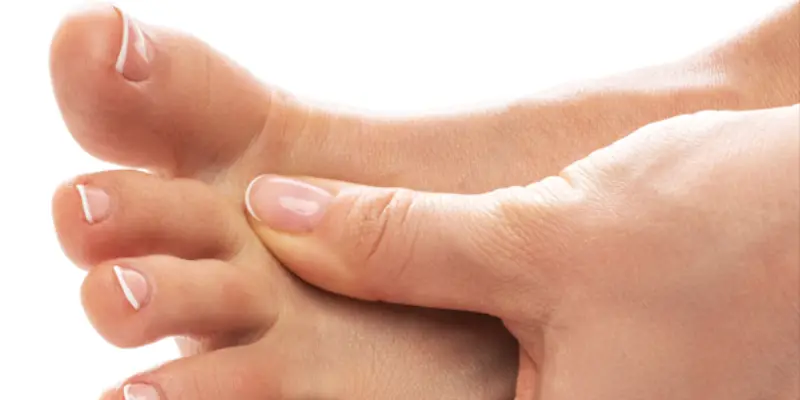
The big toe plays a fundamental role in our walking. Think about it: every time you walk, it's the last toe to leave the ground during the push-off phase. It's like the pivot of a lever that propels us forward.
Anatomically, the big toe is made up of two phalanges connected by joints, tendons, and ligaments that work in perfect synergy. When it works well, we don't even think about it. But when it starts acting up—with bunions, hallux rigidus, or simply pain—we suddenly realize how precious it is.
Foot reflexology considers the big toe a particularly significant point. According to this discipline, stimulating the big toe influences various bodily functions. It's a fascinating insight that many patients find appealing, especially when seeking alternatives to more conventional treatments.
The big toe problems I see every day

In my office, I constantly see patients with big toe problems. Hallux valgus is probably the most common—the deformity that causes the bone to protrude outward and push the big toe toward the other toes.
The other day, a woman came to me and said, "Doctor, I've tried everything, even reflexology." Now, this is a classic. Many people turn to reflexology hoping to find relief for ailments like hallux rigidus (when the joint loses mobility), metatarsalgia (pain under the metatarsal heads), or even plantar fasciitis.
Plantar fasciitis, on the other hand, is a problem I know well. It's the condition that causes excruciating pain in the heel, especially in the morning. Achilles tendon pain is another classic, as is Morton's neuroma—that sensation of having a pebble in your shoe that's actually caused by a thickened nerve.
Flat feet can also create significant discomfort, altering the biomechanics of the entire foot and often causing pain that radiates up to the ankle and beyond.
What does foot reflexology promise?

Those who practice foot reflexology claim several benefits. Reduction of pain and inflammation are the first to be mentioned. Then there's improved blood circulation—and this is interesting because good circulation is indeed important for foot health.
Muscle relaxation is another often-mentioned benefit. In fact, any well-done massage can lead to relaxation, so this aspect makes sense. More controversial is the concept of "restoring energetic balance," which falls within the realm of holistic disciplines.
The general well-being many patients report after a reflexology session for bunions is interesting. They often say to me, "Doctor, I don't know if my big toe is healed, but I feel better." And this shouldn't be underestimated.
How a session takes place

A foot reflexology session always begins with a medical history—just as we doctors do. The therapist asks about the specific problem, your medical history, and your expectations. Then the actual manipulation of the reflex points on the big toe and foot begins.
The duration is usually 45-60 minutes. How often? It depends greatly on the case and the therapist, but it often involves multiple sessions. Some patients tell me they've had 8-10 sessions, others stop sooner if they don't see results.
Now, this brings me to an important point: if after a few sessions you don't see significant improvements, perhaps it's time to reevaluate your approach.
Precautions and when to be careful

As with any treatment, there are some contraindications to keep in mind. During pregnancy, for example, certain pressure points could theoretically stimulate contractions, so it's best to err on the side of caution.
Thrombophlebitis is another significant contraindication—manipulating an area with severe circulatory problems can be risky. People with diabetes must be especially careful, as foot sensation may be impaired. And obviously, if there are ongoing infections, any manipulation is inadvisable.
In short, even if it is a “gentle” technique, it is not without clinical considerations.
My vision as an orthopedist
Now, I have to tell you the truth. As an orthopedic surgeon specializing in the foot, my approach is based on scientific evidence. Reflexology has no robust clinical studies demonstrating its specific effectiveness for big toe disorders. This doesn't mean it's "wrong"—it simply means we don't have solid scientific evidence.
What I do see, however, is that some patients benefit from the relaxation and attention given to their feet. And that's no small thing. If reflexology helps you feel better, without replacing necessary treatments, it can be a pleasant complement.
But beware: if you have severe bunions, chronic plantar fasciitis, or other structural foot problems, reflexology alone likely won't address the underlying problem.
SmartHallux: Where we can help you

Here at SmartHallux, we specialize in foot and ankle surgery. Dr. Luigi Manzi, with extensive experience in this field, provides each patient with a personalized treatment plan using the most modern, evidence-based techniques.
The SmartHallux team treats conditions such as hallux valgus , Morton's neuroma , and other deformities that cause foot pain. Providing comprehensive support throughout the treatment process, SmartHallux can be a winning choice for effective treatment tailored to your needs. Book your specialist consultation with the SmartHallux team now (opens in a new tab).
Questions you often ask me
Doctor, can reflexology cure my bunions?
It may help with relaxation and perhaps provide some temporary pain relief, but bunions are a structural deformity. To truly correct the problem, targeted surgery is often necessary.
Can I try reflexology along with other therapies?
Absolutely, if there are no specific contraindications. Many patients combine different approaches. The important thing is not to neglect treatments with solid scientific evidence.
How much does it cost and is it worth it?
Costs vary widely. If it relaxes you and makes you feel better, and you're not neglecting other necessary treatments, it can be a reasonable investment in your overall well-being.