
Foot Surgery: A Focus on Brachymetatarsia
Foot surgery for brachymetatarsia lengthens the short metatarsal and restores the toe's alignment. How the operation works and what recovery involves.
By Dr. Luigi ManziUpdated on
In recent years, foot and ankle surgery has been able to significantly improve the quality of life of even the most complex patients.
Among the conditions considered to be the most complex is brachymetatarsia , which certainly represents one of the most interesting and complicated challenges for orthopedic surgeons.
Brachymatatarsia can be congenital or acquired but, in both cases, it causes a lot of pain, aesthetic problems and above all problems walking, significantly decreasing the patient's quality of life.
What is Brachymetatarsia?

Brachymetatarsia is a malformation that involves the shortening of one of the metatarsals of the foot, usually the fourth metatarsal ; this condition leads to misalignment of the toes.
This malformation can occur in one or both feet and, as already mentioned, it can be congenital, due to bone growth problems during the fetal phase or to serious trauma.
Brachymetatarsia , which causes severe pain and deformity of the foot, usually affects females more than males.
Pain, however, is a factor that is more or less common in all types of pathologies. To diagnose and promptly treat brachymetatarsia, one must first recognize its symptoms.
What are the symptoms of brachymetatarsia?

The typical symptoms of brachymetatarsia change based on the state of the disease itself.
The most common, and the first to appear, are discomfort and pain . Pain is especially felt when walking or doing physical activity. It is precisely the pain that causes the resulting discomfort , because it leads to the inevitable abnormal gait.
As explained, brachymetatarsia causes misalignment of the toes . This misalignment results in incorrect weight distribution , which in turn leads to the development of blisters and calluses. Therefore, the presence of calluses and blisters in the affected areas is a warning sign that may indicate the onset, or even the presence, of the condition.
The aesthetic problem , which is often a real discomfort, should not be underestimated . This condition causes a visible difference in the length of the toes, with the shorter toe tending to overlap with the adjacent toes.
In the most severe and advanced cases , brachymetatarsia can also lead to difficulty walking and postural problems.
As with all pathologies, only an early diagnosis can lead to timely intervention and resolution of the problem.
How to diagnose brachymetatarsia?
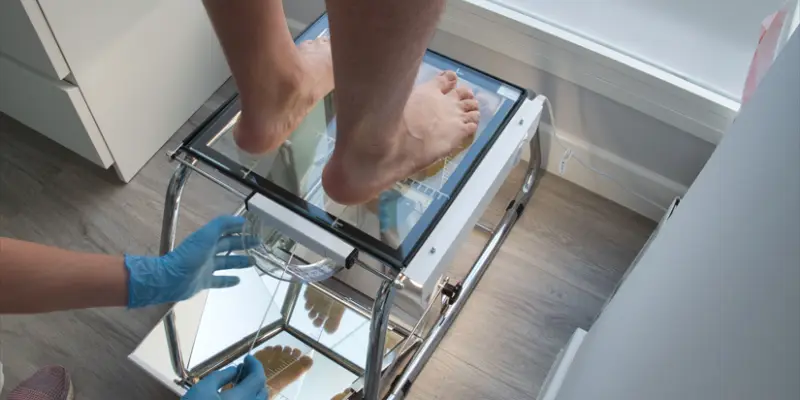
Diagnosing brachymetatarsia is essential to address the problem promptly and try to resolve it.
Clinical evaluation and radiographic examination are the starting points for its diagnosis.
Diagnosis begins with a detailed physical examination by a doctor specializing in orthopedics or podiatry.
The doctor will evaluate the length and alignment of the toes , as well as collect and take a complete medical history.
Foot x-rays are then taken . They are essential to confirm the diagnosis, as they allow for a clear visualization of the bone structure, identification of the shortened metatarsal bone, and assessment of the severity of the condition.
If there is a suspicion of associated complications, the doctor often also prescribes an MRI.
Traditional Treatments for Brachymetatarsia

To treat brachymetatarsia, there are various treatments, which can be more or less invasive, depending on the severity and state of the pathology.
In less serious cases , it is preferable to opt for what are defined as “conservative solutions”.
These solutions are not intended to completely solve the problem, but simply to alleviate the symptoms , thus making the patient's pain more bearable. Conservative solutions include the use of orthotic insoles , special footwear , and individualized physical therapy.
In more serious cases, however, surgery may be considered necessary .
Surgical techniques for brachymetatarsia
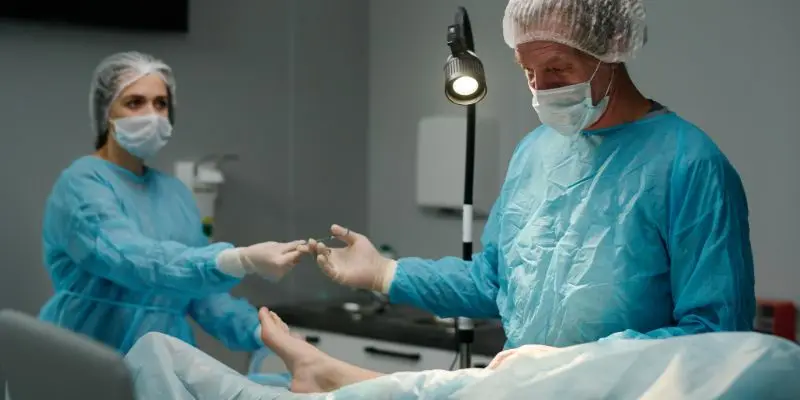
What to do in severe cases of brachymetatarsia?
Resorting to surgery can be scary, but increasingly it is the definitive solution to the problem.
But what are these techniques? And which one works best?
We focus on distraction osteotomy and the use of bone grafts.
Distraction Osteotomy
Distraction osteotomy is now considered one of the most cutting-edge techniques in the correction of brachymetatarsia.
This procedure involves a controlled fracture of the short metatarsal and the subsequent use of an external fixation device that serves to gradually lengthen the bone. This device will be adjusted daily so that the new bone can form and consolidate properly.
Distraction osteotomy not only ensures precise and monitored control of bone lengthening, but also reduces the percentage risk of complications , which can include infection and bone non-union.
Bone Grafts
This procedure is also considered innovative, and involves specific steps of action.
Initially, a segment of another bone is taken , which may belong to the patient (autograft) or come from donors (allograft).
This segment will then be placed in the affected area and will serve to lengthen the short metatarsus.
Bone grafting is preferred when significant lengthening of the metatarsal is required; it also offers the advantage of a faster recovery time compared to distraction osteotomy.
Recovery and Rehabilitation

Any procedure chosen to resolve the problem of brachymetatarsia will be considered successful not only based on the technical resolution of the problem, but also based on the post-operative rehabilitation and recovery program.
Physiotherapy and recovery must always be monitored, so as not to incur further complications.
Stretching , joint mobilization , and muscle strengthening are all part of recovery physiotherapy, often combined with the use of braces or special footwear to protect the foot during healing.
Post-operative recovery monitoring also includes regular follow-up visits with the orthopedic surgeon, who will monitor the patient's progress step by step, ensuring that the treatment chosen for them is the best one.
SmartHallux's innovative surgery

The technique offered by SmartHallux is an innovative surgical procedure developed specifically for the treatment of brachymetatarsia.
Unlike traditional techniques that may involve the use of bone grafts or external distraction devices, SmartHallux uses a combination of precise osteotomies and advanced internal fixations.
This approach is not only minimally invasive, but also allows for accurate correction of metatarsal shortening, reducing tissue trauma and improving postoperative stability.
One of the main advantages of the SmartHallux technique is the significantly reduced recovery time.
How to book an appointment with SmartHallux

SmartHallux's team of expert surgeons is made up of specialists with extensive experience in foot and ankle surgery.
Relying on the specialists at SmartHallux is an excellent choice for those seeking an effective and less invasive solution for brachymetatarsia.
SmartHallux offers several consultation options to meet the needs of all patients, such as:
- studio visits, for an in-depth and immediate evaluation;
- telemedicine consultations, perfect for those who prefer the convenience of a virtual visit from their own home;
- home visits, designed for those who have difficulty moving or prefer a more personal service.
Booking a consultation with one of the SmartHallux surgeons is simple and convenient.
To learn more about SmartHallux surgery and to book a consultation, visit the official SmartHallux website or click directly on this link to book.
Here you'll find detailed information about the services offered and can choose the consulting option that best suits your needs.