
Hammer Toe: When Your Big Toe Hurts and Gets Deformed
Hammer toe is a bend in the middle joint of a toe that becomes fixed over time, causing pain and corns. The causes, how it progresses and the treatments.
By Dr. Luigi ManziUpdated on
Have you ever looked at your big toe and noticed that it's no longer straight? Or maybe you've started feeling pain when you walk, right where your big toe meets your shoe?
Hammer toe is a more common problem than you might think. In my office, I often see patients who come in worried because their big toe has started to bend strangely. "Doctor, what do you call a big toe when it does that?" they often ask, pointing to a deformity that's increasingly bothering them.
Well, today I want to explain everything you need to know about this condition. Simply, as if you were right here in front of me.
What exactly is hammer toe?

Hammer toe is a deformity that primarily affects the big toe—what some call the big toe. It occurs when the toe joint bends upward, creating a shape that resembles a hammer.
Think of your big toe as a jammed zipper. Normally, it should stand straight, in line with the rest of your foot. Instead, at a certain point, it begins to bend upward in the middle, while the tip tends to remain pointing downward.
What's most troubling for patients? At first, it seems like just a cosmetic issue. Then comes the pain.
Why does it happen? The main causes

After all, the big toe doesn't deform on its own. There are always very specific reasons.
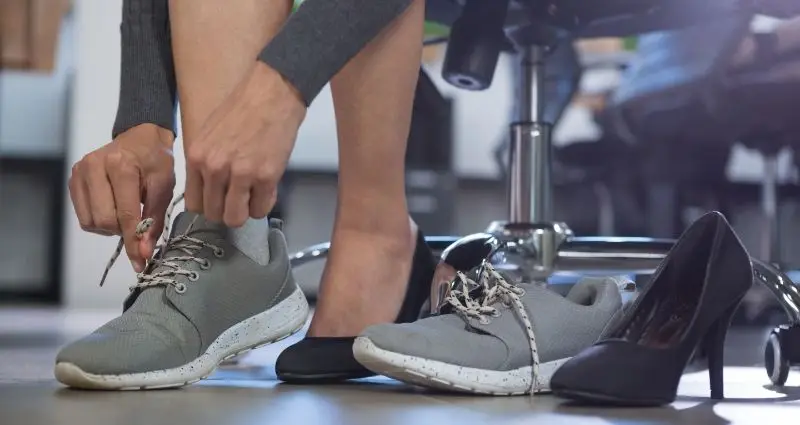
The most common cause I see in my office is the wrong shoes. I know, I know—everyone always says it's the shoes' fault. But in this case, it really is! Shoes that are too tight, have too-pointy toes, or heels that are too high, forcing your toes into unnatural positions for hours on end, day after day.
Then there are factors you can't control. Age, for example. Over time, the muscles and tendons in the foot lose strength and elasticity. Genetics also play a role: if your father or mother had similar problems, the likelihood increases.
Rheumatic diseases like arthritis can accelerate the process, as can trauma—a good blow to the foot can upset the balance of forces that keep the toes straight.
Sometimes it's a question of foot structure. People with flat or high arch feet, or whose big toe is longer than the other toes, are more prone to developing this deformity.
Symptoms You Can't Ignore

Pain is the first warning sign. It's not always severe at first—many patients describe a feeling of discomfort when wearing certain shoes.
“Doctor, it's as if I always have a pebble in my shoe,” they often tell me.
Swelling appears as the condition worsens. The joint becomes inflamed, reddish, and sometimes warm to the touch. Walking becomes difficult, especially in closed shoes.
Limited movement is another important sign. You try to move your finger and feel it doesn't respond as it should. It's stiff, stuck in that unnatural position.
In more advanced cases, the nail may also become deformed. It thickens, changes color, and sometimes becomes ingrown. It's not pretty to look at, but above all, it's uncomfortable.
How do I diagnose?

When you come to me with this problem, the first thing I do is watch you walk. I observe how you place your foot, whether you limp, and whether you tend to place your weight abnormally.
Then comes the examination of the foot itself. I touch, press gently, and move the toe to determine how rigid the deformity is. It's important to determine whether we're still in the "flexible" phase—where the toe can still be straightened manually—or whether we've already reached complete rigidity.
X-rays are crucial. They allow me to see exactly what's happening to the bones and joints. Sometimes what appears to be a simple hammertoe hides more complex bone problems.
I also need to rule out other similar conditions. Hallux valgus, for example, can cause similar symptoms but is a completely different condition that requires different treatments.
The treatment options we have
Now, this is the part that patients are most interested in: “Doctor, what can we do?”
It depends a lot on how advanced the problem is. If we catch it early, while the finger is still flexible, we can try a conservative approach.
Rest and ice for acute inflammation. Anti-inflammatories to control pain and swelling. Custom-made insoles to better distribute weight on the foot. Wider, more comfortable shoes—I know it sounds trivial, but it makes a huge difference.
Specific exercises to keep the joint mobile. I'll teach you; they're simple but must be done consistently. Finger stretching, active and passive mobilizations.
When conservative treatment is no longer sufficient, and especially when the toe has become stiff, surgery should be considered. It's not something I suggest lightly—but sometimes it's the only way to walk properly again.
Surgical techniques vary, depending on the case. They range from small soft tissue procedures to more complex bone corrections. The important thing is choosing the right technique for your specific problem.
Recovery after surgery
Here's something all patients ask me: “How long will it take to get better?”
The truth? It depends on the type of surgery we perform. For simpler cases, we're talking a few weeks. For more complex cases, it can take a few months for a full recovery.
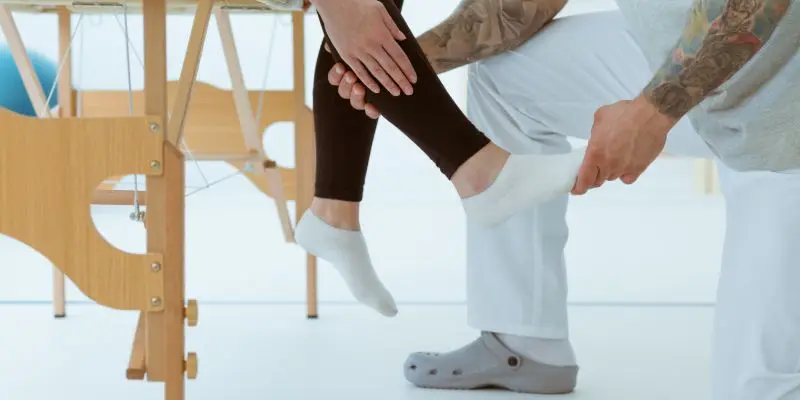
For the first few days after surgery, you'll need to elevate your foot as much as possible. Apply ice regularly to control swelling and pain. The dressings should be changed as I'll explain.
Physiotherapy begins as soon as possible. Gentle mobilization exercises begin, then gradually become more intense. The goal is to regain movement, strength, and coordination.
I usually see patients start to feel better after a couple of weeks, but full recovery takes patience.
How to prevent the problem
Prevention is always better than cure, right?
Rule number one: the right shoes. Wide enough to avoid pinching your toes, with a reasonable heel (maximum 3-4 cm), and preferably made of materials that adapt to your foot.
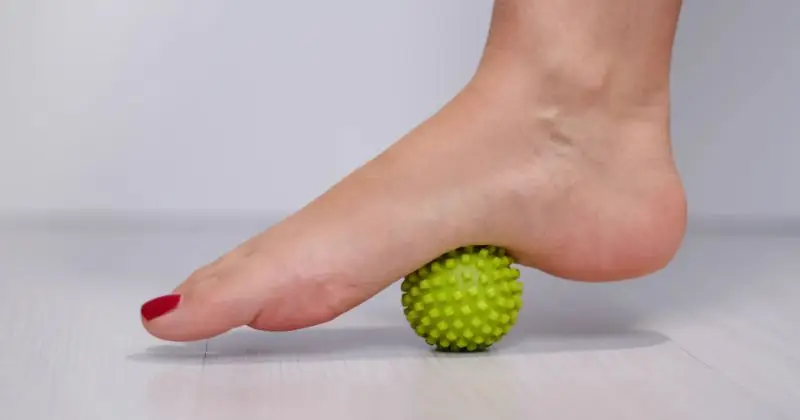
Regular exercises keep your toes and feet flexible. Even just 5 minutes a day is enough: circular ankle movements, flexing and extending your toes, picking up small objects with your toes.
If you have posture problems or foot deformities, it's important to correct them before they lead to complications. A custom-made insole can work wonders if done right.
SmartHallux: Where we can help you

Here at SmartHallux, we specialize in foot and ankle surgery. Dr. Luigi Manzi, who has extensive experience in this field, provides each patient with a personalized treatment plan using the most modern techniques.
The SmartHallux team treats conditions such as hallux valgus , Morton's neuroma , and other deformities that cause foot pain. Providing comprehensive support throughout the treatment process, SmartHallux can be a winning choice for effective treatment tailored to your needs. Book your specialist consultation with the SmartHallux team now (opens in a new tab).
We have offices in Milan, Rome, and Naples, and each case is carefully evaluated to find the best solution.
Questions you often ask me
Doctor, can my hammer toe get worse if I don't treat it?
Yes, unfortunately, it tends to worsen over time. What starts as a minor annoyance can become a real problem if left untreated. That's why it's important to intervene early.
Is surgery always necessary?
No, absolutely not. If the deformity is still flexible and the symptoms are mild, we can often manage everything with conservative treatments. We only consider surgery when other options no longer work.
Will I be able to go back to sports after surgery?
In the vast majority of cases, yes. It takes time to fully recover, but that's exactly the goal: to get back to doing everything you did before, but without pain.
Is it true that the problem can return after surgery?
Recurrences are rare if the surgery is performed properly and you follow the recovery instructions. It's also important to maintain good shoe and exercise habits.