
Morton's neuroma and injections: when foot pain becomes unbearable
Injections for Morton's neuroma, with corticosteroid or alcohol, can relieve pain between the toes. When they are indicated and what to expect.
By Dr. Luigi ManziUpdated on
Have you ever felt that sensation of walking on a pebble? That discomfort that never seems to go away, localized between your toes? Well, it could be Morton's neuroma. It's a problem I see often in my office, and I assure you that those who suffer from it always describe it to me in the same words: "Doctor, it's as if I always have something under my foot."
Morton's neuroma is a condition affecting the nerve that passes between the toes. It's not a true tumor, despite the scary name. It's more of a thickening of the tissue surrounding the nerve, caused by continued compression.
And here we come to the point: when the situation becomes really annoying, we often talk about Morton's neuroma and infiltrations.
What exactly is this Morton's neuroma?
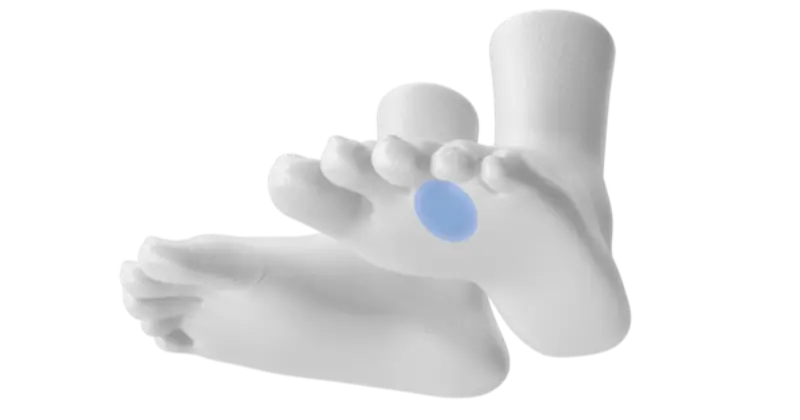
Imagine the nerve running between your fingers as an electrical cable. Now, think about what happens if this cable is constantly pinched and rubbed. The covering thickens to protect itself, but paradoxically, this thickening causes even more problems.
Morton's neuroma primarily affects the nerve between the third and fourth toes. Why exactly there? Simple: it's the point where two nerves join, creating a naturally thicker structure that's vulnerable to compression.
The area becomes inflamed. Scar tissue forms around the nerve. And the result? Pain that can be truly debilitating.
The causes: why does it happen to you?
Besides, this problem doesn't arise out of nowhere. There are several reasons you might develop Morton's neuroma, and often—I admit—it depends on our habits.
Shoes are the number one culprit. High heels, narrow toecaps, thin soles. In short, anything that forces the foot into unnatural positions for hours on end. I've seen patients who have endured uncomfortable shoes for years, thinking "you'll just get used to it." Well, the foot never really gets used to it.
Then there are biomechanical problems. Flat feet, high arches, and hallux valgus. All conditions that alter the way we place our feet on the ground, creating abnormal pressure. It's as if some parts of the foot have to work twice as hard to compensate.
Sports activity can be a trigger. Sports that involve repetitive jumping, running on hard surfaces, or sudden lateral movements. Jogging on asphalt for miles, tennis, or ballet—anything that subjects the foot to repeated microtrauma.
To be honest, I've noticed that patients often come to me after changing their habits. "Doctor, I started running three months ago," or "I bought those new shoes for work." The body needs time to adapt, and sometimes it protests.
Symptoms You Can't Ignore

Pain is the main symptom, but it's not always the same. Some patients tell me, "It's like an electric shock." Others: "It feels like someone's sticking a needle between my fingers."
Burning is very common. It's that intense heat sensation that starts between the toes and can travel up the entire foot. It's often accompanied by tingling or numbness.
An interesting fact: the symptoms almost always worsen with tight shoes and improve barefoot. My patients always tell me: "At home, barefoot, I feel fine. As soon as I put my shoes on, the ordeal starts again."
The pain can radiate. It's not limited to the toes, but can extend toward the ankle or involve the entire forefoot. And often, after a particularly intense day, it persists even at rest.
How do I diagnose?

When you come to my office with these symptoms, the first thing I do is listen. Really. You tell me where it hurts, when it hurts, what makes it worse or better. This information is crucial.
Then I move on to the physical examination. I press on the painful area, wiggle my toes, and check how you place your foot. There's a specific test called "Mulder's sign": I press the foot on one side while pressing the painful area on the other. If there's a neuroma, you often hear a clicking sound and the patient feels the typical pain.
Ultrasound is my first-line test. It's quick, inexpensive, and in most cases allows me to clearly see the neuroma. I can measure it, assess the nerve's thickening, and rule out other pathologies.
Sometimes an MRI is necessary. Not always, but when I have doubts or want to plan a possible surgery, it can provide more detailed information about the soft tissues.
Infiltrations: when and why
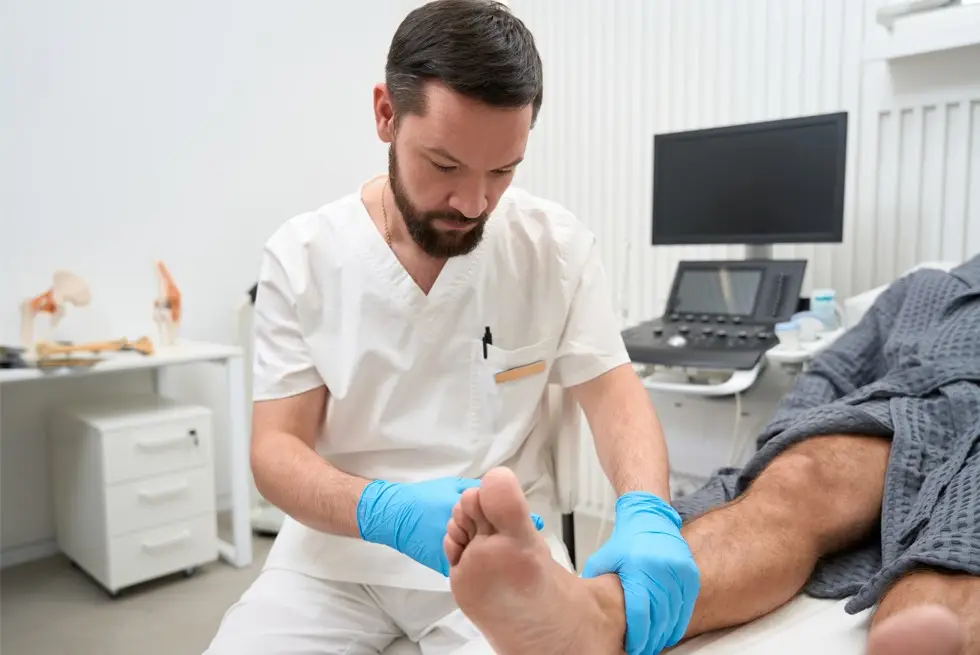
Now, we're getting to the heart of the matter. Cortisone injections for Morton's neuroma are a very useful tool, but they're not a panacea. Let me tell you right away: they work well when the problem is still in its early stages or when inflammation is the main component.
How do they work? Cortisone is a powerful anti-inflammatory that acts directly on the inflamed tissue around the nerve. The effect isn't immediate—it usually takes 3-5 days to begin feeling the benefits, and peaks after about a week.
The procedure is quite simple. I use a very thin needle and insert the medication directly into the neuroma. It takes just a few minutes. It's certainly not the most comfortable, but most patients tolerate it well.
How many injections are needed? It depends. Sometimes a single injection is enough to solve the problem for months. Other times, 2-3 are needed, spaced a few weeks apart. My limit is this: no more than 3-4 injections per year in the same area, because cortisone can have side effects on local tissue.
And here's the crux: when injections no longer work, we must consider other options. Conservative treatments for neuroma may include custom insoles, physical therapy, and changing footwear. But in the most resistant cases, surgery becomes the only permanent solution.
What to expect after the infiltration
Immediately after the injection, you may feel a little more pain. This is normal: the needle has caused a small local trauma, and the injected fluid may temporarily increase pressure. I always recommend returning home calmly and avoiding strenuous activities for the rest of the day.
The first 2-3 days can be variable. Some patients feel better immediately, others worse. From the third day onward, if the injection is working, you'll begin to notice a progressive improvement.
The peak effect is usually reached after a week. If you haven't noticed any improvement after 10-15 days, the injection probably didn't work.
One important thing: the effect can last from a few weeks to several months. It depends on how advanced the neuroma is, your anatomy, and your habits. I have patients who feel good for a whole year with one injection, others who need a repeat injection after two months.
Alternatives when infiltrations are not enough
Morton's neuroma treatment includes several options. First of all, and I always repeat this, the right shoes make all the difference. Shoes with a wide toe, low heels (2-3 cm maximum), and shock-absorbing soles. I know it's not always easy to balance comfort and style, but foot health comes first.
Custom insoles can help tremendously. Not the ones you buy at the supermarket, but the ones custom-made after gait analysis. They can redistribute pressure and relieve stress on the inflamed nerve.
Physiotherapy plays a role, especially in working on foot biomechanics and correcting any muscle imbalances. Stretching, mobilization, and strengthening exercises for the intrinsic muscles of the foot are recommended.
When all this isn't enough, surgery remains. Neuromectomy is the most common procedure: the thickened portion of the nerve is removed. It's a relatively simple procedure, but it always results in permanent loss of sensation in the area between the affected fingers.
Prevention is better than cure
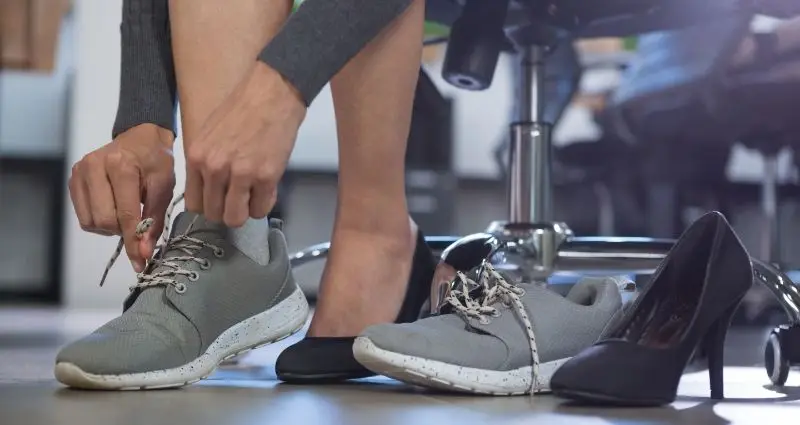
I know it sounds trivial, but preventing Morton's neuroma depends primarily on the shoes we wear. Wide toes, heels no higher than 4 cm, and soft materials. And if you play sports, choose footwear specifically designed for your activity.
Body weight plays a role. Every extra pound puts additional pressure on your feet. I'm not suggesting you get incredibly skinny, but maintaining a reasonable weight helps.
If you have foot problems like flat feet or bunions, treat them. Don't wait for them to get worse. Correcting a biomechanical problem can often prevent the development of a neuroma.
SmartHallux: Where we can help you

Here at SmartHallux, we specialize in foot and ankle surgery. Dr. Luigi Manzi, who has extensive experience in this field, provides each patient with a personalized treatment plan using the most modern techniques.
Our approach is always conservative first and foremost. We evaluate all non-surgical options together, from injections to customized insoles. Only when strictly necessary do we consider surgery.
The SmartHallux team treats conditions such as hallux valgus , Morton's neuroma , and other deformities that cause foot pain. Providing comprehensive support throughout the treatment process, SmartHallux can be a winning choice for effective treatment tailored to your needs. Book your specialist consultation with the SmartHallux team now (opens in a new tab).
Questions you often ask me
Doctor, do the injections hurt?
Honestly? A little, yes. But it's bearable pain and lasts a few seconds. Most patients tell me, "I thought it was worse." I use very thin needles and always try to be as gentle as possible.
After how many infiltrations do I have to give up?
There's no hard and fast rule. Generally, if after 2-3 well-spaced injections you don't see significant improvements, it's time to consider other options. Continuing to "puncture" your foot without results makes no sense.
If I have the infiltration, will I have to have surgery afterwards?
Absolutely not. Injections don't compromise the possibility of future surgery, but they often make it unnecessary. Many of my patients experience permanent relief with injections combined with appropriate shoes and insoles.
Is it true that after the operation I will no longer feel my fingers?
It depends on the type of surgery. With traditional neuromectomy, yes, there's always some loss of sensation in the area between the operated fingers. But I must say that most patients prefer not to feel anything at all rather than experience constant pain.
Can injections be done during pregnancy?
I prefer to avoid it, especially in the first trimester. If absolutely necessary, it can be considered in the second or third trimester, but always after considering all the alternatives.