
Toe deformities: when the foot doesn't grow as it should
Toe deformities such as hammer, claw and overlapping toes can be present at birth or develop with age and footwear. The causes, symptoms and treatments.
By Dr. Luigi ManziUpdated on
Have you ever looked at your feet and noticed something's wrong? Maybe you have a toe that bends strangely, or two toes that seem stuck together. You're not alone.
Toe deformities are more common than you might think. In my office, I see patients of all ages who come in worried about these problems. Some have them from birth, others develop them over time. The good news? Today, we have effective solutions for most of these conditions.
What exactly are these malformations?
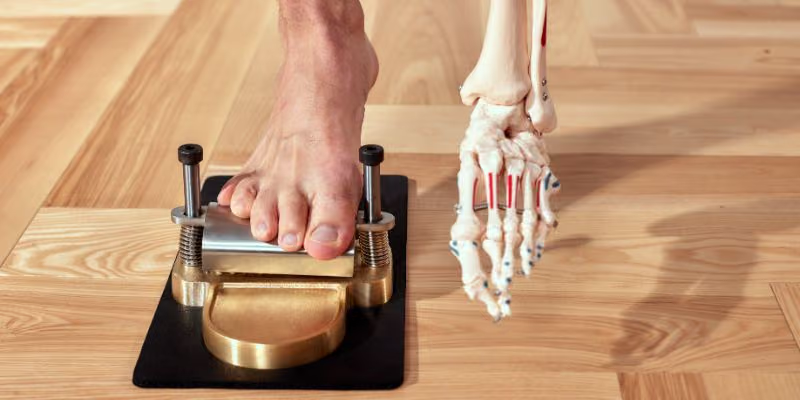
When we talk about foot malformations, we mean alterations to the normal anatomy that can affect the toes, the shape of the foot, or its structure. Simple, right?
Some people are born with these conditions. Others develop them over the course of their lives due to trauma, arthritis, or simply the wear and tear of time. It's a bit like a road deteriorating: sometimes it's born with defects in the surface, other times it's damaged by traffic and bad weather.
Congenital malformations—those you're born with—can be caused by genetic factors. I've seen entire families with the same type of foot problem, passed down from generation to generation. After all, we inherit our eye color from our parents, so why shouldn't we also inherit the shape of our feet?
There are also more complex conditions, such as some genetic syndromes. Down syndrome, for example, can be associated with particular foot conformations. But I don't want to scare you: most of the malformations I see are isolated conditions, not related to more serious problems.
Why does it happen? The main causes
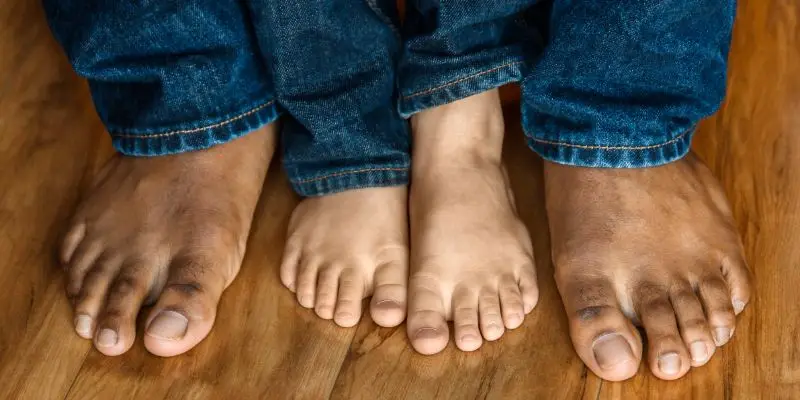
This is always the first question patients ask me: "Doctor, why did this happen to me?"
Genetic causes are often the most common. DNA is like an instruction book for building our bodies, and sometimes there are small "misprints" on some pages. Nothing dramatic, mind you. It's simply that the instructions for building the foot are interpreted slightly differently.
Then there are the traumas. A badly broken finger, an accident, a seemingly trivial fall that compromised a child's bone growth. Arthritis can play nasty tricks over time, gradually deforming the finger joints.
Sometimes it's the fault of years of wearing the wrong shoes. Yes, you heard right. Those tight, pointy shoes that "looked so good" can cause long-term problems. The foot adapts, but not always properly.
Signs You Shouldn't Ignore
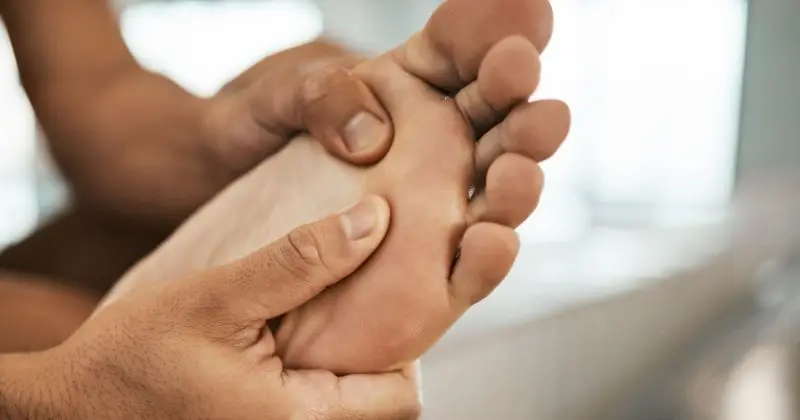
Pain is obviously the first warning sign. But it's not the only one.
Many patients tell me, "Doctor, it doesn't hurt, but I can't find shoes that fit me anymore." It's a significant symptom! When the foot changes shape, it becomes difficult to wear it normally.
Others notice the problem by looking in the mirror or noticing a different way of walking. "I've started limping a little," they tell me. Or, "I feel like I'm putting weight on my feet strangely when I walk."
Tingling and numbness are other signs. They may indicate that the deformity is compressing a nerve. In these cases, it's best not to wait too long before seeing a doctor.
How do we diagnose?

When you come to my studio, the first thing I do is watch you walk. Yes, exactly. I ask you to take a few steps back and forth. You can tell a lot from the way a person places their foot.
Then I examine the foot while still, touching it, and checking the mobility of the toes. I always ask when the problem started, if there's pain, and if it gets worse in certain situations. Your story is as important as what I see.
X-rays are often needed. Nothing complicated: a simple X-ray to see the structure of the bone under the skin. Sometimes I also request a CT scan or MRI, but only in the most complex cases.
Treatment options: where do we start?

Not all malformations require surgery, here's something important to know right away.
We often start with conservative solutions. Custom-made insoles, for example. They're like little "correctors" that help the foot function better. They don't always correct the deformity, but they can significantly reduce symptoms.
Orthopedic shoes are no longer the ugly and bulky ones they once were. Today, there are elegant and comfortable models that perfectly conceal their therapeutic function. Many of my patients have been surprised by the aesthetic quality of modern footwear.
Physiotherapy can be very helpful. Specific exercises to maintain toe mobility, stretching for shortened tendons, and strengthening foot muscles. It's a team effort between you, me, and the physiotherapist.
In some cases, cortisone injections can provide temporary relief from pain and inflammation. It's not a permanent solution, but it can be very helpful in overcoming acute phases.
When is surgery necessary?
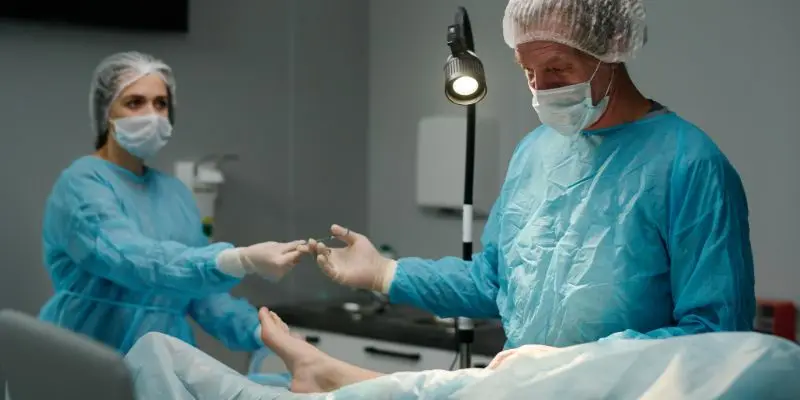
I consider surgery when conservative treatments are not enough and quality of life is compromised.
There are various surgical techniques, from simple correction of a hammertoe to more complex procedures to realign the entire forefoot. Every case is different, every foot has its own story.
Recovery varies greatly depending on the type of surgery. For some simpler procedures, you can walk immediately in a special shoe. For others, a longer off-duty period is required. I typically see patients return to their normal activities within 6 to 12 weeks.
SmartHallux: Where we can help you

Here at SmartHallux, we specialize in foot and ankle surgery. Dr. Luigi Manzi, who has extensive experience in this field, provides each patient with a personalized treatment plan using the most modern and least invasive techniques possible.
Our philosophy is simple: first and foremost, we seek non-surgical solutions. If surgery is necessary, we use minimally invasive techniques that reduce pain and recovery time.
The SmartHallux team treats conditions such as hallux valgus , Morton's neuroma , and other deformities that cause foot pain. Providing comprehensive support throughout the treatment process, SmartHallux can be a winning choice for effective treatment tailored to your needs. Book your specialist consultation with the SmartHallux team now (opens in a new tab).
Questions you often ask me
Doctor, is it hereditary? Will I pass it on to my children?
Some malformations have a genetic component, others do not. There is no general rule. If there have been similar cases in the family, it is more likely to recur, but it is not a mathematical certainty.
Can I continue to play sports with this deformity?
It depends a lot on the type of malformation and the sport you practice. Many patients can continue their activities without any problems, perhaps with some adjustments to their shoes or specific insoles.
Is it true that it will get worse with age?
Not always. Some conditions remain stable throughout life, while others may gradually worsen. The important thing is to monitor them with regular checkups.
Is the surgery always painful?
Modern techniques are much less traumatic than in the past. Postoperative pain is generally well controlled with medications, and most patients are pleasantly surprised by how manageable it is.