
Achilles tendonitis: effective natural remedies to relieve pain
Natural remedies for Achilles tendonitis: rest, ice, eccentric calf exercises, heel lifts and gradual return to running. What helps and when to see a doctor.
By Dr. Luigi ManziUpdated on
Have you ever felt that stabbing pain behind your ankle after a run? Or maybe in the morning, when you get out of bed and take your first steps? Well, you've probably experienced Achilles tendinitis. It's a problem I see often in my office, especially among those who play sports regularly.
Achilles tendinitis is essentially an inflammation of the tendon. This tendon—the largest in our body—connects the calf muscles to the heel. When it becomes inflamed, it's really painful.
Now, before continuing, one important thing I always tell my patients: natural remedies can be excellent support, but they should never replace a serious medical evaluation. Moreover, Achilles tendon pain can also be the result of other conditions that should be ruled out.
What is Achilles tendinitis really?
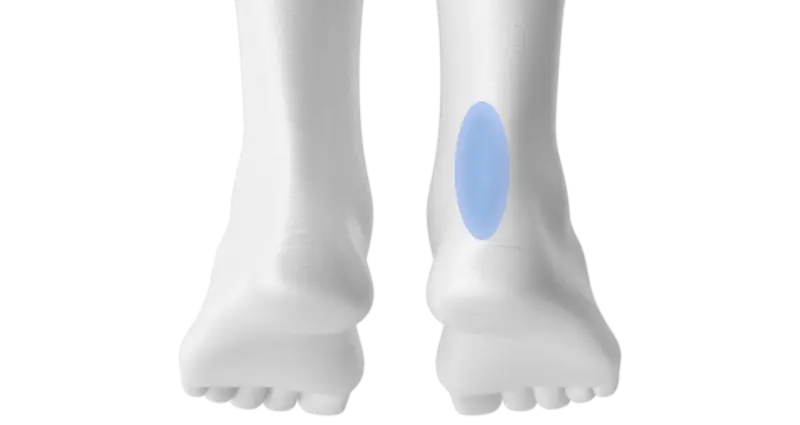
Imagine the Achilles tendon as a thick rope. When this "rope" is overstressed, or stressed incorrectly, it begins to wear out and become inflamed. The resulting pain can be truly debilitating.
The other day, a patient came to me and said, "Doctor, it feels like someone is sticking me with a needle behind my ankle." Now, that's a pretty typical description. The pain can manifest itself in different ways: sometimes it's dull and constant, other times sharp and stabbing, especially during movement.
Interestingly, the pain often worsens after a period of inactivity. You may have noticed that in the morning, when you wake up, the first steps are the most painful. Then, as you gradually "warm up" the tendon, the pain eases somewhat.
Why do Achilles tendonitis occur?

The causes? Well, they're varied and often combined.
Overload is certainly the main cause. Consider runners who increase their weekly mileage too quickly, or those who resume physical activity after a long break without adequate preparation. The tendon simply isn't ready to sustain all that stress.
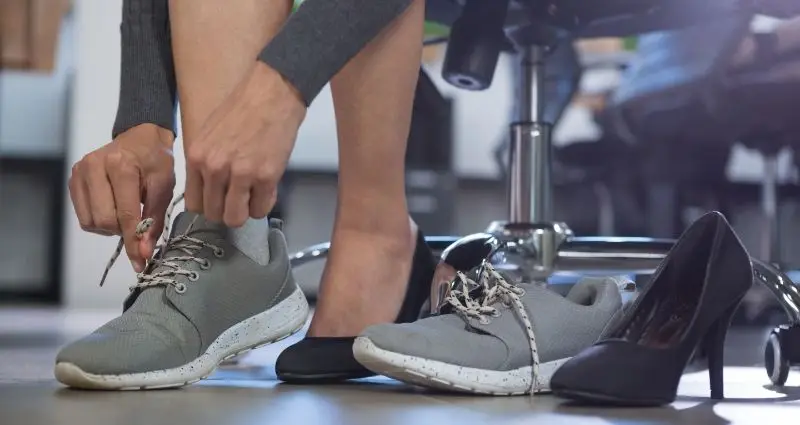
But it's not just athletes who suffer from it. I've seen patients who developed Achilles tendinitis simply by changing their shoes. Shoes with high heels, for example, keep the foot in an unnatural position that overloads the tendon. Or shoes that are too flat after years of wearing high heels—this can also cause problems.
Calf muscle tightness plays a key role. Shortened and tense muscles place constant stress on the Achilles tendon. It's like having a rope that's too tight: sooner or later, something will give way.
Age also plays a role – tendons lose elasticity as we age. Not to scare you, but after 40, we need to be more careful about these aspects.
The symptoms you need to recognize

Pain is the main symptom, of course. But where exactly? It's usually located at the back of the ankle, right where you can feel the tendon cord under the skin. Patients often point to a specific spot a few centimeters above the heel.
Morning stiffness is very characteristic. It's what we call "cold soreness" in slang—after hours of rest, the tendon feels "asleep" and the first movements cause discomfort.
Swelling may also occur. It's not always obvious, but if you run your finger along the tendon, you may feel a thickening. Sometimes, there's also a localized sensation of warmth.
Another sign I often notice during an examination is tenderness. If I gently press on the tendon, the patient feels discomfort. It's a simple but effective diagnostic test.
Natural remedies that really work
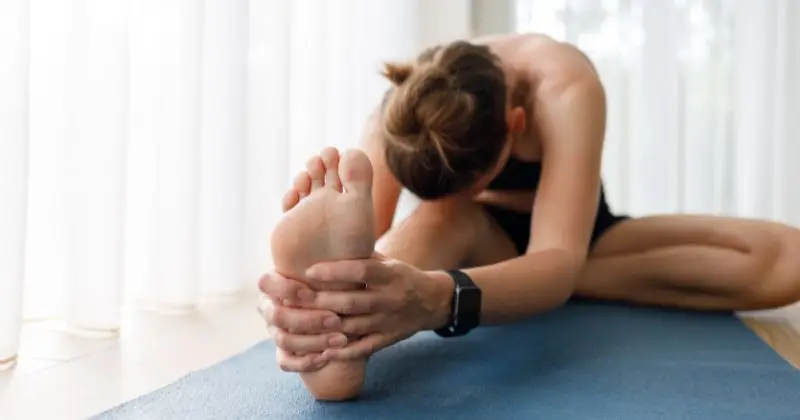
Let's look at the most effective natural remedies together. I should point out that these approaches work best in the initial stages and for mild to moderate tendinitis.
**Rest is the first medicine.** I know, it may seem trivial, but it's essential to give the tendon time to "turn off" the inflammation. It doesn't mean staying immobile for weeks, but rather avoiding activities that trigger the pain. If you run, maybe try cycling or swimming.
Ice can be a great ally, especially in the first 48-72 hours when the inflammation is most acute. I always recommend applying it for 15-20 minutes, 3-4 times a day. But be careful: never apply ice directly to the skin; always use a cloth.
**Stretching exercises** are essential. My favorite? Standing, place your hands on the wall, with one leg bent in front and the painful leg straight behind. Press your heel toward the floor and hold for 30 seconds. Repeat several times a day. It's simple but highly effective for stretching the entire muscle-tendon complex.
As for **herbal remedies**, devil's claw has good anti-inflammatory properties. Turmeric, too—many of my patients benefit from it. Obviously, always consult your doctor, especially if you're taking other medications.
Green clay applied as a poultice can provide relief. Some patients tell me they also find relief from compresses made with diluted lavender essential oil.
When it's time to worry
There are situations where natural remedies aren't enough. If the pain persists for more than 2-3 weeks despite rest, it's time for a more thorough evaluation.
Watch for warning signs: very intense and constant pain, significant swelling, difficulty walking normally. If you hear a "pop" during movement, rush to the emergency room immediately—it could be a rupture.
Fever associated with local pain should not be underestimated. In these cases, urgent medical evaluation is required.
Prevention remains the best thing
As I always say: prevention is better than cure. A good warm-up before physical activity makes all the difference. I'm not talking about three jumps, but at least 10-15 minutes of gradual preparation.
The right shoes are essential. For runners, change them every 500-600 kilometers. For everyday use, avoid extremes: neither high heels nor completely flat shoes.
Keep your calf muscles supple with regular stretching. Even just 5 minutes a day can prevent many problems.
SmartHallux: Where we can help you

Here at SmartHallux, we specialize in foot and ankle surgery. Dr. Luigi Manzi, who has extensive experience in this field, provides each patient with a personalized treatment plan using the most modern techniques.
For Achilles tendinitis, we use both conservative and, when necessary, minimally invasive approaches. The important thing is to evaluate each case individually.
The SmartHallux team treats conditions such as hallux valgus , Morton's neuroma , and other deformities that cause foot pain. Providing comprehensive support throughout the treatment process, SmartHallux can be a winning choice for effective treatment tailored to your needs. Book your specialist consultation with the SmartHallux team now (opens in a new tab).
Questions you often ask me
Doctor, how long does it take to heal?
It depends a lot on the severity and extent of the tendon's inflammation. Typically, for mild tendinitis, recovery takes 2-6 weeks with the right approach. More complex cases can take months. Patience is key.
Can I continue to play sports?
During acute phases, it's best to avoid activities that cause pain. You can replace them with sports that don't stress the tendon, such as swimming. As the pain subsides, you can gradually resume.
Do old wives' remedies work?
Some, yes! Alternating hot and cold compresses, clay poultices... they're obviously not miraculous, but they can provide relief. The important thing is not to replace medical treatment when necessary.