
Swanson Prosthesis: When Your Big Toe Hurts Too Much
The Swanson prosthesis is a silicone implant that replaces the big toe joint in advanced hallux rigidus. When it is indicated, how surgery works and recovery.
By Dr. Luigi ManziUpdated on
Have you ever woken up in the morning and felt like your big toe had become your enemy? Stiff, painful, and making you limp from your first steps. If you're reading this article, you probably know exactly what I'm talking about.
Hallux rigidus is one of those conditions that changes your life. Little by little. At first it's just a nuisance, then it becomes constant pain that accompanies you everywhere. And when you reach the point where you can no longer walk normally, that's when the Swanson prosthesis comes into play.
But what exactly is this prosthesis? And most importantly: is it the right solution for you?
When the joint gives up

The joint between the big toe and the first metatarsal—what we technically call the metatarsophalangeal joint—is crucial for walking. Think about how much you use it every day: every step you take, every time you stand on tiptoe, every step you climb.
When this joint becomes affected by arthritis, the cartilage that acts as a "cushion" between the bones wears away. It's as if you have two pieces of metal rubbing against each other, with nothing left to protect them. The result? Pain. Stiffness. And a quality of life that deteriorates day by day.
I've seen patients who couldn't walk their dog anymore. Others who had stopped dancing. Some who struggled even to get out of their chairs.
The Swanson Prosthesis: A Story of Innovation
The Swanson prosthesis is named after Dr. Alfred Swanson, an American surgeon who revolutionized the treatment of damaged joints in the 60s. Its design is elegantly simple. And often the best solutions are the simplest, right?
This prosthesis is made of medical-grade silicone, a material with a unique characteristic: it's soft and flexible, yet durable. It's not metal like other prosthetics you may be familiar with (hip or knee ones, for example). It's designed to replace the damaged joint while maintaining some mobility in the finger.
How the intervention works

"Doctor, how is this procedure performed?" It's one of the questions I get asked most often. I'll explain it to you the same way I explain it to my patients in the office.
The operation takes about an hour. It's performed under local anesthesia with sedation—so you sleep soundly and won't feel a thing. I make an incision on the top of your big toe, remove the damaged joint, and insert the Swanson prosthesis in its place.
The beauty of this prosthesis is that it acts as a "flexible spacer" between the bones. It doesn't exactly reproduce the original anatomy of the joint, but it allows the finger to move without pain. It's like having a small shock absorber that absorbs loads and maintains the correct distance between the bones.
The risks? They exist, as with any surgery. Infection, healing problems, stiffness. But they're rare, especially if we follow the post-op carefully.
Recovery: What to Expect
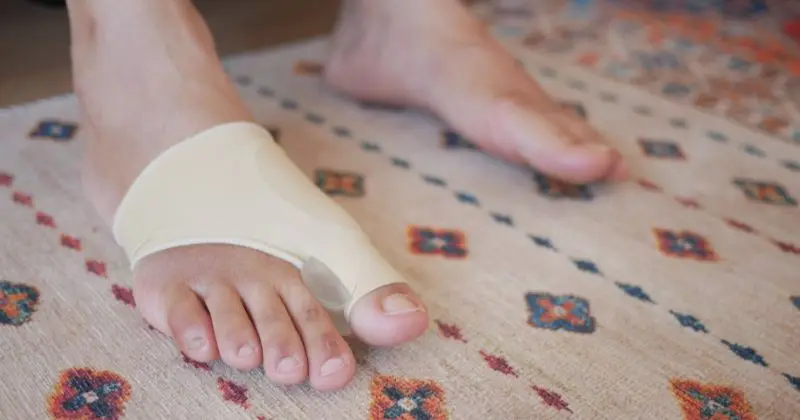
Once surgery is complete, your foot will be bandaged and you'll need to wear a special shoe for about four to six weeks. During the first few days, keep your foot elevated as much as possible. Ice is your friend for reducing swelling.
The first week is the most delicate. Then, little by little, you start walking normally again. In fact, many of my patients tell me that after just a month, they feel much better than before the surgery. The constant pain they had is gone, and that's an incredible relief.
Physiotherapy? It's important, but it's not as strenuous as other surgeries. Gentle movements to maintain the toe's mobility, exercises to strengthen the foot muscles. Nothing dramatic.
How long does a Swanson prosthesis last?
"Doctor, do I have to do it again?" Good question. On average, a Swanson prosthesis lasts 10-15 years. But I have patients who have had it for over twenty years and are doing great. Others have had some problems after eight years.
It depends on many factors. Your age, how much you walk, your weight, and how you treat your foot. If you go back to running marathons every day after surgery, it probably won't last as long as if you were to lead a more relaxed lifestyle.
The important thing is that when the prosthesis wears out, it's not a big deal. It can be replaced, although it's a slightly more complex procedure than the first.
It's not for everyone
Now, this is an important point. The Swanson prosthesis isn't a one-size-fits-all solution for big toe problems. It's fantastic for hallux rigidus with advanced arthritis, especially if you're over 50 or 60 and don't play high-impact sports.
If you're a young athlete, however, it might be better to consider other options. If you have significant circulation problems or active infections, you might have to wait. Every case is different, and that's the beauty (and complexity) of medicine.
SmartHallux: Where we can help you

Here at SmartHallux, we specialize in foot and ankle surgery. Dr. Luigi Manzi, who has extensive experience in this field, provides each patient with a personalized treatment plan using the most modern techniques.
What I like about our approach is that we never rush. Before suggesting any procedure, we evaluate all conservative options. And when we decide on surgery, we follow the patient step by step, from the first meeting until full recovery.
The SmartHallux team treats conditions such as hallux valgus , Morton's neuroma , and other deformities that cause foot pain. Providing comprehensive support throughout the treatment process, SmartHallux can be a winning choice for effective treatment tailored to your needs. Book your specialist consultation with the SmartHallux team now (opens in a new tab).
Questions you often ask me
Will the Swanson prosthesis help me walk like I used to?
It won't be like being 20, but yes, most of my patients can walk again without pain. You'll be able to go for long walks, travel, and live a normal life. High-impact sports, perhaps not, but an active lifestyle, certainly is.
Will I be able to feel the prosthesis when I walk?
You may feel a different sensation at first, but after a few weeks, your brain gets used to it. Most patients tell me they forget they have it.
What if it doesn't work?
The chances of it not working are low, but they exist. In that case, we can consider alternatives, such as a revision of the prosthesis or, in extreme cases, a joint fusion. But I assure you, in the vast majority of cases, the results are excellent.
Can I postpone the surgery?
You can, but keep in mind that the longer you wait, the more damage the joint will suffer. This can complicate the procedure and affect the final results. If the pain limits your daily life, it's best not to wait too long.