
Talus (ankle bone): anatomy, pathologies, and treatments
The talus is the ankle bone that links the leg to the foot and carries the body's weight. Its anatomy, why it hurts and the injuries that can affect it.
By Dr. Luigi ManziUpdated on
Have you ever heard of the talus ? It's a small bone in the ankle, but it plays a crucial role in our balance and mobility. When something goes wrong in this area, even the simplest actions—like walking or standing—can become difficult or painful.
Let's find out together what astragalus is, what problems it can cause, and how to treat them.
What is the talus and where is it found?
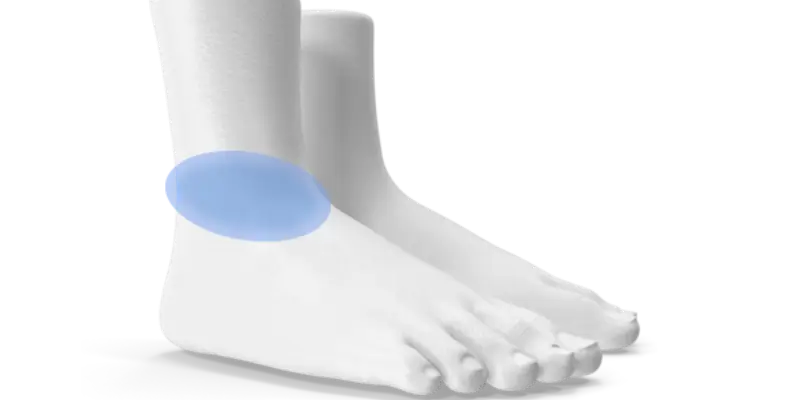
The talus is one of the seven bones of the foot and is located at the top of the foot, where it forms the ankle joint along with the tibia and fibula. It has no direct muscle attachments, but it transmits body weight to the foot and allows for flexion and rotation.
Its main functions are:
- Support the body load
- Allow joint movements between the leg and foot
- Promote stability of the lower limb
Pathologies of the talus

Despite its small size, the talus can be subject to various pathologies, often linked to trauma or joint problems:
- Talus fractures, typical of falls or accidents
- Dislocations, due to forced movements or serious injuries
- Osteochondrosis or necrosis of the talus, a condition in which the bone loses its blood supply and begins to deteriorate
- Osteoarthritis of the talus, progressive wear of the joint
- Impingement, or the conflict between bone structures or soft tissues
- Peroneal tenosynovitis, inflammation of the lateral tendons of the ankle
How to recognize the symptoms?

Talus problems generally manifest themselves with:
- Ankle pain, which worsens with movement or load
- Localized swelling, often visible
- Reduced joint mobility
- Stiffness or instability
- In some cases, redness or heat if there is inflammation
Diagnosis of talus pathologies

A correct diagnosis requires a specialist evaluation . The most commonly used tools include:
- Clinical examination and mobility test
- X-rays, to identify fractures or osteoarthritis
- Magnetic resonance imaging, useful for cartilage lesions or necrosis
- CT scan, for a three-dimensional view in surgical cases
Available treatments

Non-surgical approaches
Conservative treatments are often started, especially for non-serious conditions:
- Painkillers or anti-inflammatory drugs
- Physiotherapy aimed at recovering mobility and functionality
- Use of braces or orthoses to unload the joint
Surgical treatment
When the lesion is complex or does not respond to conservative therapy, surgery may be required:
- Reduction and synthesis in case of fractures
- Debridement (removal of damaged tissue)
- In some advanced cases, ankle prosthesis
Recovery and rehabilitation times
Postoperative recovery varies depending on the procedure performed. Physiotherapy plays a key role in:
- Regain strength and stability
- Reduce pain
- Avoid relapses
Ankle replacement: when is it indicated?

Ankle replacement can be a valid option in severe cases of osteoarthritis or talar necrosis:
- Improves the quality of life
- Reduces chronic pain
- It allows you to walk again
Like any procedure, it has benefits and risks, which should be discussed with a specialist.
Customized solutions with SmartHallux

Conditions such as talar injury , necrosis , or loose bone fragments require specialized treatment. Ignoring symptoms or delaying treatment can permanently impair ankle function.
SmartHallux is a center specializing in the diagnosis and treatment of foot and ankle conditions. Thanks to an expert team and cutting-edge technologies, it offers:
- Minimally invasive and prosthetic surgery
- Personalized treatments for any type of talar pathology
- Restoration telemedicine
- Offices in Italy (Milan, Rome, Naples)
- Free consultations
The SmartHallux team treats conditions such as hallux valgus , Morton's neuroma , and other deformities that cause foot pain. Providing comprehensive support throughout the treatment process, SmartHallux can be a winning choice for effective treatment tailored to your needs. Book your specialist consultation with the SmartHallux team now (opens in a new tab).
FAQ
Why does the talus of the ankle swell?
Swelling can be caused by ligament or tendon injuries, osteoarthritis, infections, or metabolic conditions such as gout.
What can be done for ankle pain?
It depends on the cause. Treatment may begin with rest, ice, and medications, and may even involve surgery in more complex cases.