
Chondropathy of the Talus: When Your Ankle Really Hurts
Chondropathy of the talus is wear or damage to the cartilage of the ankle bone, causing persistent pain when walking. The causes, diagnosis and treatments.
By Dr. Luigi ManziUpdated on
Have you ever felt ankle pain that never goes away? That kind of nagging pain that gets worse when you walk and makes you wonder, "What have I done?" Well, it could be chondropathy of the talus.
It's not a name you hear every day, I know. In fact, many of my patients come to my office without even knowing they have this problem. But it's more common than you think, especially if you've played sports or suffered ankle injuries over the years.
Let's see what we're talking about. The talus is the bone right in the center of your ankle—think of it as a sort of "bridge" between your leg and your foot. When the cartilage covering it gets damaged or worn away, that's when the problem arises.
What exactly is this chondropathy?
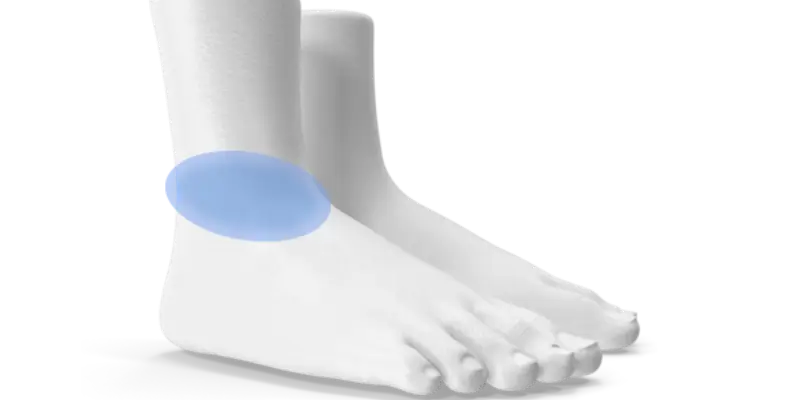
Talus chondropathy is essentially damage to the cartilage covering this vital bone. Cartilage, as you know, is the smooth, shiny tissue that allows bones to glide over each other without friction—a bit like oil in a car engine.
When this cartilage is damaged, irregularities occur. The surfaces are no longer smooth. And movement becomes painful. This is different from osteoarthritis, which is a more generalized wear and tear process—this is more localized damage, often due to a specific trauma or repeated microtraumas.
An inflamed talus can cause problems not only in the ankle, but also in the entire foot. After all, everything in our bodies is connected, right?
Why does this happen? There are various causes.
Truth be told, there can be many causes. The most common one I see in my office is trauma—a bad sprain, a fall, an accident. Perhaps it happened years ago and you thought it had healed completely.
Then there's overload. If you play sports that heavily involve the ankle—soccer, basketball, running—the constant stress can damage the cartilage over time. I've seen many runners develop this problem after years of training.
Obesity plays a significant role. Extra weight puts more stress on the joints, and the talus is affected. Certain congenital malformations—things you're born with—can also predispose to the problem. And of course, age: as we age, cartilage becomes less elastic and more vulnerable.
Symptoms: What You Really Feel

Pain is the main symptom. But not just any pain—it's a pain that gets worse when you move your ankle, especially when you bend it upward or make rotational movements. Many patients tell me, "Doctor, it hurts worse when I go down the stairs than when I go up them."
Joint stiffness is another warning sign. Do you wake up in the morning and feel like your ankle is locked up? Do you need to take a few steps to loosen it up? This could be your case.
Swelling in the affected area is common. Sometimes there's also localized warmth—the skin becomes slightly warm to the touch. And in more advanced cases, walking becomes truly difficult. It's not that you can't walk at all, but every step reminds you that something is wrong.
How do I make the diagnosis in the office?

When you come to me with these symptoms, the first thing I do is listen carefully. You tell me when the pain started, how it manifests, and what makes it worse or better. Then I examine you: I feel your ankle, test your movements, and check where it hurts the most.
But to be sure, instrumental tests are needed. X-rays are the first step—they show us if there are any obvious bone changes. Often, however, something more precise is needed: magnetic resonance imaging (MRI) is the test that allows us to truly see the condition of the cartilage. Ultrasound can be useful for evaluating inflammation of the talus and surrounding soft tissue.
I always need to rule out other conditions that can cause similar symptoms—tendonitis, a stress fracture, or ligament problems. Differential diagnosis is crucial.
What we can do: Treatment options
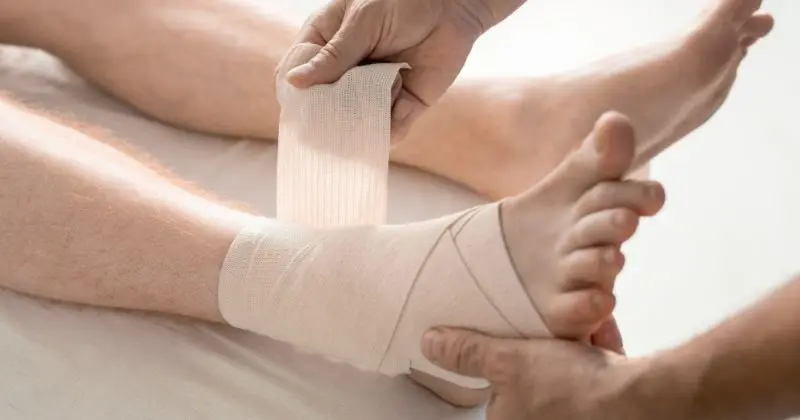
Fortunately, there are plenty of treatment options. Conservative treatment always begins, meaning without surgery. Relative rest—this doesn't mean staying completely still, but avoiding activities that worsen the pain. Ice in acute phases. Anti-inflammatory drugs to control pain and inflammation.
Physical therapy is essential. A good physical therapist can help you regain range of motion, strengthen your ankle muscles, and improve proprioception—that sense that allows you to "feel" where your foot is in space.
Hyaluronic acid injections can be very helpful. They're like "lubricating" the joint from the inside—a bit like putting new oil in a creaky engine.
When conservative treatment isn't enough, we can consider surgery. Arthroscopy allows us to "clean" the joint, remove fragments of damaged cartilage, and stimulate the growth of new cartilage. In more severe cases, more complex procedures are available, such as osteotomies or, in extreme cases, ankle replacement.
Recovery: Timescales and Realistic Expectations

Every patient is different, I always say this. But generally, with conservative treatment, improvements are visible after 6-8 weeks. Full recovery can take several months.
If we've had arthroscopic surgery, I usually see patients return to normal activities within 2-3 months. Sports require a little more patience—at least 4-6 months, depending on the type of sport.
Tips to avoid making the situation worse

There are some things you can do right away. Watch your weight—every pound less means less stress on your joints. Choose appropriate shoes: cushioned soles, arch support, and no high heels if you already have ankle problems.
Regular physical activity is important, but choose it wisely. Swimming, cycling, and walking on level ground are all excellent. Avoid sports involving jumps and sudden changes in direction if you already have symptoms.
And if you've injured your ankle, even if it seems trivial, get yourself checked out. An untreated injury can cause problems years down the road.
SmartHallux: Where we can help you

Here at SmartHallux, we specialize in foot and ankle surgery. Dr. Luigi Manzi, who has extensive experience in this field, provides each patient with a personalized treatment plan using the most modern and minimally invasive techniques.
Our approach? First, a comprehensive assessment, then choosing the most appropriate treatment for your specific case. If surgery is necessary, we use techniques that allow for faster recovery times and better aesthetic results.
The SmartHallux team treats conditions such as hallux valgus , Morton's neuroma , and other deformities that cause foot pain. Providing comprehensive support throughout the treatment process, SmartHallux can be a winning choice for effective treatment tailored to your needs. Book your specialist consultation with the SmartHallux team now (opens in a new tab).
Questions you often ask me
Doctor, is it true that chondropathy of the talus always leads to osteoarthritis?
Not necessarily. If we intervene early with the right treatment, we can significantly slow the progression of osteoarthritis. This is why it's important not to ignore the symptoms.
Does ankle pain always get worse with movement?
Typically, yes, especially with movements that put strain on the joint. But every case is different—some patients tell me the pain is worse at rest, especially at night.
Can I continue to play sports?
It depends on the type of sport and the severity of the chondropathy. "Gentle" sports like swimming or cycling can often be continued. For more demanding sports, we evaluate them on a case-by-case basis.