
Born with brachymetatarsia? Here's what to do.
Born with brachymetatarsia? Don't worry, because there are treatments available and they're becoming increasingly effective.
By Dr. Luigi ManziUpdated on
Born with brachymetatarsia ? Fear not, because there are remedies available and they are becoming increasingly effective. For those reading this who aren't informed on the subject, brachymetatarsia is a congenital disorder that affects the length of the metatarsal bones , the long bones in the foot from which the toes extend. People with this condition often have difficulty finding shoes that fit perfectly. The strangest thing about brachymetatarsia is that it's more common among women . As we said, you should never despair, because there's always light at the end of the tunnel.
When it comes to problems related to brachymetatarsia, there are two main ones: aesthetic and biomechanical . A foot with a shorter metatarsal bone may seem a little "odd" to some. This explains why it can be a significant headache, especially for those who care a lot about aesthetics. But the real problem arises in gait. A foot that doesn't behave as it should could turn a walk down the street into a real nightmare.
Diagnosis and treatment for brachymetatarsia
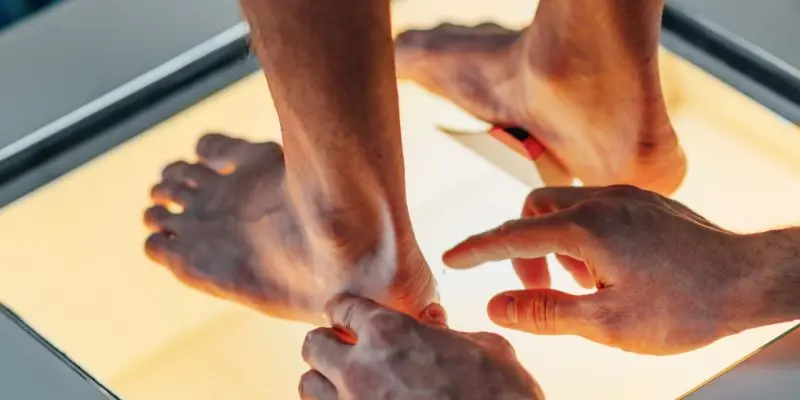
It's common to discover brachymetatarsia after a visit to the podiatrist as a child, perhaps during one of those X-rays that always seem to show up backwards. The diagnosis is quite simple: a careful look at the foot and the X-ray can reveal everything. The most common culprit is the fourth metatarsal bone.
Eating healthy and exercising? It won't do much to solve the problem. Brachymetatarsia is often hereditary or can be caused by trauma . But don't worry, there's no need to delve deep into your family tree or live in fear.
As for treatments, there's no one-size-fits-all solution. It all depends on the severity of the case and individual needs. For those who want to avoid surgery, there's the option of wearing shoes with greater depth . This little trick can relieve pressure and friction on the toes . Another solution is to use orthopedic accessories, such as custom orthotics . Think of it as a custom-made cushion for your feet yearning for relief.
Surgery and its pitfalls
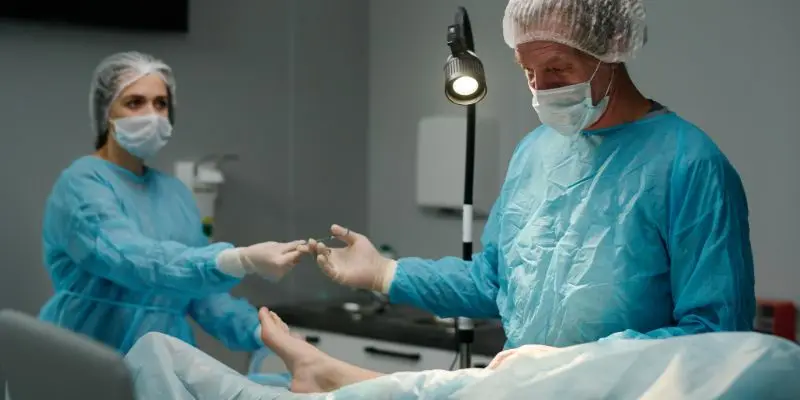
For those who have failed to resolve the problem with various treatments, there is ultimately a surgical option. The method is simple but tricky: lengthen the short metatarsal . One of the most common procedures is a gradual distraction osteotomy . The bone is cut and an external device gently pulls it until it reaches the desired length.
During surgery, it may be necessary to insert a bone graft to stabilize the length . But, as with all surgical procedures, there are certainly pitfalls. Among the most common complications are possible infection and the risk of the procedure being unsuccessful. This is why it is important to rely on an expert podiatrist with extensive experience in this type of procedure.
Another risk is overcorrecting the bone, which could cause the toe to bend too much in the plantar or dorsal direction . This could negatively affect alignment.
The good news is that many cases of brachymetatarsia don't necessarily require invasive treatment. In fact, many people manage to live peacefully with their recalcitrant metatarsal bones, opting for various conservative solutions and regaining their balance (literally).
Book your visit with SmartHallux

If you suffer from brachymetatarsia, don't despair. SmartHallux offers you effective, cutting-edge solutions. Thanks to the MICA (Minimally Invasive Chevron Akin) technique, SmartHallux represents a leap into the future compared to other minimally invasive techniques. Relying on SmartHallux means choosing a team of expert podiatrists who use the most advanced technologies. Ultimately, with SmartHallux, you can walk again painlessly and with confidence. Book a consultation now using the booking form on our website.