
Cheilectomy: what it is, when it's needed, and how it helps you walk again
Cheilectomy is surgery that removes the bone spurs on top of the big toe joint in hallux rigidus. When it is advised, how it is performed and the recovery.
By Dr. Luigi ManziUpdated on
Do you have foot pain when walking or climbing stairs? Is the big toe joint stiff, swollen, or preventing you from making normal movements? You may be dealing with a condition that requires a cheilectomy , a surgical procedure to remove bone spurs that limit movement and cause pain.
But what exactly is it? Is it a complex procedure? Is it really necessary? Let's find out together.
What is cheilectomy?

Cheilectomy is a surgical procedure that involves the removal of bone spurs (osteophytes) that form on the metatarsophalangeal joint, typically at the base of the big toe. These bony growths are often responsible for hallux rigidus , a degenerative condition that limits mobility and causes pain, especially when pushing off.
It is sometimes performed in combination with a hallux rigidus osteotomy , which is a corrective bone cut to improve the alignment of the toe.
When is it indicated?
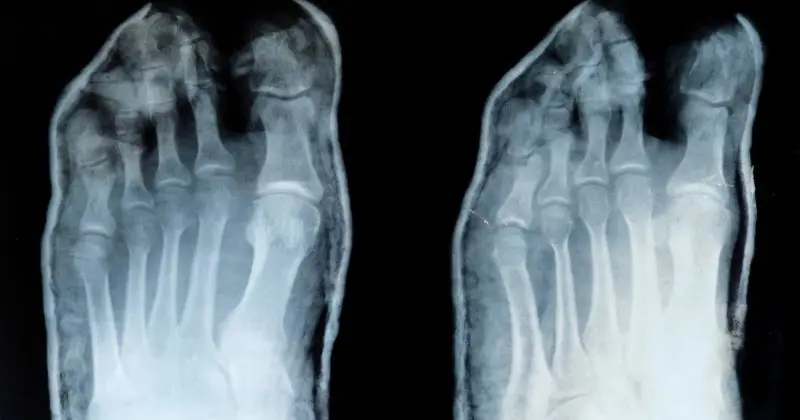
Cheilectomy is recommended when:
- the pain is localized, but the joint still has good mobility,
- are present bone spurs visible on x-ray,
- the patient has already tried conservative treatments (drugs, insoles, physiotherapy) without success.
It often represents a valid alternative to arthrodesis (joint fusion) in younger or athletic patients who wish to maintain flexibility of the big toe.
How is the procedure performed?
The procedure can be performed using traditional open surgery or, in some cases, arthroscopically . After local or spinal anesthesia, the surgeon accesses the joint, removes bone spurs, and, if necessary, files the joint edges to facilitate movement.
The procedure lasts approximately 30-45 minutes. In most cases, hospitalization is not necessary: it is a day surgery procedure , with same-day discharge.
Recovery and rehabilitation

Immediately after surgery, the foot is protected with a post-operative shoe. During the first week, rest is recommended, with the foot elevated, and ice applications to reduce swelling.
Walking returns within a few days, with crutches only if necessary. Physiotherapy helps regain movement and reduce stiffness.
Typically, complete return to light physical activity occurs within 3-4 weeks, while for more intense sports it takes about 6-8 weeks.
Why choose SmartHallux for your cheilectomy?

Dr. Luigi Manzi , an orthopedic surgeon specializing in foot and ankle surgery, performs cheilectomy at SmartHallux , a center of excellence with cutting-edge technologies and a highly personalized approach.
The benefits of SmartHallux include:
- reduced waiting times,
- transparent and competitive prices,
- access to the first visit also via telemedicine or in locations throughout Italy,
- complete support in managing post-operative recovery.
If you suffer from big toe pain , stiffness, or have already been diagnosed with hallux rigidus or joint bone spurs , don't wait for the situation to worsen. A procedure like cheilectomy can solve the problem quickly and permanently. Book your specialist consultation with the SmartHallux team today (opens in a new tab).