
Chevron Osteotomy for Hallux Valgus: When Surgery Is the Right Choice
The chevron osteotomy corrects mild to moderate bunions with a V-shaped cut that shifts the metatarsal head into line. How it works and what recovery involves.
By Dr. Luigi ManziUpdated on
Have you ever wondered if that annoying bunion that's been bothering you for years could finally be solved? Maybe you've already tried insoles, braces, and exercises. But the pain persists. And that lump on your foot shows no signs of improving.
Well, the chevron osteotomy for bunions might be the answer you've been looking for. It's one of the most effective surgeries for correcting bunions, especially in mild to moderate cases. The name may seem complicated, but it's actually a very precise technique that restores the big toe to its natural position.
In my office, I often see patients who come in after years of living with this problem. "Doctor, I can't take it anymore," they tell me. And they're often right to consider surgery.
What exactly is chevron osteotomy?

Think of the first metatarsal—the long bone that connects the big toe to the rest of the foot—as a crooked post that needs to be straightened. The chevron osteotomy does just that: through a "V"-shaped cut (hence the name "chevron," meaning arrow), I reposition the head of the bone in the correct direction.
It's an elegant procedure, I must say. The V-shaped cut allows the final portion of the bone to be moved and then fixed with small screws. The advantage? Immediate stability and precise angle correction.
The beauty of this technique lies in its versatility. I can correct both a deviated big toe and any bunion problems with a single procedure.
Who can benefit from this intervention?
Not all patients with hallux valgus are ideal candidates for a chevron osteotomy. It works best when the deviation isn't too severe—say, up to 30-35 degrees of angulation. Beyond this, I often prefer other surgical techniques.
The other day, I remembered a patient I operated on last year: she was 45, a sales assistant, and spent hours on her feet. The pain had become unbearable, but the deviation was still within the "right" range for the chevron. The result? Today, she walks without problems and has even started running again.
However, there are some conditions that may discourage surgery. Advanced arthritis of the joint, for example, or significant vascular problems. Even advanced age requires special consideration, not so much for the surgery itself as for post-operative recovery.
How do you prepare for surgery?
Preparation is key. First, a weight-bearing X-ray—that is, taken while you're standing. This allows me to see exactly how the foot behaves when it has to support the body's weight.
Then we'll evaluate your medical history, any medications you're taking, and any allergies. Nothing too complicated, but it's important for your safety. I'll also explain what to expect post-op, because having realistic expectations is part of success.
One thing I always tell my patients: plan for the post-surgery period. You'll need help for the first few weeks. And pack comfortable, wide shoes for when you can wear them again!
The intervention step by step
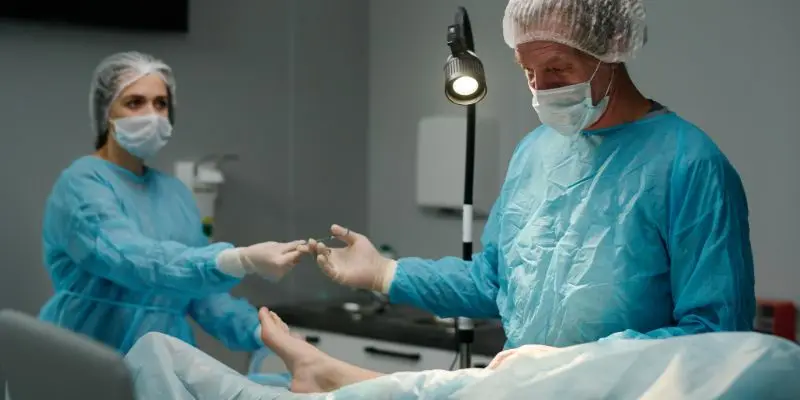
The chevron osteotomy is performed as an outpatient procedure, with local anesthesia of the foot. Yes, you remain awake during the procedure, but you feel absolutely nothing. In fact, many patients ask me questions while I operate!
It takes about 30-45 minutes. I make an incision about 4-5 centimeters long on the inside of the foot, then proceed with the V-shaped cut on the bone. The most delicate part? Moving the fragment into the correct position and securing it with screws. This is where experience makes all the difference.
The screws I use are titanium, very small. They'll stay in place forever, but they don't cause any discomfort. Many patients forget about them completely.
Recovery: What to Really Expect
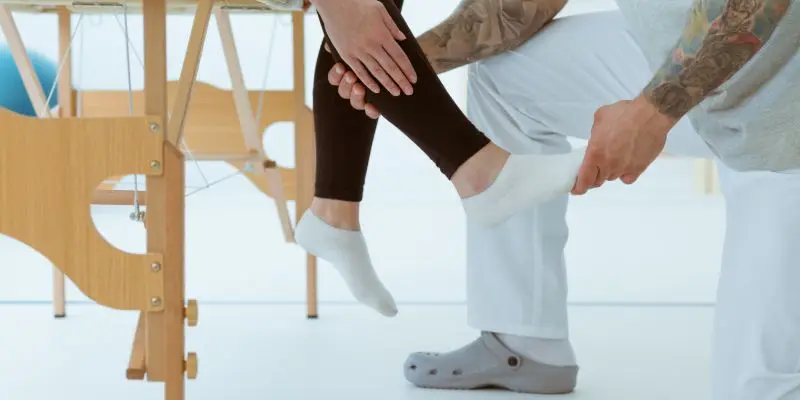
This is the part that concerns all my patients the most. The first month is the most delicate. You'll immediately walk in a rigid post-op shoe, but you'll need to limit weight bearing on the operated foot.
After six weeks, when the bone has begun to heal, you can gradually return to normal shoes. But be careful: wear comfortable, low-heeled shoes for at least another two to three months.
The pain? It's there in the first few days, I won't deny it. But it's manageable with regular painkillers. Most of my patients tell me it's less intense than they expected.
The swelling persists for a longer period of time—even 3-4 months. This is normal. The foot has undergone significant remodeling and needs time to adapt.
Risks and complications: let's talk about them clearly
Like any surgical procedure, the chevron osteotomy also has risks. Infection, healing problems, and joint stiffness are rare, but they do exist.
A specific complication of this procedure can be the loss of correction over time, especially if post-operative instructions are not followed. This is why I emphasize the recovery period.
Then there's the risk of load transfer—that is, the second toe may begin to cause problems. But with proper technique and careful patient selection, these problems are rare.
The results you can expect

Patient satisfaction is generally very high. We're talking about over 90% success rates, with pain relief and satisfactory aesthetic results.
However—and this is important—the operated big toe will never be identical to the one you never had problems with. It will function perfectly, but it may be slightly stiffer or have some minor limitations in movement.
One thing I like to emphasize: many patients tell me they wish they'd had the surgery sooner. "Doctor, I wasted years suffering for nothing!"
Costs and coverage in Italy
The cost of a chevron osteotomy in private practice generally varies between 3.000 and 6.000 euros, depending on the structure and complexity of the case.
The good news? If the conditions are met (significant pain, functional limitation), the procedure can also be performed under the National Health Service (NHS). Waiting times vary greatly from region to region, but it's an option worth considering.
Private insurance often covers this type of surgery, but it's always best to check your policy details first.
SmartHallux: Where we can help you

Here at SmartHallux, we specialize in foot and ankle surgery. Dr. Luigi Manzi, who has extensive experience in this field, provides each patient with a personalized treatment plan using the most modern techniques.
Our approach? Thorough assessment, intervention when necessary, and careful follow-up. We don't operate on everyone—only when it's truly the right choice for the patient.
The SmartHallux team treats conditions such as hallux valgus , Morton's neuroma , and other deformities that cause foot pain. Providing comprehensive support throughout the treatment process, SmartHallux can be a winning choice for effective treatment tailored to your needs. Book your specialist consultation with the SmartHallux team now (opens in a new tab).
Questions you often ask me
Doctor, how long will it take for me to put my heels back on?
This is especially true for young women! The answer is: it depends. Low heels (3-4 cm) after 3-4 months. High heels? It's best to wait at least 6 months, and in any case, use them sparingly.
Is the surgery very painful?
Postoperative pain is subjective but generally well-controlled. The first 2-3 days are the most uncomfortable, then it gradually improves. Local anesthesia lasts several hours after surgery.
Will I be able to play sports again?
Absolutely, but gradually. Light activity after 2-3 months, more strenuous sports after 4-6 months. I have patients who have started running marathons again!