
Percutaneous bunion surgery: when small gestures make a big difference
Percutaneous bunion surgery corrects hallux valgus through incisions of a few millimeters, with no open wound. How it works, who is eligible and the recovery.
By Dr. Luigi ManziUpdated on
Have you ever looked at your foot and thought, "How could it have gotten like this?" Hallux valgus is one of those conditions that develops gradually, almost without you noticing, until it becomes impossible to ignore.
Today I want to talk to you about "Percutaneous Hallux Valgus Surgery." It's a technique I use often in my practice and, I must say, has revolutionized the way we approach this problem. It's not magic, mind you, but the results I see every day convince me more and more that this is the right path for many patients.
When the big toe decides to "change direction"

Hallux valgus isn't just a cosmetic problem, as many people think. It's a true deformity of the forefoot where the big toe slants toward the other toes, creating that characteristic "bunion" on the inside of the foot. Interestingly, patients often tell me, "Doctor, I didn't notice it until I started feeling pain."
And they're right. Hallux valgus can develop silently for years. Then, one day, perhaps while trying on a new pair of shoes or after a long walk, the pain sets in. At that point, it becomes difficult to find comfortable shoes, walking becomes a problem, and the foot begins to seriously "complain."
Truth be told, there are several factors that predispose to this condition. Heredity plays a major role—if your mother or grandmother had bunions, you're likely to develop them too. Then there are tight, high-heeled shoes (yes, the ones that look so elegant but are painful on your feet), flat feet, and some rheumatic diseases.
The signals your foot sends you
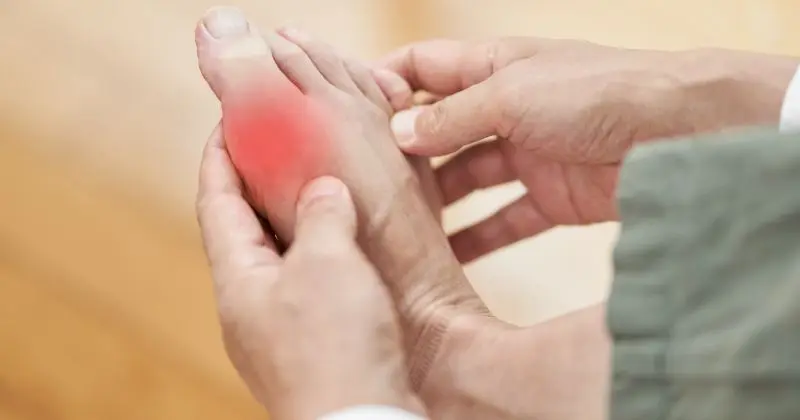
When bunions begin to bother you, the symptoms are quite clear. Pain is the first warning sign—a pain that patients often describe as "burning" or "throbbing," especially in the bunion area.
You may have felt the discomfort increase throughout the day, worsening when you walk a lot or when you wear closed shoes. Some patients tell me they wake up at night with their foot throbbing with pain.
But pain isn't the only problem. The deformity progressively worsens, the skin thickens and can become inflamed, and calluses often appear on the other toes, which "overlap" to make room for the deviated big toe.
The revolution of percutaneous technique
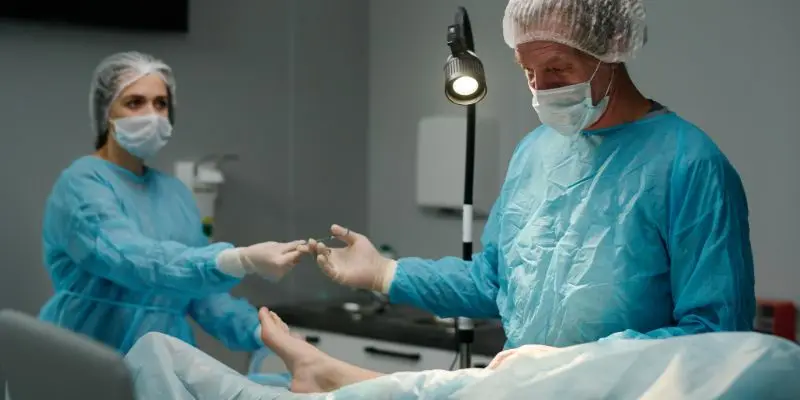
Now, this is the interesting point. Until a few years ago, when a patient needed surgery for bunions, it meant traditional open surgery with fairly large incisions, screws and plates, and a fairly long recovery time.
Percutaneous bunion surgery has completely changed the game. Think of this technique as "miniature surgery"—instead of opening, we work through tiny incisions, just a few millimeters in size, using specialized instruments that allow us to correctly reposition the bone.
The concept is brilliant in its simplicity: through these small “access ports” we can make the same corrections we did with traditional surgery, but with infinitely less trauma to the tissues.
During percutaneous surgery for hallux valgus, we use specialized mini-instruments. We perform osteotomies (that is, we "cut" the bone in the right places) to reposition it correctly. Everything is stabilized with small absorbable screws or sutures, which are practically invisible from the outside.
Why patients prefer this technique
The advantages of minimally invasive bunion surgery over the traditional approach are evident from the first post-operative day. The pain is significantly less—many patients tell me, "I didn't think it would be so bearable."
Recovery times are significantly reduced. While with traditional surgery we often expect 2-3 months for a complete recovery, with the percutaneous technique, many patients are back to walking normally in 4-6 weeks. Of course, every case is different, but experience tells me that the difference is truly noticeable.
And then there's the aesthetic aspect, which for many patients is as important as the functional one. The scars are practically invisible—we're talking about 2-3 millimeter spots that often disappear after a few months.
How we prepare for surgery together

When we decide that percutaneous hallux valgus surgery is the right solution for you, we begin a preparatory process that I like to share step by step with the patient.
First, we perform a thorough assessment. In addition to a clinical examination, specific X-rays are needed to accurately assess the angle of the big toe and best plan the surgery. Sometimes I also request a CT scan for a perfect 3D view.
Blood tests are routine, and if you have specific medical conditions, you may also need to get approval from your doctor or cardiologist. The goal is to arrive at the surgery in the best possible condition.
The day before your bunion surgery, I always give you precise instructions: fasting from midnight (important for the anesthesia), any medications you may need to stop, and how to arrange your return home. Small details that make all the difference.
What to expect after percutaneous correction

The post-operative period for minimally invasive bunion surgery is generally simpler than for traditional surgery. For the first few days, you'll need to keep your foot elevated as much as possible and wear a special shoe that protects the area during the procedure.
There's pain, I can't deny it, but it's manageable with regular painkillers. Most patients tell me it's much less intense than they expected. After 7-10 days, we remove the dressings and evaluate how everything is healing.
Physiotherapy isn't always necessary, but when it does help, it helps greatly in fully regaining mobility. I usually start recommending it after 3-4 weeks, when the tissues have begun to heal well.
One important thing: every patient has their own recovery time. Some are back to walking normally in a month, others take two. Age, general fitness, and the type of work you do—everything affects recovery time.
SmartHallux: Where we can help you

Dr. Luigi Manzi, who has gained specific experience in this field, follows each patient with a personalized path using the most modern techniques.
The SmartHallux team treats conditions such as hallux valgus , Morton's neuroma , and other deformities that cause foot pain. Providing comprehensive support throughout the treatment process, SmartHallux can be a winning choice for effective treatment tailored to your needs. Book your specialist consultation with the SmartHallux team now (opens in a new tab).
Our philosophy is simple: every foot is different, every patient has their own specific needs. There are no "standard" procedures—there are tailor-made solutions.
FAQ
Doctor, is percutaneous intervention always possible?
Not in all cases, to be honest. It depends on the degree of deformity and the specific characteristics of your bunion. In more severe cases, a traditional approach is sometimes still necessary. This is why a thorough assessment is important.
How much does percutaneous hallux valgus surgery cost?
Costs vary depending on the complexity of the case and the facility where the procedure is performed. In general, the percutaneous technique costs the same as traditional surgery, but the recovery benefits often make it more cost-effective in the long run.
After bunion surgery, will I be able to wear heels again?
This question is mostly asked by women, and understandably so! Once you've fully recovered, you can go back to wearing shoes with a reasonable heel. It's probably best to avoid very high heels, but elegant, comfortable shoes are definitely fine.
Can bunions return after surgery?
Recurrences do occur, but they are rare if the surgery is performed correctly and a few simple post-operative guidelines are followed. Choosing the right shoes, for example, remains important even after surgery.