
Hallux valgus arthrodesis: when is it really necessary to block the joint?
Hallux valgus arthrodesis fuses the big toe joint when the deformity is severe or combined with arthritis. When it is preferred, how it works and recovery.
By Dr. Luigi ManziUpdated on
When a patient walks into my office with a slight limp and says, "Doctor, my big toe hurts like hell and I can't even wear normal shoes anymore," we're often talking about hallux valgus. But sometimes. Sometimes we're dealing with something more complex, requiring a permanent solution: hallux valgus arthrodesis.
Now, I know the word "arthrodesis" can be scary. It sounds complicated, right? It's actually simpler than you think, though I admit it's a serious procedure. That's why I want to explain everything you need to know, in no uncertain terms.
What is hallux valgus arthrodesis really?

Hallux valgus arthrodesis is essentially this: we block the joint between the big toe and the first metatarsal. Permanently. The goal? To eliminate pain once and for all and correct the deformity that's ruining your life.
Let me explain. When the bunion is severe—and I'm talking about those cases where the big toe practically overlaps the second toe—the metatarsophalangeal joint is often so compromised that any other intervention would be like putting a Band-Aid on a failing dam.
With big toe arthrodesis, however, we remove the damaged joint surfaces and ensure the two bones fuse together in the correct position. Yes, you lose some movement in your big toe. But do you know what you gain? A pain-free life and the ability to walk normally.
It's different from an osteotomy (where we cut and reposition the bone) and different from a big toe prosthesis. It's the most radical solution, but also the most definitive.
Who really needs a hallux valgus arthrodesis?

Not all patients with hallux valgus require arthrodesis. In fact, it's reserved for specific cases that I see in my office and that I recognize immediately.
First of all, patients with very severe hallux valgus, often associated with hallux rigidus. This occurs when the joint is so compromised that it hurts even when standing still, not just when walking. The other day, a 65-year-old woman came to me who couldn't even wear slippers anymore. That was a perfect case for arthrodesis.
Then there are younger patients—even those in their 40s and 50s—who have already tried other surgeries without success. Or those with hallux rigidus arthrodesis, which is so advanced that the joint is practically destroyed. In these cases, hallux rigidus arthrodesis becomes the most logical option.
Age isn't an absolute limit, but lifestyle factors must be considered. If you're an athlete who plays sports that require a lot of push-off on the big toe, we might consider other options. But if your goal is to walk pain-free and wear normal shoes, arthrodesis may be perfect.
How does hallux valgus arthrodesis surgery work?
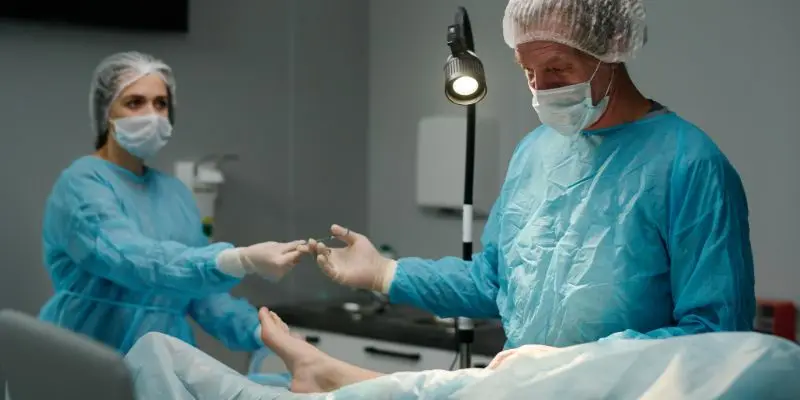
Hallux valgus arthrodesis surgery takes about an hour, or an hour and a half if the case is complex. It's performed under spinal anesthesia or local anesthesia with sedation—we'll decide together which you prefer.
The process is fairly straightforward. I make an incision on the big toe, remove the damaged joint surfaces, and reposition the toe in the correct position. I then secure everything with screws or plates—modern materials that integrate seamlessly with the bone.
The most important part? Positioning. The big toe must be perfectly aligned, because once it's healed, that's it. For this reason, I use specific guides and X-rays during the procedure. There's no room for approximation.
I use different surgical techniques depending on the case. Sometimes a simple metatarsophalangeal arthrodesis is enough, other times a more complex approach is needed. It always depends on the specific situation I find once I open the joint.
The risks you need to know about
Like any surgical procedure, bunion arthrodesis also has risks. I won't hide them from you because it's important you know everything.
The most common risk? Failure of the bone to heal. This occurs in about 5-10% of cases, especially in smokers or those with circulation problems. That's why I'll ask you to stop smoking for at least a month before surgery.
Then there's the risk of infection, which fortunately is low—we're talking about 1-2%—thanks to modern techniques and antibiotics. Numbness of the skin around the scar can occur, usually temporary but sometimes permanent.
One complication that worries me most? Persistent pain. It's rare, but it can happen, especially if there are problems with healing or if you develop complex regional pain syndrome. This is why postoperative follow-up is essential.
The good news is that by carefully following post-operative instructions, most of these risks are dramatically reduced.
What to expect after surgery
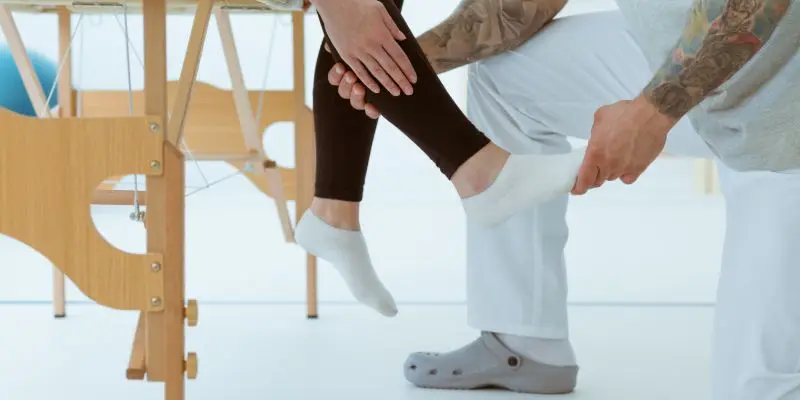
The first few days after bunion arthrodesis aren't easy, I won't deny that. Your foot will be swollen and painful, and you'll need to elevate it as much as possible. Pain medication will help, but you'll need to be patient.
For the first 6-8 weeks, you'll wear a special post-surgical shoe. No weight should be placed on the operated big toe. Zero. I know it's uncomfortable, but it's essential for the bone to heal.
After about two months, we begin to gradually regain weight. X-rays tell us if the bone is healing properly. Typically, three to four months after surgery, you can return to normal daily activities, including regular shoes.
Sports activity? It depends on the type of sport, but generally after 4-6 months you can resume everything, except perhaps sports that require rapid changes of direction. But most of my patients return to everything they did before. Pain-free.
Arthrodesis vs. Other Options: When to Choose Which

Patients often ask me: “But can't we do a less invasive procedure?” The answer always depends on the specific case.
Osteotomy can correct the deformity while maintaining joint motion, but it only works if the joint isn't severely damaged. If there's severe arthritis or the big toe is stiff, osteotomy is doomed to failure.
A big toe prosthesis? It may seem attractive because it preserves movement, but it has a limited lifespan and doesn't always work well in active patients.
Arthrodesis, on the other hand, is permanent. Once it's healed, you'll have no more problems. It's true, you lose some movement in your big toe, but most people don't even notice it in their daily activities. And you can wear any shoe you want, even heels.
The costs of hallux valgus arthrodesis
The average cost of hallux valgus arthrodesis surgery is between €9.000 and €10.000. I know, it's a lot. But consider that it's a lifelong investment—literally.
The price includes the procedure, hospitalization (usually one night), materials used, and all post-operative follow-up. Some clinics offer installment plans to make the procedure more affordable.
I always recommend that you carefully research what's included in the quote. Some facilities charge additional fees for checkups or physiotherapy, which should be part of the overall package.
SmartHallux: Where we can help you

Here at SmartHallux, we specialize in foot and ankle surgery. Dr. Luigi Manzi, who has extensive experience in this field, provides each patient with a personalized treatment plan using the most modern techniques.
Our strength lies in our comprehensive approach: from the initial consultation to surgery, all the way to complete rehabilitation. We never leave you alone on this journey, which I know may seem challenging, but which will change your quality of life.
The SmartHallux team treats conditions such as hallux valgus , Morton's neuroma , and other deformities that cause foot pain. Providing comprehensive support throughout the treatment process, SmartHallux can be a winning choice for effective treatment tailored to your needs. Book your specialist consultation with the SmartHallux team now (opens in a new tab).
Questions you often ask me
Doctor, does hallux valgus arthrodesis hurt a lot after surgery?
Postoperative pain is generally well controlled with appropriate pain medications. The first 3-4 days are the most uncomfortable, then it gradually improves. With a cast or special shoe for 6-8 weeks, most patients return to normal activities after 3-4 months without any problems.
But how much will this procedure really cost me?
The cost of hallux valgus arthrodesis varies between €9.000 and €10.000, depending on the complexity of the case and the technique used. It includes everything: surgery, hospitalization, materials, and post-operative checkups. Financing plans can be considered to spread the cost.
When will I be able to go back to sports?
Full recovery time is approximately 3-4 months for daily activities, 4-6 months for sports. It depends on age, general health, and the type of sport practiced. But once it's well-established, you can do virtually anything without limitations.