
Complications of Bunion Surgery: Everything You Need to Know
The complications of bunion surgery: recurrence, stiffness, infection, nerve irritation and overcorrection. The warning signs and how to lower the risk.
By Dr. Luigi ManziUpdated on
In this article, titled "Complications of Bunion Surgery," we'll explore the complications of bunion surgery in detail, providing you with all the information you need to make an informed decision. Read on to find out what to expect, how to prevent complications, and how to manage post-operative recovery.
Hallux valgus is a common problem that can cause pain and limit mobility. This foot deformity is most often due to a genetic predisposition, but also to wearing tight shoes and certain medical conditions. The first metatarsal of the foot tends to twist outward, pushing the big toe onto the other toes.
In more severe forms, bursitis, also called “onion bursitis,” occurs, which causes pain and thickens due to constant contact with the shoe.
Generally, attempts are made to limit the negative effects of this condition with conservative treatments, but if the patient continues to suffer despite using an insole and the pain becomes increasingly difficult to bear, hallux valgus surgery is probably the most effective solution. But what exactly does this procedure involve? Essentially, the operation aims to restore the bone's original alignment and correct the deformity.
Bunion Surgery: What to Expect
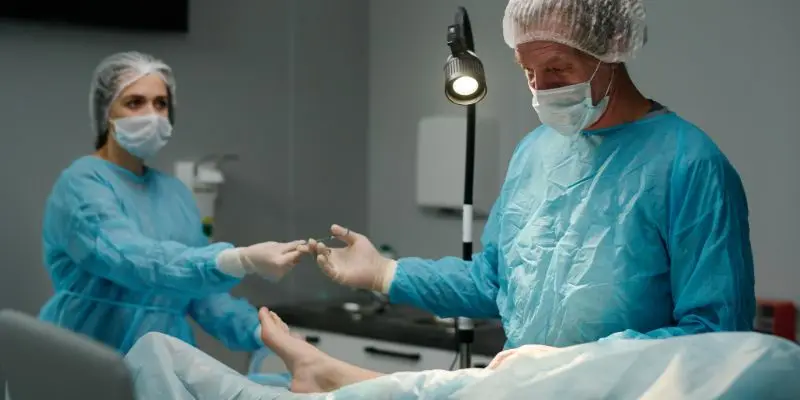
Hallux valgus surgery can be performed using various techniques, depending on the patient's needs. Hallux valgus surgery can be performed traditionally with a single incision. In recent years, minimally invasive techniques have become increasingly popular, as they allow for treatment of the condition without requiring large incisions thanks to the use of small holes.
It's important to carefully choose not only the surgeon who will perform the procedure but also to have the type of osteotomy explained to them, trying to understand any potential complications. Risks associated with surgery are very rare, especially with non-invasive surgery.
Postoperative recovery from surgery, regardless of the technique, is approximately 30-40 days. Treatment involves bone resection, which requires a reasonable amount of time to heal.
Like any surgical procedure, bunion surgery can lead to complications. It's important to be aware of these risks to face the procedure with peace of mind.
- Immediate complications:
- Infections, or A risk common to all surgical procedures. They manifest themselves with redness, swelling, and pain in the operated area;
- Pain which can be managed with painkillers;
- Bleeding: some degree of bleeding is expected, but in rare cases it may be more heavy than normal;
- Allergic reactions;
- Nerve injuries, although rare, they can cause numbness, loss of sensation or tingling in the foot;
- Deep vein thrombosis.
- Long-Term Complications:
- Joint stiffness, with Your foot may feel less flexible after surgery.
- Recurrence of hallux valgus or foot deformity;
- The surgery may increase the risk of developing arthritis in the big toe joint.
Certain factors can increase the risk of complications after bunion surgery. These include excessive weight, which can place greater stress on the operated foot. Smokers generally experience a slower healing process and increase the risk of infection. Finally, diabetic patients and those suffering from cardiovascular disease are at greater risk of infection and healing problems.
Preventing complications related to hallux valgus surgery

Prevention is essential to reduce the risk of complications. Here are some helpful tips. Seeking a surgeon who specializes in foot and ankle surgery is crucial. Following their instructions, both before and after surgery, is essential for a successful recovery and a speedy recovery.
It's important to be aware of potential post-operative limitations and follow an appropriate rehabilitation program. Physical therapy can help restore foot mobility and strength, and if complications arise, it's important to address them promptly.
The hallux valgus correction techniques used at SmartHallux centers are extremely precise and minimally invasive . State-of-the-art percutaneous surgery allows for the correction of all deformities without incisions, resulting in a significant reduction in pain, improved foot function, and increased mobility of the forefoot joints.
All this translates into an improved quality of life for patients who can go back to wearing shoes they couldn't wear before and resume physical activity without pain.
The surgery can also prevent the onset of complications such as bursitis and metatarsalgia and improve the patient's posture, in addition to the indirect benefit related to the resumption of sports activities.
SmartHallux: An innovative approach to foot care

If you have hallux valgus and are considering surgery, contact us for a video consultation with Dr. Luigi Manzi , a specialist in foot and ankle surgery and SmartHallux 's Italian representative.
Book an appointment now for a personalized video consultation and find out if the latest-generation minimally invasive bunion surgery, which unlike other minimally invasive techniques reduces the risk of recurrence while ensuring long-lasting correction, faster recovery, and less pain, is the right solution for you!