
Foot Bones: Names and Everything You Need to Know
The foot has many bones divided into tarsals, metatarsals and phalanges. Their names, how they fit together and the problems that most often affect them.
By Dr. Luigi ManziUpdated on
The foot is made up of 26 bones, about 1/8 of the total number of bones in the human body. Its skeletal structure is complex, made up of numerous small bones that work together. The bones of the foot allow us to walk, run, jump, and perform many daily activities that we often take for granted.
The bones of the foot: a perfect structure
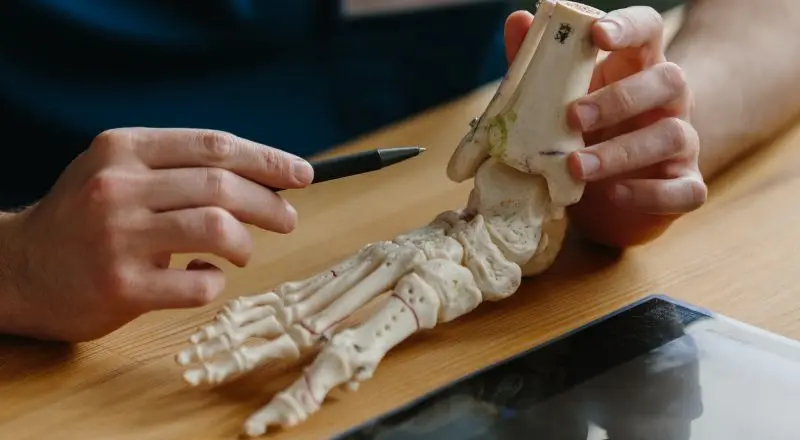
The skeleton of the foot is made up of 26 bones . These can be divided into three main groups:
- Tarsus: includes 7 bones that form the back of the foot. Among these we find the calcaneus (heel), the talus, the cuboid, the navicular, and the three cuneiforms (medial, intermediate, and lateral).
- Metatarsus: made up of 5 metatarsal bones, which connect the tarsus to the toes and contribute to the stability of the foot.
- Phalanges: there are 14 bones that make up the toes. Each toe has three phalanges (proximal, middle, and distal), except the big toe, which only has two.
Each bone performs a specific function: some bones support the body's weight, while others allow flexibility and adaptation to the surfaces we walk on.
Common foot bone problems

Like any other part of the body, the foot can also be subject to problems. Here are some of the most common conditions:
- Fractures: can occur due to trauma, falls or excessive stress.
- Osteoarthritis: affects the joints, causing pain and stiffness.
- Hallux valgus: a deviation of the big toe towards the other toes, often associated with pain and inflammation.
- Metatarsalgia: pain localized in the front part of the foot, due to overload.
- Morton's neuroma: a thickening of a nerve between the fingers, causing tingling and pain.
- Plantar fasciitis o heel spur: an inflammation of the plantar fascia, which causes pain under the foot, especially in the morning.
The most common symptoms include pain, swelling, difficulty walking, and deformities. There can be multiple causes: trauma, wear and tear, genetic predisposition, or ill-fitting footwear.
Diagnosis and treatment

If you experience persistent foot pain or discomfort, it's important to see a specialist. Your doctor will perform a physical examination and, if necessary, order X-rays, MRIs, or ultrasounds to better assess the situation.
Treatments vary depending on the specific problem. In some cases, medications, physical therapy, or the use of orthopedic insoles may suffice. In more complex cases, surgery may be necessary.
How to prevent foot problems

To understand the causes of any pain or injuries, and prevent future orthopedic problems, there are some best practices to follow.
Wearing comfortable shoes that fit the shape of your foot allows you to absorb shock while walking and distribute your body weight evenly, reducing stress on other parts of the body, such as the knees and spine.
Stretching and strengthening exercises help keep your feet flexible, but also increase range of motion, strength, health, and vitality.
SmartHallux: a specialized center for foot health

Keeping your feet healthy can help reduce pain and relieve muscle soreness. Therefore, if you have toe problems, don't ignore your body's signals. If you experience pain or discomfort, consult a specialist to find the best solution for you.
SmartHallux is a specialized foot surgery center with offices in Milan, Rome, and Naples. The team, led by Dr. Luigi Manzi , uses modern techniques to treat the main foot and ankle pathologies.
The team treats conditions such as hallux valgus , Morton's neuroma , and other deformities that cause foot pain. Providing comprehensive support throughout the treatment process, including post-operative recovery, SmartHallux can be a winning choice for effective treatment tailored to your needs. Book your video consultation with Dr. Luigi Manzi now.