
Navicular bone in the foot: when it hurts, what it means, and how to treat it
The navicular bone sits on the inside of the midfoot. Why navicular bone pain occurs, from stress fractures to an accessory navicular, and how it is treated.
By Dr. Luigi ManziUpdated on
It's not a body part we often talk about, but when it bothers us... it really makes itself felt. The navicular bone of the foot is a small but important structure, hidden on the inside of the foot, which plays a fundamental role in ensuring stability and movement.
When it becomes inflamed, ruptured, or develops vascular disease, every step can become painful. Understanding what it is, why it can cause problems, and what can be done is the first step to walking well again.
What is the navicular and what is it for?
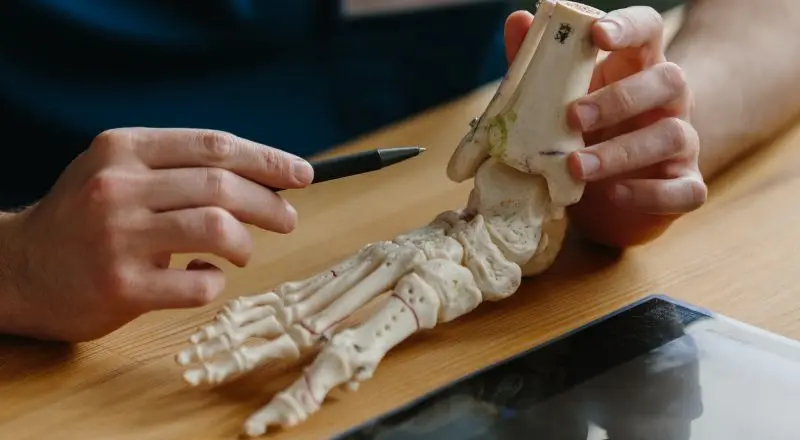
The navicular bone is located between the talus (at the top) and the cuneiforms (at the front), in the midfoot. It serves as a connection point and "sorter" of forces during walking: it absorbs, distributes, and supports.
When everything is working, you don't even notice. But if something happens—a fracture, inflammation, or a pathology—the pain can become very sharp, especially in the upper part of the foot, near the ankle.
Navicular fracture: more common than you think

It often occurs in those who run, jump, or play sports that put stress on the foot. But it can also occur following a direct trauma or a fall. The pain, in these cases, is concentrated in the central part of the back of the foot, and there may be swelling, difficulty walking, and sometimes even a slight bruise.
Diagnosis is made through physical examination and X-rays. In milder cases, a brace or cast is sufficient. However, if the fracture is displaced or involves the joint, surgery is necessary to stabilize the navicular bone.
Osteonecrosis and Muller-Weiss syndrome

In some patients, especially adults, the navicular bone can develop osteonecrosis: that is, its central portion stops receiving blood and begins to collapse. This is a serious, often progressive condition that can cause navicular bone collapse and foot deformity.
A special case is Muller-Weiss syndrome , which mainly affects women between the ages of 40 and 60. The pain increases with physical activity and tends to be localized on the inside of the foot.
Here too, early diagnosis is crucial: it can make the difference between effective conservative treatment and the need for surgery.
Navicular osteoarthritis and other problems

Wear and tear of the navicular joint can lead to osteoarthritis , with chronic pain, stiffness, and limited movement. Other conditions related to the navicular joint include tarsal coalitions (fusion of bones) and foot deformities such as flatfoot or valgus foot.
Each situation must be evaluated based on the symptoms, the structure of the foot and the person's lifestyle.
And when is it necessary to operate?

Surgery becomes necessary if the pain doesn't respond to conservative treatments, or if the navicular bone has been severely fractured, collapsed, or deformed. Techniques vary: screw fixation , arch reconstruction , or even joint fusion may be used in more advanced cases.
After surgery, rehabilitation plays a key role: regaining strength, mobility, and proper support takes time, but with a guided program, excellent results can be achieved.
The right step is to get seen by an expert

If you experience persistent pain in the middle of your foot, or if you've been diagnosed with a fracture or a problem with your navicular bone, contact the person who cares for you every day. Dr. Luigi Manzi , with his SmartHallux team , will help you understand the problem and choose the most suitable treatment for you.
The team treats conditions such as hallux valgus , Morton's neuroma , and other deformities that cause foot pain. Providing comprehensive support throughout the treatment process, including post-operative recovery, SmartHallux can be a winning choice for effective treatment tailored to your needs. Book your specialist consultation with the SmartHallux team now (opens in a new tab).
FAQ
What are the symptoms of a navicular bone fracture?
Pain in the top of the foot, swelling, difficulty walking, and sometimes visible bruising.
How long does it take for the navicular bone to heal?
Generally 6-8 weeks, but it depends on the type of fracture and the treatment chosen.
Is it always necessary to operate on the navicular bone?
No. Many fractures heal with a cast or brace. Surgery is considered if the fracture is complex or if conservative treatments aren't enough.