
Guide to your ankle's well-being
A guide to ankle health: how the joint works, the habits that protect it, the most common problems and the warning signs that call for a specialist.
By Dr. Luigi ManziUpdated on
One of the most important, yet underestimated joints in the human body is the ankle.
Although the ankle allows us to carry out all the daily and fundamental activities, such as walking and keeping our balance , we understand its inestimable value only when it somehow gets sick and stops supporting us every day. In this article entitled "Guide to the well-being of your ankle" we will see how to take care of it.
A broken , sprained , or inflamed ankle makes it almost impossible to live peacefully, and it is at this moment that we understand how fundamental ankle health actually is for our body and our daily lives.
Ankle health and well-being are therefore essential to maintaining our quality of life. Let's discover together how to care for our ankles.
Ankle: anatomy and importance
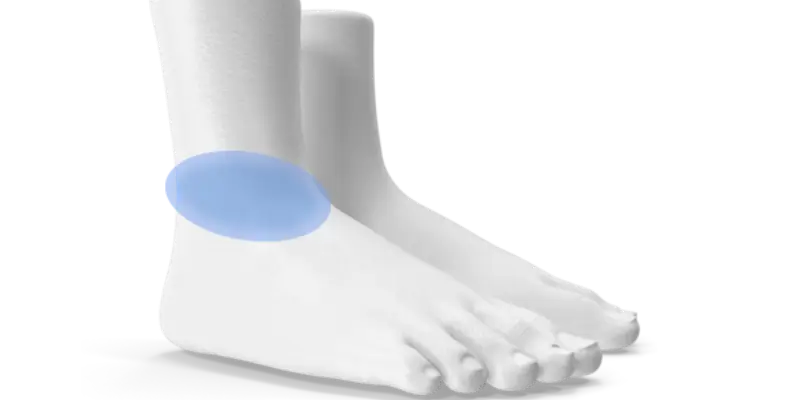
With the main function of connecting the foot to the leg , the ankle stabilizes the body, allowing each person to balance, walk, and everything that goes with it.
But how is the ankle formed anatomically?
The ankle is made up of three main elements :
- Ossa: tibia, fibula and talus;
- Ligaments;
- Muscles e tendons.
Let's analyze these three elements in detail.
The tibia is considered the weight-bearing bone of the ankle, while the fibula provides lateral support . Together, the tibia and fibula form a wishbone-like structure that serves to envelop the talus. The three bones, arranged in this way, create the ankle joint.
More, and less simply organized, are the ligaments . On the inside of the ankle is the deltoid ligament , while on the sides are the ligaments that support and stabilize the ankle's movement: the calcaneofibular ligaments, and the anterior and posterior talofibular ligaments.
Last but not least, there are tendons and muscles . Among these, the largest and most important is the Achilles tendon, which, together with the other smaller tendons, provides support to the ankle , thus enabling movement of the joints and, consequently, of the foot.
It must always be kept in mind that the ankle could not function properly, let alone exist, without these 3 fundamental elements that work in synergy with each other.
Pathologies affecting the ankle

Walking, balancing, running, and jumping are common daily activities that, however, continuously put stress on the joints of the feet and ankles.
Precisely because of this continuous stress and the resulting strain , the ankle can often be affected by various pathologies.
We list the most common and well-known ones:
- Osteoarthritis: gradual wear and tear and degeneration of cartilage tissue, often linked to previous trauma, a fracture or pathologies such as rheumatoid arthritis
- Fractures: caused by possible traumas and accidents;
- Dislocations e distortions: ligament damage due to trauma and accidents;
- Plantar fasciitis: as per the wording, it is an inflammation of the plantar fascia;
- tendonitis: inflammation of one or more tendons, caused by poor posture and bad habits, often affecting the Achilles tendon or the tibialis posterior;
- Rheumatoid arthritis: an autoimmune disease that can affect various joints in the body, including the ankle;
- Tarsal tunnel syndrome: consists of a compression of the tibial nerve which is located inside the tarsal tunnel;
- Neuropathy: diseases that affect the nerves of the ankle
All these problems and pathologies manifest themselves with common symptoms that often include pain , stiffness and swelling.
Symptoms of ankle problems
As mentioned, the most common symptoms of ankle problems and pathologies are stiffness , pain and swelling.
The pain can be acute and localized and can also become chronic.
Redness and swelling are other symptoms that affect the ankle, along with joint weakness and stiffness.
All these symptoms are easily recognizable because they cause, among other things, difficulty in keeping balance and walking , as well as a significant limitation of movement.
All these symptoms, therefore, contribute to lowering a person's quality of life , immediately alarming them and thus setting off a fundamental alarm bell to ascertain the presence of an ankle pathology.
It is therefore important not to underestimate or ignore the symptoms listed and to contact a doctor as soon as possible to be able to treat the condition in time, before it worsens.
Diagnosing ankle problems.

To treat and restore the health of a compromised ankle , it is necessary, if not essential, to obtain an accurate and, above all, timely diagnosis.
If you seek the care of a specialist doctor, you will have to undergo a diagnostic test.
This test, like almost all those used to diagnose foot and ankle pathologies, follows several specific steps.
The doctor will begin with a detailed history of the ankle problem , as well as compiling a personal file to catalog and describe the patient's general health.
We will proceed with carrying out X-rays, ultrasounds and magnetic resonance imaging , to obtain internal images that will help the doctor understand the specific nature of the pathology.
Once the correct diagnosis has been obtained, the doctor will proceed to explain and evaluate, together with the patient, what treatments and cures may be necessary to resolve the problem.
SmartHallux: The best treatments for your ankle

If the suspicions of an ankle pathology are, finally, well-founded, you should rely on a doctor, or a team of medical specialists.
SmartHallux is an industry leader in the treatment of foot and ankle conditions, offering both the highest level of professionalism and patient care, as well as an emergency service with advanced and personalized treatments.
Thanks to the use of innovative techniques to regenerate damaged ankle tissue , and thanks also to the ad hoc treatments designed for each individual type of patient , SmartHallux ensures the utmost care and professionalism aimed at resolving ankle pathologies as best and as quickly as possible.
When it comes to foot and ankle health, as we've explained, it's crucial to act promptly and seek professional advice.
Book your visit with SmartHallux

It's also essential to schedule an appointment as soon as possible to determine the underlying problem with your ankle.
SmartHallux, once again, offers you the fastest and safest solution to book your first visit immediately.
Booking an appointment with SmartHallux is as simple as it is essential for the health of your ankle.
By clicking here , you can choose which type of visit to opt for, online or in person, also choosing which city to carry out the in-person visit in.
For a healthy and pain-free life, always pay attention to the health of your feet and ankles.