
Heel bruise: what you need to know when your heel really hurts
A heel bruise, or bruised heel bone, usually follows a hard landing or a stone under the foot. The symptoms, how long it takes to heal and how to treat it.
By Dr. Luigi ManziUpdated on
Have you ever hit your heel hard on a corner? Or maybe jumped off a step that was a little too high and felt that dull pain shoot through your entire foot? Well, you've probably had to deal with a heel contusion.
In my office, I often see patients limping in, with that slightly worried expression of someone who doesn't know exactly what happened to their foot. "Doctor, I hit my heel hard three days ago, and it still hurts like hell." It's a phrase I hear at least once a week.
A heel bruise is more common than you might think. And above all, it's one of those injuries that may seem trivial but, if left untreated, can become more complicated.
What exactly is a heel contusion?

The calcaneus is the largest bone in the foot. It's what forms the heel, so to speak. When we talk about a heel contusion, we're talking about trauma that affects both the bone and the surrounding soft tissues—muscles, tendons, ligaments, and skin.
Think of the heel as the pillar of your foot. It's designed to support your entire body weight when you walk, run, or jump. But when it experiences direct trauma—say, a fall, a hard impact, or a bad landing after a jump—it can become bruised.
The interesting thing is that heel trauma can be of two types. There's direct trauma, when you hit something, and indirect trauma, when, for example, you land badly after a jump. In both cases, the tissues are damaged and the inflammatory process we call a contusion begins.
The most common causes I see

How does it happen, anyway? Well, there are various causes. The other week, a bricklayer came to me who had fallen from a five-foot scaffolding, landing on his heels. A pretty serious injury.
But you don't have to fall from who knows where. Sometimes it's enough to go down the stairs badly. Or jogging on uneven terrain and stumbling on a rock. I've seen heel contusions caused by a simple Sunday soccer game—a tackle, a jump to head the ball, and a botched landing.
The wrong shoes don't help. If you run in worn-out shoes or shoes without cushioning, the risk increases significantly. Age also plays a role: as we age, tissues become less elastic and are more easily damaged.
Symptoms You Shouldn't Ignore

Pain is the first warning sign. It's not just any pain—my patients describe it as "a deep stabbing pain, like someone hammering a nail into my heel." It gets worse when you put weight on your foot. It gets worse when you walk.
Swelling occurs almost immediately. The heel area swells and becomes tense. Sometimes a prominent purple bruise appears, which can extend toward the sole of the foot.
What most affects patients is the difficulty walking normally. "Doctor, I'm forced to limp; I can't even put my heel on the ground." It's understandable: the heel is essential for normal walking.
But be careful. How can you tell if it's a simple bruise or something more serious, like a fracture? A heel fracture presents more intense symptoms: the pain is unbearable, the swelling is massive, and you often can't stand at all. When in doubt, it's best not to wait.
How I get to the diagnosis

When a patient comes to my office with a suspected heel bruise, the first thing I do is listen. "Tell me exactly how it happened." The dynamics of the injury already tell me a lot.
Then I move on to the clinical examination. I look, touch (gently!), assess the swelling and tender points. I ask the patient to try to walk, if he can. I check for signs of a fracture—deformity, crepitus, excessive pain when pressed.
Sometimes an X-ray is necessary. Not always, but if I suspect a fracture, it's best to check. I reserve other tests, such as ultrasound or MRI, for specific cases—when symptoms aren't improving as expected or when I suspect soft tissue injuries.
Experience helps a lot. After years of practice, I can often understand the severity of the problem during the initial consultation.
How to treat a heel bruise

The RICE protocol is still valid: rest, ice, compression, elevation. But be careful—it's not necessarily enough.
Rest really means rest. It's not "I'm walking a little less than usual." It means avoiding putting weight on the heel for a few days. Ice should be applied for 15-20 minutes several times a day, always with a cloth between the skin and the ice to avoid frostbite.
For pain, anti-inflammatory medications like ibuprofen can help. But don't overdo it—they're meant to manage the pain, not mask it and keep you going as if nothing was wrong.
In some cases, I prescribe physical therapy. Once the acute pain subsides, the therapist can help with specific exercises to regain mobility and strength. But only when the time is right—starting too early can make things worse.
How long does it take to heal?

“Doctor, when will I be able to walk normally again?” That's the question everyone asks me. The honest answer? It depends.
A minor bruise can heal in a week. More serious ones can take up to a month. The patient's age, general health, and adherence to my instructions all play a role.
I usually see gradual improvement: first the pain at rest decreases, then the pain when walking, and finally the swelling goes down. It's important to be patient and not rush things.
Prevention: better to avoid the problem
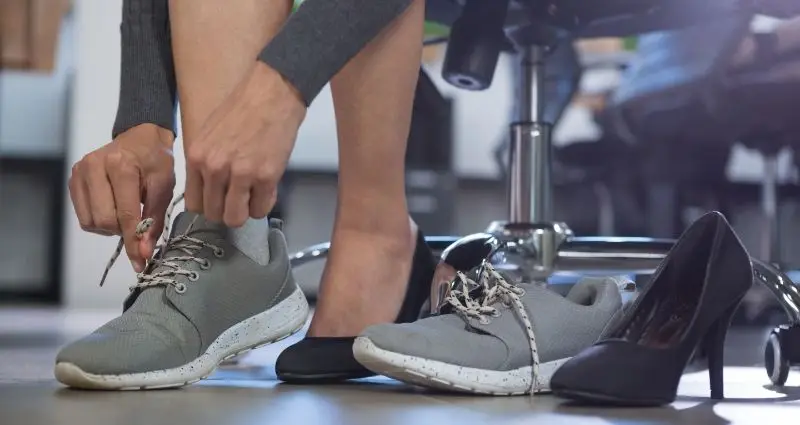
How can you prevent heel bruises? Proper footwear is essential. If you play sports, invest in specific footwear with good cushioning. If you work on construction sites, always wear safety shoes.
Be careful on uneven terrain. When running or walking on uneven surfaces, go slower and watch your step. It may seem trivial, but many injuries could be avoided this way.
Warming up before physical activity helps. More elastic muscles and tendons absorb impacts better.
When things get complicated

Not everything always goes smoothly. Sometimes the bruise can become complicated. Infection is rare but possible, especially if there's an open wound. Symptoms not to be underestimated: increasing redness, heat, fever, and discharge.
Venous thrombosis is another possible complication, though uncommon. If you notice swelling that increases instead of decreasing, pain that changes in severity, or if your foot turns blue, it's best to call immediately.
In some predisposed patients, a simple bruise can trigger chronic problems like heel pain or plantar fasciitis. This is why it's important to get proper treatment right from the start.
When you really need to worry

There are situations where you can't wait. If the pain is unbearable from the moment of the injury, if you can't stand at all, or if your foot is clearly deformed, go to the emergency room.
Other warning signs: persistent numbness or tingling, worryingly discolored skin, fever that appears after the injury.
And then there's common sense: if after a week of rest and treatment you don't see any improvement, don't wait any longer. Better another checkup than an overlooked complication.
SmartHallux: Where we can help you

Here at SmartHallux, we specialize in foot and ankle surgery. Dr. Luigi Manzi, who has extensive experience in this field, provides each patient with a personalized treatment plan using the most modern techniques.
The SmartHallux team treats conditions such as hallux valgus , Morton's neuroma , and other deformities that cause foot pain. Providing comprehensive support throughout the treatment process, SmartHallux can be a winning choice for effective treatment tailored to your needs. Book your specialist consultation with the SmartHallux team now (opens in a new tab).
Questions you often ask me
Can I walk with a heel bruise?
It depends on the severity. If you can tolerate the pain without a noticeable limp, a few steps are fine. But if the pain forces you to walk in an altered way, complete rest for a few days is best. You risk overloading other parts of the foot and creating secondary problems.
Is ice always good?
For the first 48-72 hours, yes, it's helpful for reducing swelling and pain. After that, you can alternate ice and heat. Some people respond better to moist heat after the acute phase. Experiment and see what gives you the most relief.
How long does the swelling last?
The swelling usually begins to subside after 3-4 days, but milder forms can persist for weeks. If the swelling hasn't subsided after two weeks, it's best to see a doctor.