
Neuroma surgery: when foot pain becomes a surgical problem
Neuroma surgery removes or decompresses the thickened nerve, most often Morton's neuroma, when injections and insoles fail. How it works and recovery.
By Dr. Luigi ManziUpdated on
Have you ever felt like an electric shock under your foot? Or maybe that stinging pain between your toes that gets worse when you put on shoes? You might be dealing with a neuroma.
I know, the name sounds a little scary. But don't worry: let's talk about it together, as I always do here in the office with my patients. Neuroma is one of those conditions that, once understood, can be treated very well. After all, knowing the problem is half the solution.
Let's look together at what it really means to have a neuroma and when neuroma surgery might be necessary.
What exactly is a neuroma?

So, imagine the nerves in your foot as electrical cables. A neuroma is essentially a benign "ball" growing around one of these cables. It's not cancer—that's important to clarify right away. It's simply nerve tissue that, for various reasons, has thickened and formed a kind of nodule.
The most common is Morton's neuroma. It's usually located between the third and fourth toes. You've probably heard of it, right? When you have it, it's like having a pebble in your shoe. Except the pebble isn't there—it's the nerve that's "pissed off," so to speak.
In my office, I see many cases like this, especially women who have worn heels for years. But don't think it's just the dress shoes that are to blame—we'll get back to that shortly.
Why does this blessed neuroma arise?

Here's a question I get all the time. The answer, truth be told, isn't exactly simple. There's no single cause. It's a bit like when a car breaks down: it's rarely just one thing that goes wrong.
High-heeled shoes are a significant factor, that's true. When you walk in heels, you compress the ball of your foot into a narrow space. Think of your nerves like spaghetti: if you repeatedly squeeze them, sooner or later they'll become irritated. And an irritated nerve can thicken, forming a neuroma.
But it's not just a matter of heels. I've also seen neuromas in athletes who run a lot, or in people with flat feet. Sometimes there's an anatomical predisposition—some of us simply have nerves positioned in a way that makes them more vulnerable to compression.
The other day, a patient came to me who had been a waiter for thirty years: always on his feet, always wearing tight safety shoes. He had developed a serious neuroma. In short, every foot has its own story.
How do I know if I have a neuroma?

The symptoms are quite characteristic, once you know them. The pain is unique: it's often like an electric shock that starts in the fingers and travels upward. Some patients tell me, "Doctor, it's like someone pressed a button that sends electricity to me."
The pain typically worsens when wearing tight shoes or heels. Many tell me that in the morning, barefoot, they feel relatively fine. Then they put on shoes and the ordeal begins. There's also this strange feeling of numbness between the toes, as if the foot were "asleep."
An interesting thing I often notice: patients tend to take off their shoes and massage their feet. It's an instinctive gesture—they're trying to "reactivate" circulation and relieve nerve compression.
If the neuroma is large, you may also feel a lump under the skin. Not always, but sometimes.
How we diagnose here in the office

When you come to me about this problem, I listen first. Really. The symptoms of neuroma are so characteristic that often, even as you tell me what you're feeling, I have a pretty clear idea.
Then I'll examine you. I'll press on specific points on your foot to see where it hurts. There's a special test we do: it's called the Mulder test. I compress your foot laterally while pressing from below—if there's a neuroma, you'll often hear a "click" and you'll jump in pain.
At this point, if I'm fairly confident in the diagnosis, I might order an ultrasound. It's a simple, non-invasive test that allows us to "see" the neuroma. In some more complex cases, I use MRI, but honestly, ultrasound is sufficient in most cases.
When is surgery really necessary?

This is the million-dollar question. Not all neuromas require surgery—in fact, many can be managed well without surgery.
I always try conservative treatments first. Custom insoles to redistribute the load, more comfortable shoes, sometimes cortisone injections. I've seen patients feel great for years simply by changing their footwear.
But when is **neurinoma surgery** necessary? When the pain affects your daily life. If you can no longer walk normally, if you constantly have to take off your shoes, if the pain wakes you up at night—then it's time to consider surgery.
The other important indicator is the response to conservative treatments. If there is no significant improvement after three to four months of non-surgical therapies, then surgery becomes a viable option.
How does neuroma surgery work?
The operation itself isn't terribly complicated, but it requires precision. It essentially involves removing the thickened piece of nerve. I know, it sounds brutal, but it's actually the most effective solution.
There are two main approaches. The most common is the plantar approach—I make a small incision on the sole of the foot, locate the neuroma, and remove it. The alternative is the dorsal approach, from the top of the foot, which I use in selected cases.
Microsurgery allows me to be very precise. With the operating microscope, I can clearly see the tissue and preserve the surrounding healthy structures as much as possible.
The procedure usually lasts 30-45 minutes. It's a day surgery procedure—you come in in the morning and leave in the afternoon. Local anesthesia is used in most cases, although some patients prefer sedation.
Recovery: What to Expect After Surgery

Here's the part that interests everyone: "Doctor, when will I be able to walk normally again?"
The answer always depends on the individual case, but generally recovery is fairly predictable. For the first few days, you'll need to keep your foot elevated as much as possible. I'll give you special shoes—called post-surgical shoes—that protect the operated area.
After about a week, the stitches are removed. From then on, you can gradually resume walking, always wearing protective shoes. Normal walking is usually resumed after 3-4 weeks.
An important thing to know: where we remove the neuroma, there will be an area of numbness. This is normal and to be expected—we had to sacrifice a piece of nerve. Most patients adapt very well to this small "side effect," especially considering that the pain is gone.
How to prevent neuroma
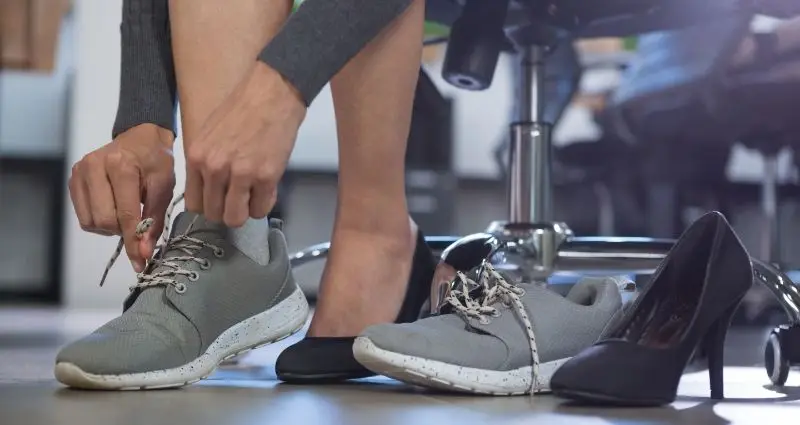
Prevention is better than cure, the English say. And they're right.
The most important thing is shoes. I'm not saying you should throw away all your heels—but use them wisely. Alternate them with more comfortable shoes. Your feet need to "breathe" and move naturally.
If you play sports, choose technical shoes that are appropriate for your activity. Runners, for example, should replace their shoes every 500-600 kilometers—worn soles no longer provide adequate cushioning, which can put strain on the nerves.
Also pay attention to your weight: every extra kilo puts four extra kilos of pressure on your feet when you walk. This isn't meant to scare people, but it's a biomechanical fact.
SmartHallux: Where we can help you

Here at SmartHallux, we specialize in foot and ankle surgery. Dr. Luigi Manzi, who has extensive experience in this field, provides each patient with a personalized treatment plan using the most modern techniques.
Our philosophy is simple: we always try all non-surgical alternatives first. Surgery is a last resort, not the first. But when necessary, we perform it with all the experience and technology available.
The SmartHallux team treats conditions such as hallux valgus , Morton's neuroma , and other deformities that cause foot pain. Providing comprehensive support throughout the treatment process, SmartHallux can be a winning choice for effective treatment tailored to your needs. Book your specialist consultation with the SmartHallux team now (opens in a new tab).
Questions you often ask me
Doctor, can the neuroma come back after surgery?
This is a legitimate concern. Once removed, a neuroma won't return—that's gone forever. However, a new neuroma can form elsewhere if the underlying causes persist. This is why it's important to address risk factors, such as the type of footwear worn.
I'm afraid of anesthesia, can I do it without it?
I understand the fear, but the local anesthesia for these procedures is very safe. It's the same one the dentist uses, so to speak. You'll only feel a slight sting at first, then your foot will go completely numb. If you're really anxious, we can consider light sedation.
How much does the surgery cost?
The cost depends on various factors, but especially whether it is performed under the National Health Service (NHS) or privately. In some cases, if clinical criteria warrant it, the procedure can be performed through the NHS. For private cases, we will provide you with full cost information during your consultation.
Will I be able to wear heels again?
After an adequate recovery period, yes. But with moderation and common sense. The advice is to alternate heels with more comfortable shoes and not to overdo the height.