
Shoes for a broken little toe: what to wear while it heals
Severe pain, swelling, bruising, and difficulty walking are typical symptoms: a shoe with a rigid, protective sole may be needed for a broken little toe.
By Dr. Luigi ManziUpdated on
When a little toe fracture occurs due to trauma, it's essential to assess the severity of the injury to determine the best course of treatment. For uncomplicated fractures, immobilizing the foot with a little toe fracture shoe or splint for four to six weeks may be sufficient. For more severe fractures, surgery may be necessary to reposition the bone fragments and secure them with screws or plates.
The symptoms of a little toe fracture are fairly easy to identify. Pain appears immediately after the injury and can be particularly intense. It is accompanied by swelling, bruising, and difficulty walking. For this reason, in these cases, it may be necessary to use a specific little toe fracture shoe with a rigid sole, designed to protect the foot, prevent excessive movement, and reduce the load on the little toe while walking, thus speeding up healing.
Types of little toe fractures

In the vast majority of cases, little toe fractures are caused by direct trauma or crushing. However, if the little toe is twisted or subjected to an unnatural movement, it may be a fracture caused by indirect trauma.
Among athletes and those who engage in activities that place a lot of stress on the feet, it is common to hear about fractures that develop gradually, due to microlesions that fail to heal completely between one activity and the next.
Finally, certain medical conditions, such as osteoporosis or other diseases that weaken bones, make individuals more susceptible to fractures. In these cases, even minimal trauma can cause a broken little finger.
Shoes for a Broken Little Toe: A Guide to Choosing
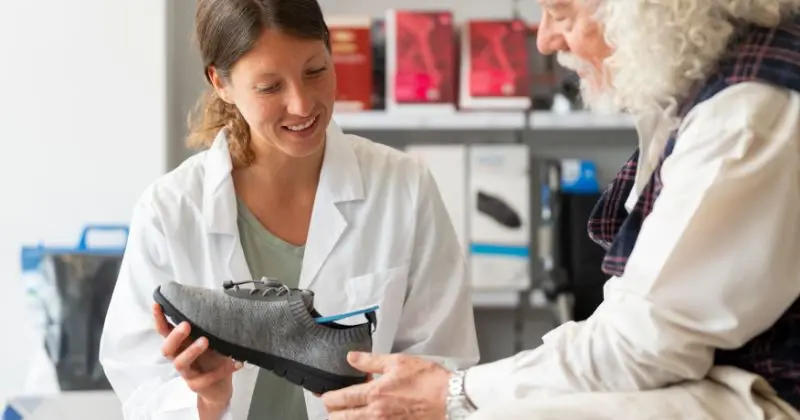
When you have an injury affecting your feet and toes, you wear specific shoes that are suitable after a metatarsal fracture or pinky toe fracture or surgery. These specific post-traumatic and post-operative shoes help keep the foot, forefoot, and toes in the correct position during rehabilitation, ensuring maximum heel protection and ankle stability, as the ankle's function is to reduce the load on the forefoot.
Features to look for in a shoe for a broken little toe include a rigid sole, which helps support and stabilize the arch, a wide forefoot with a front edge to protect the toes, and an easily adjustable closure (even with bulky bandages). Some shoes for a broken little toe also have a non-slip rocker sole, which helps provide even more stability for the foot and ankle while walking.
When it comes to shoe materials for a broken little toe, it's always best to opt for washable cloth uppers, which ensure better hygiene.
Correct use of shoes for a fractured little toe

To get the most benefit from post-traumatic shoes, it's especially important to wear them correctly. These shoes come in a variety of sizes (from XS to XXXL), have a very wide fit to accommodate bandaged feet, and have closures, usually velcro, that allow them to be worn without applying excessive pressure, while still ensuring stability without compromising circulation.
The sole of this type of shoe is designed to relieve the weight of the body from the forefoot and maintain correct posture while walking.
When removing your shoe for a broken little toe, be careful to avoid sudden movements that could stress the healing foot.
How long should you wear a shoe for a broken little toe? The length of time you should wear a shoe varies depending on the severity of the fracture: for milder injuries, it may take about four weeks, while for more complex fractures, six weeks or more may be recommended, depending on your doctor's advice.
Foot care tips during recovery

During recovery, foot hygiene is essential to prevent infections and ensure optimal healing. It's important to keep the skin clean and moisturized, avoiding cracking or irritation.
Performing rehabilitation exercises, such as gentle finger movements and ankle rotations, can help restore mobility and muscle strength. To manage pain and inflammation, you can apply ice packs and follow your doctor's instructions for painkillers. Finally, a diet rich in calcium, vitamin D, and protein promotes bone regeneration, while some natural remedies, such as collagen supplements or anti-inflammatory herbal teas made with ginger and turmeric, can aid recovery.
SmartHallux: An innovative approach to foot care

SmartHallux offers an innovative solution, combining advanced technologies and accurate diagnosis, for personalized treatment of toe pain. Thanks to the expertise of a team of expert surgeons, led by Dr. Luigi Manzi , SmartHallux offers innovative treatments ranging from diagnosis to surgery, if necessary.
The team treats conditions such as hallux valgus , Morton's neuroma , and other deformities that cause toe pain. Providing comprehensive support throughout the treatment process, including post-operative recovery, SmartHallux can be a winning choice for effective treatment tailored to your needs. Book your video consultation with Dr. Luigi Manzi now .