
Surgical interventions for metatarsalgia
Surgery for metatarsalgia is considered when insoles and footwear changes fail. The procedures, including the Weil osteotomy, and what recovery involves.
By Dr. Luigi ManziUpdated on
Among the many pathologies that affect the foot and ankle, metatarsalgia is considered one of the most annoying and disabling.
Metatarsalgia , in fact , presents itself as a widespread pain in the foot , concentrated above all in the front part, affecting the metatarsals.
By affecting the front of the foot, metatarsalgia makes even the simplest mobility difficult, thus also preventing normal walking.
There are several methods to treat and get rid of metatarsalgia , from conservative treatments to more invasive treatments such as surgery.
In this post, we'll delve into surgical procedures for metatarsalgia, considering when surgery is necessary and the different techniques available.
What is metatarsalgia?

Metatarsalgia is difficult to define precisely. To simplify, it could be defined as an inflammation that causes pain , more or less acute, in the metatarsal area.
Metatarsalgia is usually caused by excessive daily stress on the metatarsals. Wearing uncomfortable shoes, carrying too much weight, and engaging in excessive and unbalanced physical activity can contribute to particularly stressing the metatarsals, leading to inflammation and disease.
Presenting as widespread pain across the ball of the foot , metatarsalgia compromises or prevents normal foot mobility. Simple activities like walking or standing can become a real ordeal for those affected.
If diagnosed early and not too severe, metatarsalgia can be resolved with conservative treatments. However, when the health of the foot is compromised and the pain becomes unbearable, surgery may be considered.
When is surgery necessary?

It has already been said that resorting to surgery is almost never the first option considered.
Doctors usually recommend surgery when conservative treatments have not given the desired results and, consequently, metatarsalgia has become disabling.
When the pain becomes chronic and acute , preventing mobility of the entire foot, surgery becomes a concrete option.
Congenital deformities or previous pathologies can also aggravate metatarsalgia, making the surgical option increasingly concrete.
Pathologies such as hallux valgus , Morton's neuroma or pes cavus are all problems that could exacerbate the pain caused by metatarsalgia, contributing to making this pathology disabling.
When conservative treatments are not enough and when metatarsalgia has compromised the quality of life, surgery becomes the only appropriate solution.
The most commonly used surgical techniques
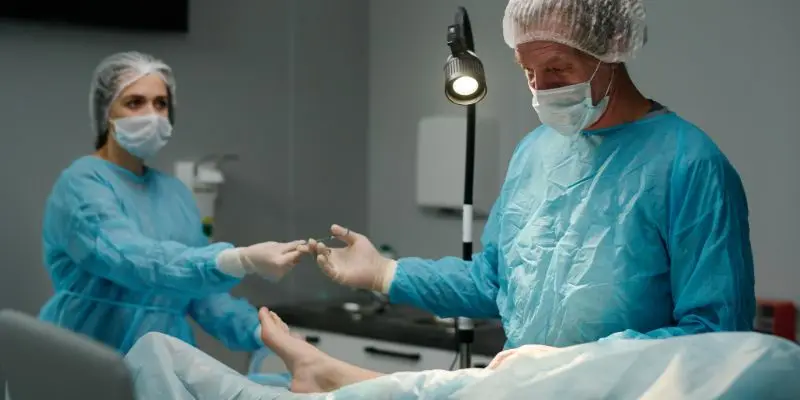
To treat metatarsalgia, there are several surgical techniques to consider.
The choice of surgical technique depends above all on two fundamental factors:
- severity and state of metatarsalgia;
- patient expectations and needs.
Let's focus on the different surgical techniques used to treat metatarsalgia.
Removal of exostoses
When the metatarsalgia is already advanced, the excessive pressure and trauma to which the metatarsals are subjected could form bony protuberances , called exostoses.
One of the least invasive and at the same time most effective surgical interventions is the removal of exostoses.
Exostoses form on the heads of the metatarsals and contribute to significantly worsening the pain typical of metatarsalgia.
Through a small incision in the affected area, the surgeon removes the exostoses, freeing the metatarsals from these protuberances. This will significantly reduce the pain, ideally even eliminating it completely. The result will be the healing of the metatarsals and the restoration of normal foot mobility.
Metatarsal osteotomy
This procedure is slightly more invasive than exostosis removal. Despite this, metatarsal osteotomy is the most common and widespread procedure for treating metatarsalgia.
This surgical procedure involves realigning the metatarsals , thus restoring the normal shape of the foot. This allows for proper weight distribution, minimizing the pressure on the metatarsals.
The actual surgery involves removing a small portion of the metatarsal (or multiple metatarsals) to reposition the bone correctly. To better secure the position, fixation devices (plates or screws) are sometimes used. As mentioned, this will limit excessive stress on the metatarsals.
Resection arthroplasty
This latter type of surgery is indicated for cases of acute joint deformity or degeneration of the metatarsal bones.
We've already discussed how metatarsalgia can be caused by foot deformities and pre-existing conditions. Therefore, when the patient suffers from deformities, bone degeneration, or other conditions, resection arthroplasty appears to be the most effective surgical technique.
The surgery, in fact, involves the removal of a part of the affected joint , thus allowing the surrounding tissues to heal properly, forming a sort of alternative joint that can relieve pain and restore lost mobility.
Resection arthroplasty may seem like an invasive and painful procedure. In reality, although post-operative recovery can be quite lengthy, the results will certainly meet your expectations.
Neurolysis and neurectomy
When one of the causes of metatarsalgia is a nerve condition, such as Morton's neuroma, neurolysis and neurectomy are the recommended techniques to resolve the problem.
These types of procedures involve removing the damaged and inflamed nerve ( neurectomy ), or freeing the nerve from pressure from surrounding tissues compromised by inflammation ( neurolysis ).
In both cases, these techniques result in the reduction of nerve compression and, consequently, the reduction of pain and the return of mobility.
SmartHallux: The best solution for metatarsalgia

Once you've learned about the various surgical techniques for metatarsalgia, you'll need to consult a specialist or team of experts to address the condition and restore foot health.
SmartHallux has established itself as a leader in the foot and ankle care sector, thanks not only to the professionalism and expertise of its team of specialists, but also to the innovative techniques and state-of-the-art tools at its disposal.
By relying on SmartHallux, you will not only have the security of an innovative and professional approach, but also maximum consistency in patient care.
SmartHallux accompanies and assists its patients from the very first stages of the disease, from diagnosis to choosing the best treatment, from post-operative check-ups to rehabilitation.
Thanks to their professionalism and extensive experience, SmartHallux specialists, under the expert guidance of Dr. Luigi Manzi , ensure maximum attention, not only to the treatment of the actual pathology, but also and above all to the needs and expectations of their patients.
Book your SmartHallux visit

If you suffer from foot pain and suspect any type of pathology, the first step to solving the problem is to contact a specialist.
SmartHallux is at the forefront of this too.
Thanks to the quick and easy appointment booking method , SmartHallux offers several consultation options. You can choose between in-office visits at various SmartHallux locations, as well as home visits and telemedicine.
Simply click here and choose the type of visit that's right for you.
Choose health, choose SmartHallux.