
Heel Spur Surgery
Heel spur surgery is considered when pain persists despite insoles, exercises and other treatments. When it is advised, how it is performed and the recovery.
By Dr. Luigi ManziUpdated on
Heel spur is one of the most common and debilitating foot and ankle pathologies . In this article, we will discuss heel spur surgery.
When even daily activities seem impossible and the heel pain becomes intolerable, surgery is often the only possible solution.
Conservative treatments such as physiotherapy and anti-inflammatory drugs can relieve pain and help us move forward, but sometimes they don't help us achieve our desired goals.
If the heel spur condition is too serious and the patient's quality of life is seriously compromised, surgery may be considered.
In this post, we'll delve into everything related to heel spur surgery , from the various types of surgery to post-operative recovery, from risks and complications to advice on who to contact.
Types of heel spur surgery
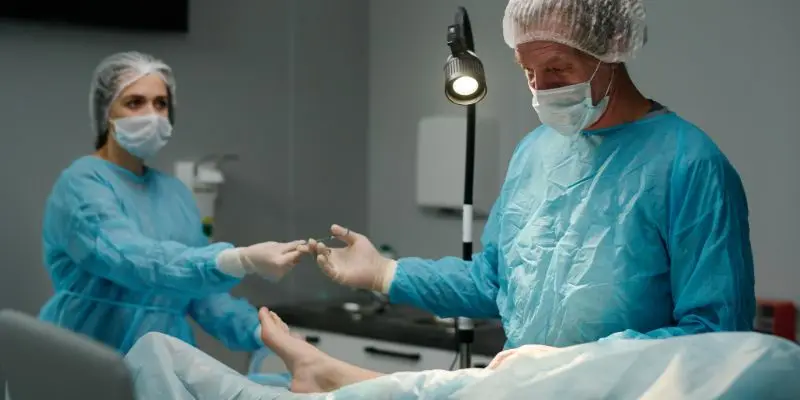
Where conservative treatments fail, surgery can be a solution , especially when dealing with debilitating conditions such as those of the feet and ankles.
It is good to know that there are different types of heel spur surgery.
It is worth mentioning and describing the best known and most practiced typologies.
Plantar Fasciotomy
The plantar fascia is partially incised to relieve tension and reduce inflammation. This procedure is preferred for reducing pain and improving connective tissue flexibility .
Heel Spur Removal
This procedure involves removing the bony growth typical of a heel spur. This approach is often preferred when not only is the bony protrusion clearly visible, but also when the surrounding tissues are significantly irritated.
Endoscopic Ablation
Endoscopic ablation is considered a minimally invasive procedure ; by its very definition, it uses endoscopic instruments. The strength of this surgical technique is undoubtedly the shorter post-operative recovery time , combined with the scarring, which is less noticeable than with traditional surgical procedures.
Achilles Tendon Tenotomy
To address heel spurs, Achilles tendon lengthening may also be recommended. This procedure, combined with fasciotomy , relieves tension in the heel, helping to resolve the underlying pathology. Achilles tendon tenotomy is usually performed when the patient's ankle and foot mobility is severely compromised.
The choice of surgical procedure is influenced by both the severity of the condition and the patient's general health. In any case, however, it is essential and mandatory to study and evaluate the various approaches together with the surgeon.
Advantages and Disadvantages of Heel Spur Surgery

Any surgical procedure you choose will have advantages and disadvantages.
What are the benefits of heel spur surgery?
Among the most important and significant, we list:
- Improvement of the foot mobility;
- Reduction or total disappearance of pain;
- Return to daily activities and sports.
However, as with any surgical procedure, there may be advantages and risks as well.
The risk of infection is very common, both with this procedure and with surgical procedures in general. Besides the disadvantage of having a scar, which can be both annoying and unsightly, one of the major disadvantages is the post-operative recovery time.
In fact, post-operative recovery doesn't always meet patient expectations. Recovery time can vary from a few weeks to several months, and this can undoubtedly create disruptions in the patient's life after surgery.
Sometimes, some patients may even achieve an incomplete recovery , as well as the return of pain.
For these reasons, it's crucial not only to thoroughly evaluate all aspects of the procedure in the pre-operative phase with your surgeon, but also to strictly follow the post-operative recovery instructions. In fact, the disadvantages and complications , in particular , can be resolved or avoided by always following your doctor's instructions.
Post-Operative Recovery and Physiotherapy

Post-operative recovery and physiotherapy after surgery are crucial and fundamental phases for the success of the operation.
These two phases are mandatory and essential to regain mobility of the foot and ankle, and must be agreed upon, evaluated, and personalized together with the attending surgeon.
Post-operative recovery, however, has specific and consequential phases , which are:
- Rest: for the first few days the patient will have to rest, with the foot elevated and using ice packs to combat the pain and swelling;
- Use of walking aids: crutches and suitable shoes to avoid stressing the heel and help maintain foot health;
- Resumption of joint movementAfter about a week to 10 days, you can begin walking without support, gradually putting weight on your foot. Obviously, always follow your doctor's instructions and remain under observation.
These initial steps are followed by actual physiotherapy . This consists of a series of targeted and personalized physical exercises, guided by the physiotherapist.
Stretching , lengthening, and resistance exercises are combined with targeted massages . The exercises improve circulation, and the massages reduce muscle tension, all to regain foot and ankle mobility in the shortest possible time.
The main goal of physiotherapy is not only to improve the mobility and health of the foot but also and above all to prevent future and possible problems.
Complete recovery , as always, varies based on the chosen procedure and the patient's physical condition. However, it is generally estimated that recovery from heel spur surgery can be achieved within 3-6 months.
The innovative SmartHallux technique

Who should I contact to resolve the problem of heel spurs?
SmartHallux , a leader in the treatment of foot and ankle conditions, has developed innovative techniques to combat heel spurs.
Combining cutting-edge medical instruments and imaging technologies, the minimally invasive interventions offered by SmartHallux guarantee reduced recovery times.
The SmartHallux specialists, under the guidance of Dr. Luigi Manzi , have established themselves in the field of orthopedic surgery as competent and available professionals.
In fact, to meet all patient needs, SmartHallux offers different types of consultations.
From in-office and home visits, SmartHallux follows its patients from diagnosis of the pathology to post-operative recovery.
Book your SmartHallux visit

If you suffer from heel spurs , or know someone who does, surgery may be the solution to the problem.
SmartHallux's innovative techniques, and the assistance offered by its team of professionals , could be the right choice that will help you regain ownership of your health and your life.
Booking an appointment and consultation with SmartHallux is easier than you might think.
What are you waiting for? Click here and book your appointment with SmartHallux.