
How to Get Rid of Heel Spurs: What You Need to Know
How to get rid of heel spurs: the spur itself rarely needs removing; treating the inflamed fascia with stretching, insoles and shockwave can ease the pain.
By Dr. Luigi ManziUpdated on
You wake up in the morning and put your foot down. Ouch! That twinge in your heel that makes you jump. I know that feeling. I've seen it in countless patients who come into my office with a slight limp, with the look on their face of someone who's tried everything, yet the pain continues to torment them.
Heel spurs are one of those conditions that can truly ruin your day. And not just in the morning—they can also happen after sitting for a long time, or worse, after a supposedly relaxing walk. But the good news? They can be treated. Today, I'll explain how to effectively eliminate heel spurs.
What is this famous heel spur really?
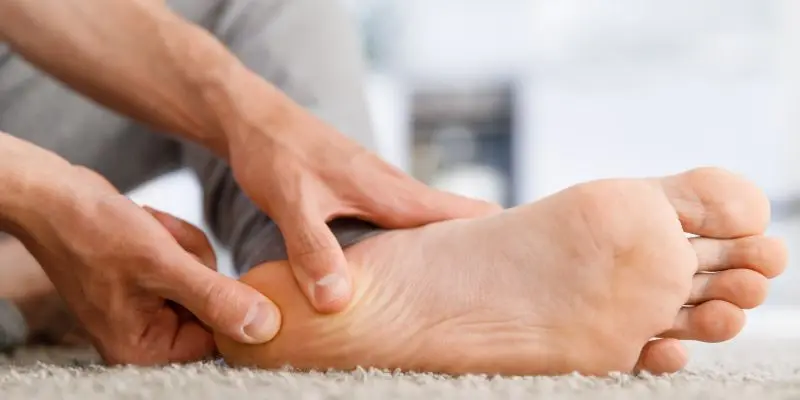
So, let's be clear. A heel spur isn't exactly a "spur" as you might imagine. It's more like a small bony protrusion that forms under the heel, right where the plantar fascia (the band of fibrous tissue that runs under the foot) attaches.
Think of the plantar fascia as a taut arch. When this arch is subjected to too much tension for too long, the point where it attaches to the heel bone begins to "react." The body, in its attempt to strengthen that area, deposits calcium, forming this small bony growth.
It's interesting because patients often say to me, "Doctor, I can actually feel the thorn pricking me!" In reality, the pain isn't so much from the thorn itself, but from the inflammation of the surrounding soft tissue. Plantar fasciitis, so to speak.
Why do heel spurs occur?
The causes are varied, and often cumulative. Let's look at the main ones.
Age plays a role—it's more common after 40. The tissues lose elasticity, and the plantar fascia becomes less flexible. Then there's body weight: every extra pound multiplies the load on the feet. I've seen many patients improve dramatically just by losing a few pounds.
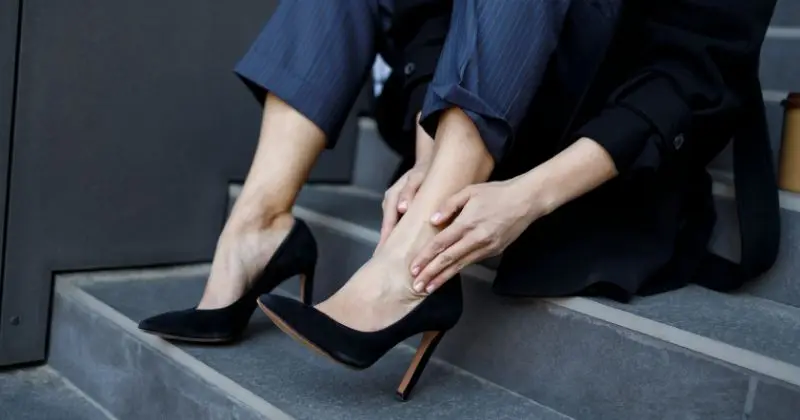
The wrong shoes are a disaster. Completely flat shoes, with no arch support, force the fascia to work twice as hard. But high heels also cause harm—they shorten the Achilles tendon, and when you walk barefoot or in flats, everything becomes even more strained.
Intense sporting activity, especially running on hard surfaces, can be triggering. I'm not saying you should stop running, absolutely not! But you have to do it wisely. And then there are the unique foot shapes: flat feet, high arches, and excessive pronation issues.
Symptoms You Can't Ignore
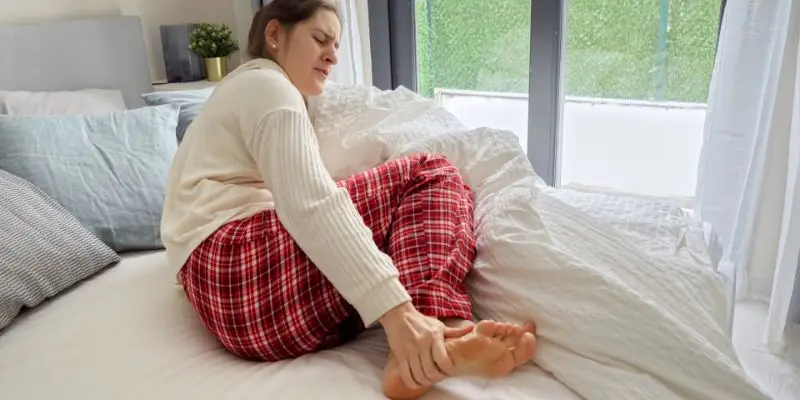
Morning pain is the most typical sign. That first step that hurts like hell. Patients describe it to me as "a stab," "like walking on nails." Then, after a few steps, it gets better a little because the tissues "warm up."
But it doesn't end there. The pain can return after prolonged sitting—what we call "post-static pain." You get up from your desk and—bang, that twinge is back. Even after physical activity, the heel may complain.
Sometimes the pain radiates along the entire sole of the foot. Some patients also experience stiffness and tenderness in the heel area.
How do I make the diagnosis in the office?

When a patient comes to me with heel pain, I first listen to their story. When does it hurt the most? How did it start? What shoes do they wear? Do they play sports?
Then I move on to the clinical examination. I palpate the heel to identify the exact location of the pain. I perform specific tests for the plantar fascia—passive stretching of the toes, which reproduces the pain. I also check the flexibility of the ankle and Achilles tendon.
The X-ray confirms the presence of a heel spur, but be careful: there isn't always a direct correlation between the size of the spur and the intensity of the pain. I've seen huge spurs that cause little discomfort and tiny ones that hurt like hell. This is because, as I said, the main problem is often inflammation of the soft tissues.
In special cases, I may request an ultrasound to evaluate the condition of the plantar fascia, or an MRI if I suspect other problems.
How to treat heel spurs: available treatments

Let's start with conservative remedies, which work in the vast majority of cases. The first step is always anti-inflammatory therapy and relative rest. This doesn't mean staying completely still, but rather avoiding activities that trigger the pain.
Ice is fantastic for acute cases. Apply it for fifteen to twenty minutes, several times a day. I often recommend freezing a bottle of water and rolling it under your foot—it's both anti-inflammatory and a massage.
Stretching is essential for treating calcaneus. Stretches for the plantar fascia, calf, and Achilles tendon. I always show them to patients because the technique must be correct. Painful stretching isn't necessary; on the contrary.
Custom-made orthotics make a difference. They support the arch of the foot and redistribute weight. I've seen all kinds over the years, and I can say that custom-made ones are definitely more effective than standard supermarket ones.
Shockwave therapy is a very interesting option for resistant cases. It stimulates tissue healing and reduces inflammation. It requires several sessions, but the results are often excellent.
For more stubborn cases, cortisone injections can provide relief, although I always prefer to try conservative therapies first. Surgery? It's truly a last resort, reserved for cases that don't respond to anything after at least 6-12 months of treatment.
How long does it take to heal?
This is the question everyone always asks me. It depends. Really, it depends on so many factors.
In mild cases, with the right treatment, improvement can be seen in as little as 2-3 weeks. Others may require more time—even several months. The important thing is to not give up and to follow the treatment program carefully.
I have patients who, after years of pain, have returned to running marathons. Others have resolved their pain simply by changing shoes and stretching. Each case is unique.
Prevention is better than cure
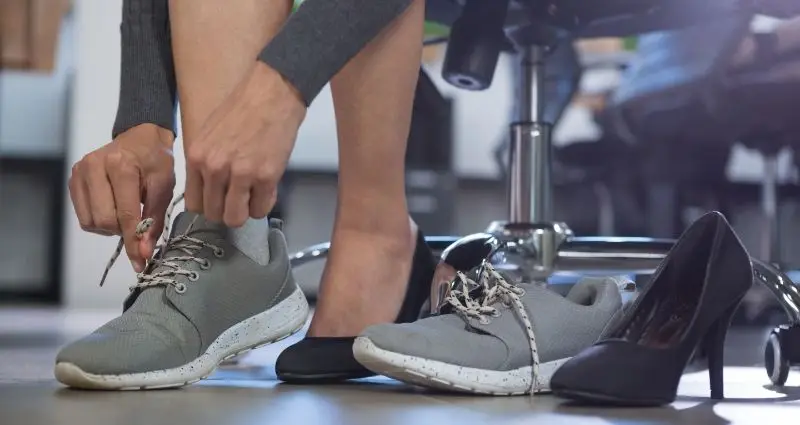
Wearing the right shoes is essential. They should have a minimum amount of arch support, and are neither too flat nor too high-heeled. If you play sports, invest in good-quality, specific footwear.
Maintain a healthy weight. I know, it's easy to say, but every pound counts when it comes to your feet. Stretch regularly, especially if you sit a lot or have a job that requires you to stand for long periods.
And listen to your body. That little pain in your heel that "will go away on its own"? Better get it checked out right away, before it becomes a serious problem.
SmartHallux: Where we can help you

Here at SmartHallux, we specialize in foot and ankle surgery. Dr. Luigi Manzi, who has extensive experience in this field, provides each patient with a personalized treatment plan using the most modern techniques.
The SmartHallux team treats conditions such as hallux valgus , Morton's neuroma , and other deformities that cause foot pain. Providing comprehensive support throughout the treatment process, SmartHallux can be a winning choice for effective treatment tailored to your needs. Book your specialist consultation with the SmartHallux team now (opens in a new tab).
Questions you often ask me
Can heel spurs come back after treatment?
It can happen if the initial causes aren't eliminated. That's why it's important to focus on prevention—proper footwear, stretching, and weight management. Recurrence is rare if you follow the recommended treatment.
Do I have to have surgery if I have a heel spur?
Absolutely not. Surgery is necessary only in a very small percentage of cases—those that don't respond to any conservative therapy after at least 6-12 months. The vast majority of patients recover without surgery.
Is it true that anti-inflammatories are harmful if I take them for a long time?
Oral anti-inflammatories, if taken for long periods, can cause side effects, especially gastric problems. For this reason, I always prefer to combine them with physical therapy and stretching to minimize the duration of administration.