
Thin Ankles: When Surgery Can Help
Speaking of ankles: often those who come to me complaining of "thin ankles" actually also have functional problems. The Achilles tendon can be
By Dr. Luigi ManziUpdated on
Do you look in the mirror and feel dissatisfied with your ankles? You're not alone. In my office, I often see patients who ask me if there's anything they can do to improve the appearance of ankles they perceive as too thin or poorly proportioned. It's a sensitive topic, as it affects people's self-esteem.
The truth? Yes, surgical solutions exist. But it's not a decision to be taken lightly.
Why some people have thin ankles
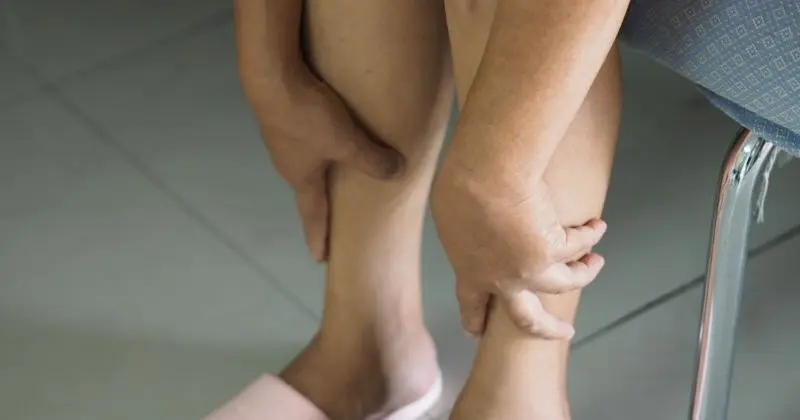
Thin ankles are often a matter of aesthetic perception rather than a true medical problem. Sometimes it's a natural anatomical conformation. Other times, it depends on the ratio between calf muscle mass and ankle circumference.
Imagine the ankle as the narrowest point of an hourglass. If the calf above lacks muscle volume, the ankle may appear disproportionate. This often occurs in very thin women or men with limited muscle development.
But be careful: what we see isn't always what others see. Sometimes perception is distorted. For this reason, when someone comes to me with this type of request, the first thing I do is determine whether there's truly a significant anatomical alteration or whether they're dealing with body dysmorphic disorder—that is, an altered perception of their own body.
Who can be a candidate for ankle cosmetic surgery?
Not everyone is an ideal candidate for this type of procedure. The perfect patient? One with realistic expectations and genuine motivation.
First of all, the patient must be of legal age. The body must be fully developed. Then I always evaluate the patient's general health – uncontrolled diabetes, significant vascular problems, and a tendency to develop pathological scars are all contraindications.
One thing I always tell my patients: "If you're thinking about this surgery to please someone else, stop for a moment." Motivation must come from within. The other day, a 25-year-old woman came to me wanting "more feminine ankles" because her boyfriend had told her so. I advised her to think carefully.
Available ankle plastic surgery techniques

There are two main approaches to ankle lengthening or reshaping. Each has its pros and cons.
The first technique involves the insertion of specific implants. These are silicone prostheses specifically shaped for this anatomical area. The procedure is performed under local anesthesia with sedation and lasts about an hour. I make a small incision, create a pocket in the subcutaneous tissue, and position the implant. Simple? In theory, yes. In practice, it requires great precision to avoid asymmetries.
The alternative is lipofilling. I take fat from other parts of the body—usually the belly or thighs—purify it, and then reinject it into the ankle area. It's a more natural concept, but it has a problem: reabsorption. Not all the fat "takes," so multiple sessions are often necessary.
There's a third, more complex option: actual leg bone lengthening surgery. But here we enter much more demanding territory, requiring months of external fixation. Frankly, for a cosmetic ankle problem, I rarely recommend it.
Recovery after surgery

After surgery, whether with implants or lipofilling, you should expect at least 2-3 weeks of restrictions. During the first few days, walk little and wear comfortable shoes. No high heels for at least a month—and this, I must say, is often the biggest sacrifice for my patients!
Swelling is normal and can last up to 6-8 weeks. Initially, the ankles may feel "too big" compared to the final result. This is the healing process. Little by little, everything settles down.
One important thing: physical therapy. It's not always necessary, but in some cases it helps restore full ankle mobility more quickly. It depends a lot on how much the ankle had to be "unstuck" during surgery.
The risks you need to know about

Like any surgery, this one also has risks. Infection is always possible, though rare with proper precautions. Asymmetry is more common—one ankle may heal differently from the other.
With implants, there's always the risk of displacement or the formation of a fibrous capsule that can harden the result. Sometimes, what we call a "seroma" forms—a fluid accumulation that may require drainage.
The biggest problem? Unrealistic expectations. I've seen patients disappointed because they thought they'd completely transform their figure. Surgery improves, but it doesn't work miracles.
Ankle prosthesis: when are they really necessary?
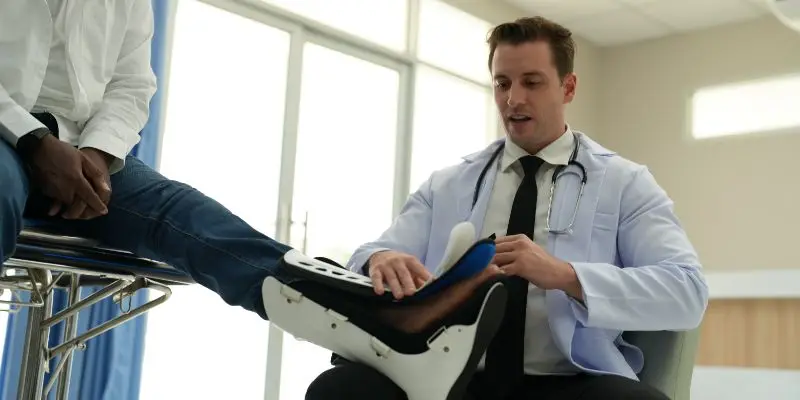
Be careful not to confuse cosmetic ankle surgery with actual ankle replacement. A prosthetic is needed when the joint is damaged by arthritis, trauma, or other conditions. It's a major orthopedic procedure, not a cosmetic one.
If you have ankle pain, stiffness, or difficulty walking, then we're talking about prosthetics. If your ankle works well but you don't like the look of it, we're in another realm.
Achilles tendon problems

Speaking of ankles: often, those who come to me complaining of "thin ankles" actually have functional problems. The Achilles tendon can be involved. If it's too stiff or injured, it can affect both the function and appearance of the ankle.
At SmartHallux, we also offer a dedicated emergency service for acute Achilles tendon ruptures. This is an emergency that must be treated promptly to avoid compromising the final outcome.
SmartHallux: Where we can help you

Here at SmartHallux, we specialize in foot and ankle surgery. Dr. Luigi Manzi, who has extensive experience in this field, provides each patient with a personalized treatment plan using the most modern techniques.
Our approach? First we listen, then we evaluate, and finally we propose. Never the other way around. And if we think a procedure isn't the right choice for you, we'll tell you straight away.
The SmartHallux team treats conditions such as hallux valgus , Morton's neuroma , and other deformities that cause foot pain. Providing comprehensive support throughout the treatment process, SmartHallux can be a winning choice for effective treatment tailored to your needs. Book your specialist consultation with the SmartHallux team now (opens in a new tab).
Questions you often ask me
Doctor, how much does a procedure like this cost?
Prices vary based on the technique chosen and the complexity of the case. I can provide you with a precise estimate during your initial consultation. Prices generally range between €3000 and €6000.
Can you see I had an operation?
If done well, no. The goal is a natural result. The scars are small and hidden. After a few months, even you struggle to find them.
Can I play sports after surgery?
Sure, but gradually. After 2-3 months, you can resume almost anything. Just avoid the most strenuous contact sports for the first few months.