
Ankle Arthritis: When Your Ankle Really Hurts
Ankle arthritis (tibiotarsal arthritis) causes pain, swelling and stiffness that can be mistaken for a sprain that will not heal. The causes and treatments.
By Dr. Luigi ManziUpdated on
Have you ever woken up in the morning and felt your ankle stiff as a block of wood? Or maybe you felt pain every time you put your foot down after sitting for a while?
It could be ankle arthritis. It's one of those conditions I see often in my office, and many patients underestimate it, thinking it's "just" a sprain that won't heal. But no. Ankle arthritis is serious, and deserves attention.
Let's talk about it together, without too many words.
What exactly is this tibiotarsal arthritis?

The ankle joint connects the tibia (the largest bone in the leg) to the talus, a bone in the foot. It's where the ankle's primary movement occurs, allowing you to flex your foot up and down.
When we talk about arthritis in this area, we mean inflammation of the joint that can become chronic. The cartilage—think of that smooth surface that allows bones to slide smoothly—begins to deteriorate. The result? Pain, stiffness, swelling. And sometimes even difficulty walking normally.
Interestingly, ankle arthritis can manifest itself in different ways. There's osteoarthritis, which is the normal wear and tear of the joint with age. Then there's rheumatoid arthritis, an autoimmune disease that can also affect the ankles. And there are other forms, such as ankle arthralgia, which is more of a painful symptom than an actual disease.
The causes: why does it happen?

Let's see, there could be a variety of reasons. In my practice, the most common cause I see is trauma. A bad ankle fracture, a serious sprain that hasn't been treated properly, a dislocation. All of these can damage the cartilage and, over time, lead to arthritis.
Then there's natural wear and tear. Over the years, cartilage wears away. It's normal; it happens to everyone, but in some people it happens earlier and more markedly. It depends on genetics, body weight, and your lifestyle.
Rheumatoid arthritis is a whole other story. It's a disease that can affect any joint, including the ankle. I have patients who discovered they had rheumatoid arthritis precisely because of their ankle pain.
And then there are less common but important causes: joint infections, gout (those uric acid crystals that build up in the joints), metabolic diseases. In short, there are many causes.
Symptoms You Shouldn't Ignore

Pain is the first warning sign. But not just any pain. My patients describe it as "deep," localized right in the ankle, and worse in the morning when they get out of bed.
"Doctor, the first steps are hell," they often tell me. And it's true, because after hours of inactivity the joint stiffens.
Swelling is another typical symptom. The ankle becomes swollen, sometimes warm to the touch. Then comes stiffness. Gradually, you lose mobility, and it's difficult to bend your foot and walk on uneven terrain.
One thing I always notice is that patients start walking differently. They unconsciously adjust their gait to avoid the pain, and this can lead to problems in other parts of the body: knee, hip, back.
How do I diagnose?

When a patient comes to me with these symptoms, the first thing I do is listen. The history is crucial. When did the pain begin? Was there a trauma? How does it manifest itself throughout the day?
Then comes the physical exam. I watch how you walk, check the mobility of your ankle, see if there's swelling, if it hurts when I press on certain areas. Sometimes I already have a pretty clear idea.
But to be sure, tests are needed. An X-ray is the first step: it shows the condition of the bones, whether there's any narrowing of the joint space, and whether there are osteophytes (those lumps of bone that form in osteoarthritis).
If I have any concerns or want to get a better look at the soft tissues, I can request an MRI. And sometimes, if I suspect inflammatory arthritis, I'll also do blood tests.
Treatment options
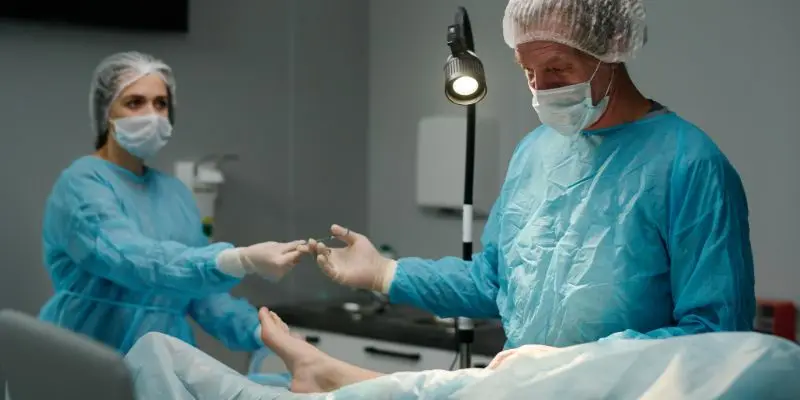
So, let's get to the point. How is ankle arthritis treated? It depends on the severity, the patient's age, and their expectations.
In early cases, we always begin with conservative treatment. Anti-inflammatories when necessary to manage pain and inflammation. Specific physical therapy is used to maintain mobility and strengthen the muscles that stabilize the ankle. Orthotics or braces can help relieve the joint.
Hyaluronic acid injections can sometimes provide relief, although they're not as miraculous as some people think. They're a bit like "lubricating" the joint, but they don't address the root cause.
When conservative treatment is no longer sufficient, surgery must be considered. There are two main options: arthrodesis (permanently blocking the joint) or ankle replacement.
Arthrodesis may seem drastic, but in many cases it works well. It eliminates pain by "welding" the bones together. You lose some movement, sure, but patients often feel much better.
Ankle replacement is a more modern and attractive option. I replace the damaged joint surfaces with artificial components. It's a more complex procedure, but you retain ankle motion. Not all patients are candidates, however. It depends on age, bone quality, and the desired activity.
Post-operative recovery

If you've had surgery, the recovery process is crucial. It's not a walk in the park, I'll tell you that right now. It takes weeks, sometimes months.
After an arthrodesis, you must wait for the bone to heal completely. For the first 6-8 weeks, no weight-bearing is recommended. Then, gradually, always under physiotherapy supervision.
With prosthetics, the process is different. You can start putting weight on your teeth earlier, but you need to be very careful with your movements to avoid damaging the implant in the first few months.
Physiotherapy is crucial in both cases. It helps restore strength, balance, and proprioception. My patients often underestimate this phase, but it's what makes the difference between a good and an excellent outcome.
What you can do to prevent
Prevention is always better than cure. We can't avoid everything, of course, but we can do something.
First of all, be careful about injuries. If you play sports, use appropriate protection. If you hurt your ankle, get checked out immediately and follow the treatment thoroughly. It's not true that "sprains go away on their own."
Maintaining a healthy body weight helps. Every extra pound puts extra strain on the joints. And then there's regular physical activity, which keeps the ankle-stabilizing muscles strong.
If you have rheumatoid arthritis or other inflammatory diseases, it's important to monitor them with your rheumatologist.
SmartHallux: Where we can help you

Here at SmartHallux, we specialize in foot and ankle surgery. Dr. Luigi Manzi, who has extensive experience in this field, provides each patient with a personalized treatment plan, using the most modern and minimally invasive techniques whenever possible.
The SmartHallux team treats conditions such as hallux valgus , Morton's neuroma , and other deformities that cause foot pain. Providing comprehensive support throughout the treatment process, SmartHallux can be a winning choice for effective treatment tailored to your needs. Book your specialist consultation with the SmartHallux team now (opens in a new tab).
Questions you often ask me
Doctor, is ankle arthritis curable?
It depends on what you mean by "curable." We can certainly significantly improve symptoms and quality of life. In some cases, with the right treatment, the pain can disappear completely. But it's important to be realistic: if the cartilage is severely damaged, we can't regrow it like new.
Will I be able to go back to sports after surgery?
This is one of the questions I hear most often. The answer is: it depends. With arthrodesis, you can do many activities, but you'll probably have to avoid high-impact sports. With ankle replacement, the options are greater, but there are still limitations. We always discuss these on a case-by-case basis.
How long does an ankle replacement last?
Modern prosthetics last an average of 15-20 years, but it depends on many factors: your age, your weight, your activity level, and how your body heals. It's not like changing a light bulb, you know. It's a long-term commitment.