
Tibiotarsal Joint: Anatomy, Movement, and Pathologies
The tibiotarsal joint, or ankle joint, connects the tibia and fibula to the talus. Its anatomy, how it moves and the conditions that most often affect it.
By Dr. Luigi ManziUpdated on
The ankle joint is one of the three joints in the ankle. It is composed of three bones: the tibia, fibula, and talus, supported by other bones such as the calcaneus, navicular bone, cuneiform bones, and cuboid bone. This joint plays a crucial role in walking, allowing the foot to move upward (dorsiflexion) and downward (plantarflexion), ensuring proper stability and weight distribution during walking, running, and other daily activities.
The function of the ankle joint
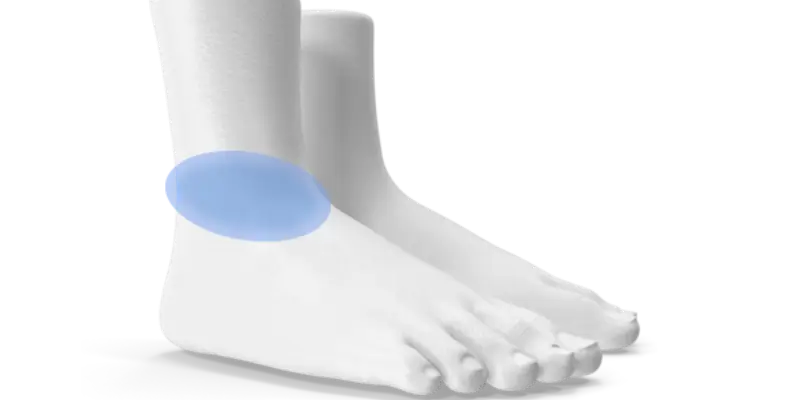
The tibiotarsal joint transfers the entire body weight to the foot. During movement, this joint is subjected to particular stress, in some cases supporting more than five times the body weight. Its structure allows for essential movements such as flexion and extension, useful during walking, and inversion and eversion, which allow the foot to adapt to uneven surfaces. Stability is ensured by a balance between the bone structure, surrounding muscles, and ligaments that support the joint, such as the deltoid ligament on the medial side and the lateral ligaments (anterior and posterior talofibular, calcaneofibular).
Like all joint surfaces, the ankle joint is also covered by a layer of cartilage, which ensures smooth movement and acts as a shock absorber, protecting the bones from wear and tear.
Pathologies of the tibio-tarsal joint

The pathologies affecting this joint are varied and can significantly compromise quality of life. Ankle osteoarthritis, for example, is a degenerative condition caused by cartilage wear.
This is a non-reversible wear process that compromises the cushioning function of the cartilage, causing the joint surfaces to rub together. This, in addition to causing pain, can lead to the formation of bony growths called osteophytes at the edge of the joint. As the disease progresses, these osteophytes can even cause limited movement.
The main causes of ankle osteoarthritis include previous trauma, obesity, genetic predisposition, and congenital foot deformities. Symptoms, such as pain, stiffness, swelling, and joint crepitus, worsen with physical activity.
In the initial stages, treatment for ankle osteoarthritis is conservative. Medication, physical therapy, and hyaluronic acid injections can help limit the effects. However, in advanced stages, surgery, such as arthrodesis or total ankle replacement, may be necessary.
Among other conditions that can affect the ankle joint, posterior tibial tendinitis is a must-see . This is an inflammation of the tendon caused by excessive stress. Symptoms include pain and difficulty walking, which can be treated with rest, physical therapy, or surgery in severe cases. Tibial neuralgia, on the other hand, manifests as neuropathic pain, burning, and numbness, often requiring pharmacological or surgical treatment.
Impingement syndrome occurs when there is a conflict between the bony structures or soft tissues of the joint, causing pain and limited movement. Treatment can be conservative or surgical, depending on the severity.
From post-traumatic osteoarthritis resulting from previous injuries, fractures, and ligament damage, to systemic and storage diseases, the causes of ankle deterioration are diverse. These conditions not only limit mobility but also induce pain and disability, prompting the need for definitive surgical solutions.
Diagnosis of ankle pathologies

Repeated trauma and sometimes inadequate surgical repair can compromise the elasticity of the ankle joint. Ankle problems, and specifically ankle pathologies, can be caused by other factors, such as the formation of osteophytes and prolonged periods of immobilization. Regardless of the underlying cause, however, all can contribute to a progressive loss of joint mobility and the onset of ankle osteoarthritis.
Diagnosing conditions affecting the ankle joint is based on a comprehensive approach. A physical examination is the first step, through which the doctor assesses the presence of pain, swelling, and limited movement. X-rays are essential for identifying fractures or deformities, while MRI and CT scans allow for a detailed analysis of the soft tissues and joint surfaces. Ultrasound is particularly useful for examining tendons and ligaments.
Ankle joint problems: available treatments

Treatment options for the ankle joint vary depending on the condition and its severity. Prevention is key to maintaining ankle joint health. Targeted exercises to strengthen the foot and ankle muscles can reduce the risk of injury, while wearing appropriate footwear and a healthy lifestyle help prevent overload and trauma.
In the early stages of many ankle problems, a conservative approach is preferred, including the use of painkillers and anti-inflammatory medications, physical therapy to improve strength and mobility, and the use of orthotics to relieve stress on the joint.
When conservative treatment is insufficient, surgery is resorted to. The most common options include arthroscopy, useful for removing fragments or damaged tissue; arthrodesis, which involves fusing the bones to reduce pain; and total joint replacement, indicated for advanced cases of osteoarthritis. After surgery, rehabilitation is essential to regain function and prevent complications.
For a correct diagnosis and subsequent treatment, a thorough understanding of the biomechanics of the foot and ankle is essential, and therefore, it is recommended that a specialist with the necessary skills take care of them.
For specialist support, book a consultation with Dr. Luigi Manzi for an accurate diagnosis and a personalized treatment plan to relieve severe pain.