
Treating Hallux Rigidus: How to Heal Your Big Toe
Treating hallux rigidus starts with stiff-soled shoes, insoles and anti-inflammatories; cheilectomy or fusion when the joint is worn. The options explained.
By Dr. Luigi ManziUpdated on
Among the various and multiple pathologies that can affect feet and ankles, one of the most widespread is hallux rigidus , here's how to treat hallux rigidus
But what is it, what causes it, and how can you defeat hallux rigidus?
This post will focus on this pathology , helping to understand how to remedy the problem.
What is hallux rigidus?

Hallux rigidus is a common problem in most patients with foot conditions. It affects the joint at the base of the big toe , causing stiffness and the resulting difficulty in movement , as well as the predictable pain.
The most common symptoms , which are also useful for identifying the pathology, are: swelling , difficulty walking, pain and stiffness in the affected part (the big toe joint).
Like almost all foot pathologies, hallux rigidus can be caused not only by genetic predisposition or previous pathologies, but also by trauma suffered during the course of one's life.
Diagnosis of hallux rigidus
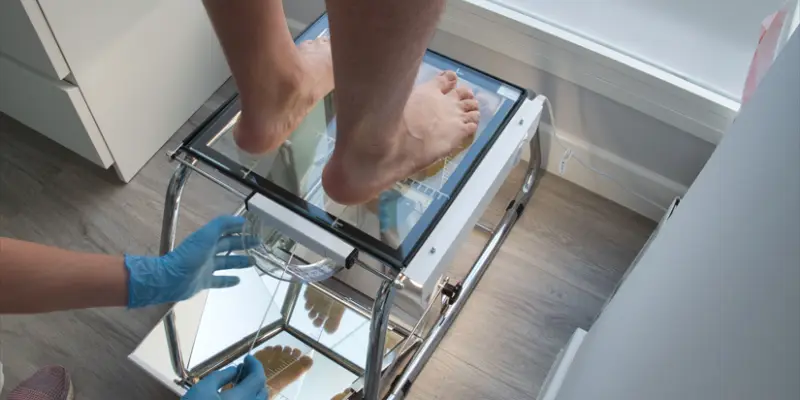
To resolve the problem of hallux rigidus as soon as possible, avoiding the risk of the situation worsening, it is always necessary to diagnose the pathology early.
Only an early diagnosis can save foot health and help the patient improve their quality of life.
But how is hallux rigidus diagnosed?
It begins with an objective examination, where first of all the doctor tries to evaluate the state of mobility of the foot , especially in the big toe area, also based on the pain and symptoms reported by the patient.
To better understand the potential damage and assess the appropriate course of action, doctors often request more in-depth tests such as X-rays . Not only do these help to better understand the condition, but they also help rule out other conditions.
Diagnosing hallux rigidus is essential for deciding and implementing an action plan , to ensure that the pathology can be defeated as best and as quickly as possible.
Treatment of hallux rigidus

Once hallux rigidus has been diagnosed, it will be necessary to decide how to intervene.
As with almost all foot pathologies, there are two methods of action: conservative treatment and surgical treatment.
Conservative Treatment
Conservative treatment is not unique, but includes various therapies that can be implemented.
These therapies can be combined or implemented individually; the decision always rests with the specialist who will decide which path to take for the patient's recovery.
Conservative treatments , as per definition, serve to combat the problem without surgical intervention.
Physical therapy and physiotherapy are prescribed to improve mobility and joint function; these are often combined with anti-inflammatory medications to reduce inflammation and pain.
Finally, the use of appropriate footwear and orthoses is also strongly recommended , to accompany and support the compromised movement.
Surgical treatment
Surgery is often the only alternative when conservative treatments have failed to resolve the pathology.
There are invasive and less invasive procedures . The decision on which procedure to opt for depends on both the state of the disease and that of the patient.
Among the invasive , yet highly effective, procedures, it's worth mentioning osteotomies, arthrodesis , and arthroplasty . The first involves cutting the bone to reposition it correctly and restore movement. The second involves fusing the affected joint (the big toe joint), while arthroplasty involves replacing the joint itself.
As with any surgical procedure, there are advantages and disadvantages.
The greatest advantage of the surgery is undoubtedly the resolution of the problem and the reduction , if not the complete disappearance, of pain . On the other hand, however, one cannot ignore the disadvantages, such as the post-operative recovery time , which can be more or less long, and the risks, such as infections or various complications.
Surgery for hallux rigidus
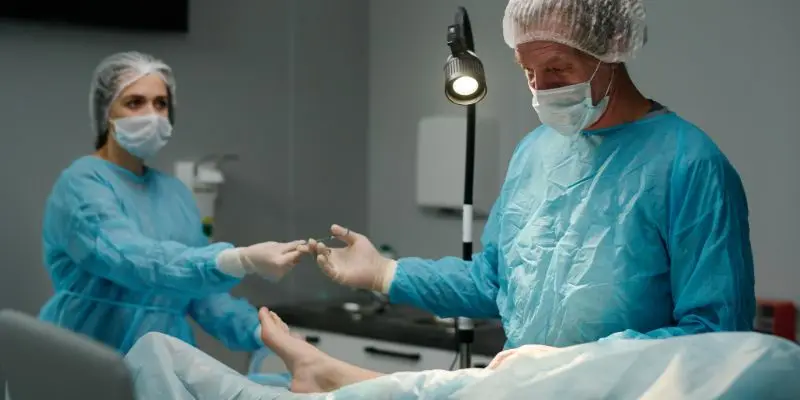
Let's now see how the various types of surgical procedures are performed and their differences.
We've already mentioned a few: osteotomy , arthrodesis , and arthroplasty . Let's go into a little more detail.
Indicated for the most complicated cases, where the joint is severely damaged, arthrodesis involves the permanent fusion of the joint . A key thing to know about arthrodesis is that by fusing the joint, the movement of the big toe will be permanently blocked. This may seem like a disadvantage, but thanks to this technique, the chronic pain caused by the pathology will be significantly reduced, if not eliminated.
Arthroplasty , on the other hand, involves the partial or total replacement of the big toe joint . The joint can be replaced with tissue from the patient's own tissue or entirely artificial , such as a prosthesis created specifically for this type of procedure. This procedure is also intended for patients whose disease has reached an advanced stage, severely compromising their quality of life. This procedure, unlike arthrodesis, however, aims to restore mobility to the big toe joint.
Osteotomy , on the other hand, involves a cut in the bone which is then positioned differently and stabilized with one or more screws to restore the correct movement by modifying the center of rotation of the first metatarsal.
Post-operative recovery and rehabilitation

After any type of surgery, it will be necessary to follow a period of recovery and post-operative rehabilitation.
It is essential to rest for the first two weeks following surgery , also applying ice to the wound to relieve swelling and redness due to the procedure.
To regain mobility, you'll need physical therapy and to strictly follow your doctor's instructions. It's crucial to avoid taking any initiatives on your own and always follow your doctor's instructions to avoid problems and complications.
In general, recovery times can be estimated from a minimum of 2 months to a maximum of 6. Obviously, each case is specific and particular, so recovery times may be either shorter or longer than those indicated.
Complications and risks of hallux rigidus surgery

Although surgery is always recommended to definitively resolve the condition and get rid of the pain, it cannot be denied that this can have risks and be subject to complications.
What are the possible complications of the surgery?
Risks and complications may include:
- chronic persistent pain;
- stiffness of the affected part;
- damage to nerves surrounding the area;
- blood clots and infections.
These complications can be easily identified because they very often manifest themselves with symptoms such as fever , swelling, redness and unbearable pain.
Both to prevent and to intervene promptly in case of complications, it is essential to follow the indications provided by the doctor in the post-operative phase.
It is therefore advisable to always monitor the condition of the big toe after surgery, so as to avoid causing further damage.
Who is the ideal candidate for the procedure?
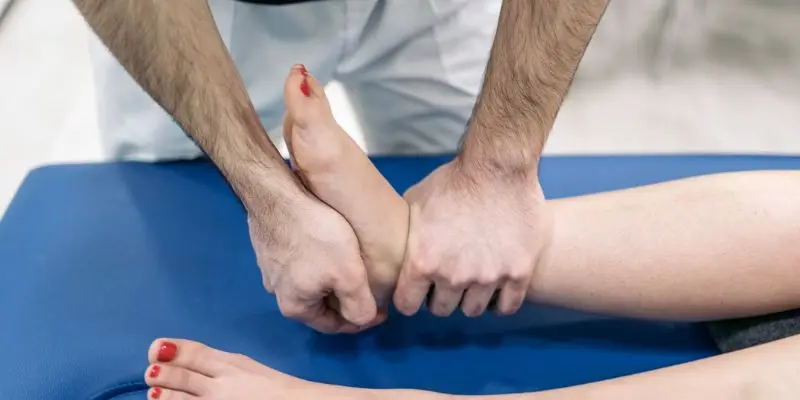
As already mentioned, surgery is resorted to when the disease has reached a stage where even conservative methods fail to provide relief.
The ideal patients for surgery , therefore, are those who have a significant and highly debilitating deformity.
Not only does the pathology influence the decision to resort to surgery, but also the patient's general condition.
In fact, a young or middle-aged patient in good health is preferred over one with other medical conditions. A healthy patient is less at risk during the operation and is also more likely to recover well from the post-operative phase and achieve better results.
However, it is always advisable to carry out a thorough pre-operative assessment , discussing the risks and all the options in detail, so that the candidate for the operation is as suitable as possible.
Why choose SmartHallux for the procedure

Once you've decided to opt for surgery, it's important to choose who to trust.
SmartHallux can guide and protect you in this.
SmartHallux is renowned for its use of advanced surgical techniques . In fact, the procedures performed by its team generally last 1 to 2 hours and are performed under local or general anesthesia, depending on the case.
The specialized and professional surgeons , led by the internationally renowned surgeon Luigi Manzi , establish themselves as leaders in the sector
By choosing SmartHallux you will certainly not be disappointed and you will have the certainty of having entrusted yourself to the best surgeons and scholars of foot and ankle pathologies.
Contact SmartHallux for a consultation

Don't let hallux rigidus rob you of the quality of life you deserve!
Book your appointment with SmartHallux today and find out how we can help you restore your foot health.
Click here to book now and start your journey to a pain-free life.