
Tecar for plantar fasciitis: does it really work?
Tecar therapy for plantar fasciitis uses radiofrequency to stimulate tissue repair. What the evidence shows, when it helps and how it fits into treatment.
By Dr. Luigi ManziUpdated on
Have you ever woken up in the morning and felt a sharp pain in your heel when you put your foot down? That could be the "welcome" sign of plantar fasciitis.
It's a condition I see very often in my office. Patients come in limping, telling me about this pain that torments them, especially when they first take their first steps in the morning. "Doctor, it feels like walking on nails," they often say.
In recent years, Tecar therapy for plantar fasciitis has become one of the most requested treatments by my patients. But does it really work? Let's see what my experience has to say.
What exactly is this plantar fasciitis?

Plantar fasciitis is the inflammation of the band of tissue that runs under the foot. Think of the plantar fascia as a stretched rubber band connecting the heel to the toes. When this "rubber band" becomes inflamed, every step becomes a pain.
It's not just a question of age, although it's true that after 40, it becomes more common. I've seen runners in their thirties suffer terribly. After all, the plantar fascia supports our entire body weight with every step. Imagine the strain!
The causes? There are several, actually. Flat or arched feet, ill-fitting shoes, sudden weight gain, excessive exercise without adequate preparation. The other day, a patient came to me who had started running without any training. The result? Plantar fasciitis within three weeks.
How to recognize if you have plantar fasciitis
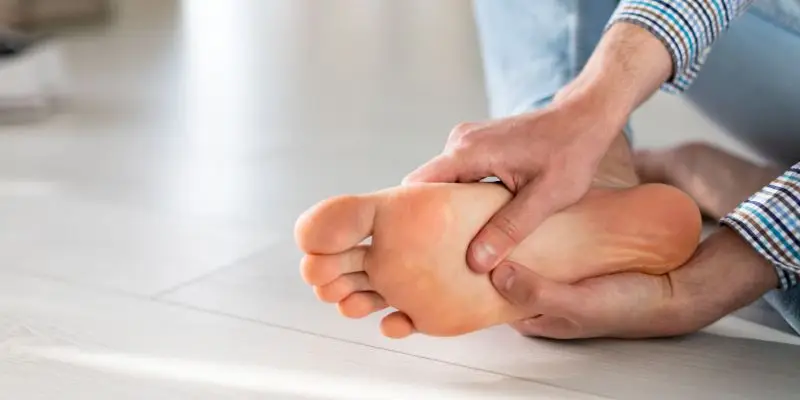
The main symptom is unmistakable: pain in the heel or along the arch of the foot. But not just any pain.
It's a pain that gets worse after resting. You get out of bed and the first few steps are terrible. Then, as you walk, it seems to improve a little. But if you stay still for a while and start walking again, there it is again. It's as if the band gets cold when you don't use it.
Many patients also describe a feeling of stiffness in their foot, as if it were "in a cast" upon waking. Others report pain radiating along the entire arch of the foot.
Tecar enters the scene: what it is and how it works

Tecar therapy for plantar fasciitis is a form of diathermy. To put it simply, it uses radio waves to create deep heat in the tissues. It's not the superficial heat of a hot water bottle, but something that reaches deep within, where it's needed.
This "inner" heat stimulates circulation and promotes the body's natural healing processes. It's like giving a boost to the body's existing repair mechanisms, which sometimes need a little help.
During the treatment, the physiotherapist places an electrode on the area being treated. It doesn't hurt, in fact. Many patients tell me it's relaxing; they can actually feel the heat spreading through their feet.
The benefits of tecar for plantar fasciitis
Why do so many colleagues, including myself, recommend it? The benefits I've observed in my patients are diverse.
First of all, it reduces inflammation. And when inflammation decreases, so does the pain. I've seen patients who, after just a few sessions of tecar therapy for plantar fasciitis, were able to get out of bed without that excruciating pain.
Then there's the improvement in vascularization. When the plantar fascia becomes inflamed, it receives less blood and therefore fewer nutrients to heal. Tecar helps "restart" local circulation.
Another interesting aspect: it speeds up healing times. Plantar fasciitis can last for months if left untreated. With Tecar, along with other measures, the healing process is often significantly shortened.
When it works best (and when it doesn't)
Tecar for plantar fasciitis isn't a magic wand. It works best in certain specific situations.
It's particularly effective in acute phases, when inflammation is severe. I've also seen excellent results in patients with chronic fasciitis who weren't responding to other conservative treatments.
It works very well when combined with a specific stretching program and the use of appropriate insoles. Tecar therapy alone, without addressing the underlying causes of fasciitis, may only provide temporary benefits.
When might it not be the best choice? If you have a very large heel spur causing ongoing mechanical impingement, or if the fasciitis is associated with systemic problems that require a different approach.
How a Tecar session takes place
A typical session lasts about 20-25 minutes. The patient lies comfortably, the physiotherapist prepares the area to be treated, and the treatment begins.
You can immediately feel the heat spreading deep within. "It's strange, doctor, I can feel the heat reaching all the way into my foot," a patient told me last week. Exactly, that's exactly the effect we're aiming for.
I usually recommend a course of 8-10 sessions, 2-3 times a week. It depends greatly on the severity of the case and the individual response. Some patients see improvements as early as the third session, others need more time.
Contraindications? Few, but they exist. It cannot be performed during pregnancy, if a patient has a pacemaker, or if there are tumors in the treatment area. Therefore, a preliminary medical evaluation is always important.
How much does it cost and where can it be done?
The cost of a Tecar therapy session for plantar fasciitis varies greatly. On average, it ranges from €40 to €80 per session, depending on the area and the center where you receive it. A full course can therefore cost between €300 and €600.
Unfortunately, the National Health Service doesn't always reimburse it; it depends on the Regions and specific situations. Some affiliated centers offer it, but there are often long waiting lists.
Alternatives to tecar

If Tecar isn't an option, there are other options. Shockwave therapy is very effective, especially for chronic fasciitis. Laser therapy also has good results.
Let's never forget the importance of specific stretching exercises for the calf and plantar fascia. Custom-made insoles can make a difference, especially if there's an underlying biomechanical issue.
For more resistant forms, we sometimes consider hyaluronic acid injections or, rarely, surgery. But these are options I only consider when all else has failed.
SmartHallux: Where we can help you

Here at SmartHallux, we specialize in foot and ankle surgery. Dr. Luigi Manzi, who has extensive experience in this field, provides each patient with a personalized treatment plan using the most modern techniques.
The SmartHallux team treats conditions such as hallux valgus , Morton's neuroma , and other deformities that cause foot pain. Providing comprehensive support throughout the treatment process, SmartHallux can be a winning choice for effective treatment tailored to your needs. Book your specialist consultation with the SmartHallux team now (opens in a new tab).
Questions you often ask me
Doctor, after how many sessions will I see results?
It depends a lot on the initial situation. On average, after 4-5 sessions you start to see the first improvements. But I have patients who have told me they feel better after just the second session.
Is it true that tecar can burn?
If done poorly, yes. This is why it's important to seek qualified personnel. The patient should feel warmth, never pain or burning. If this happens, the intensity should be reduced immediately.
Can I do it together with other therapies?
Absolutely. In fact, it's often more effective when combined with stretching, orthotics, and lifestyle changes. Tecar is just one piece of a larger puzzle.