
Bone Spur: What It Really Is and How to Get Rid of It
A bone spur, or osteophyte, is a bony growth at the edge of a bone or joint, often in the heel or toes. Why it forms, the symptoms and how it is treated.
By Dr. Luigi ManziUpdated on
Have you ever felt a sharp pain in your heel when you first take a step in the morning? Or perhaps a strange discomfort under your toes or on the top of your foot that worsens throughout the day? In many cases, these symptoms could be due to a bone spur, one of those silent conditions that go unnoticed for a long time, until the pain becomes unbearable.
Bone spurs are simply growths that form at the edges of bones. They don't grow randomly, but rather as a reaction to repeated stress, chronic inflammation, or joint changes. It's as if the bone were trying to protect itself... but instead, it creates an additional problem.
Where do they appear and why?
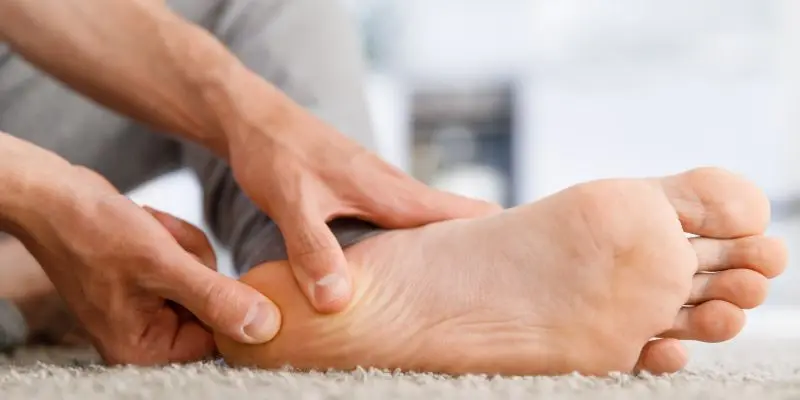
The heel is the most common site for the infamous heel spur , but the toes, hands, hips, and even the spine can also be affected. The causes? Many, and often a combination:
- arthrosis
- incorrect posture
- intense sporting activity
- unsuitable shoes
- overweight
What do you feel?
It depends on where the spur is located. Some cause no symptoms at all and are discovered incidentally on an X-ray. Others, however, are quite noticeable: pain, stiffness, swelling, sometimes even a sensation of a "stone under the foot" when walking. The pain tends to worsen with activity and subside with rest, but it can become chronic if left untreated.
How do you know if it's really a spur?

The specialist always begins with a clinical assessment: he or she will ask you where you feel the pain, when it started, and how it changes throughout the day. Then, tests are performed: X-rays to locate the spur, ultrasounds, or MRIs to determine if there is inflammation or other lesions in the surrounding tissues.
And what can be done?
A lot, even without a scalpel. In the initial stages, treatment is conservative: rest, physical therapy, anti-inflammatory medications, and custom-made orthotics. The goal is to reduce inflammation and relieve pressure on the affected area.
But if the pain persists, or worsens, surgery is considered. This is often a targeted procedure to remove the spur and release the compressed tissue. Today, thanks to minimally invasive techniques, recovery times are shorter and the procedure is much more precise.
The aftermath: how do you recover?
After surgery, you can walk almost immediately, wearing protective shoes. Recovery time can vary depending on the location of the spur and the technique used, but you can generally return to normal activities after a few weeks. Physiotherapy, at this stage, is extremely helpful in preventing relapses and restoring proper foot support.
Stop living with pain: book an appointment today.

If you suspect you have a bone spur, or if you're living with foot pain that's getting worse day by day, don't wait for it to become debilitating. Dr. Luigi Manzi and the SmartHallux team offer a personalized assessment, modern solutions, and an approach that focuses on the individual, not the symptom.
The team treats conditions such as hallux valgus , Morton's neuroma , and other deformities that cause foot pain. Providing comprehensive support throughout the treatment process, including post-operative recovery, SmartHallux can be a winning choice for effective treatment tailored to your needs. Book your specialist consultation with the SmartHallux team now (opens in a new tab).
FAQ
What are bone spurs?
They are small bone growths that form where there is chronic stress, inflammation, or friction. They are often found on the heels, toes, knees, or spine.
Bone spurs do they always hurt?
No. Some spurs don't cause any symptoms. Others, however, can inflame nearby tissue and become very painful, especially when walking.
What symptoms are alarming for bone spurs?
Localized pain, stiffness, swelling, tingling, a feeling of fullness under the ball of the foot, or difficulty bending a joint.
How are bone spurs treated?
With physiotherapy, medications, and orthotics. In severe cases, minor surgical removal is necessary.