
Endoscopic Surgery: A Minimal Option for Achilles Heel Pain
Endoscopic surgery treats Achilles heel problems such as Haglund's deformity and insertional tendinopathy through tiny incisions. How it works and recovery.
By Dr. Luigi ManziUpdated on
Endoscopic surgery represents the most significant innovation in the treatment of Achilles heel problems . Unlike traditional techniques, this Achilles heel surgery is minimally invasive and offers patients numerous advantages. Among the most important are a minimally visible scar, minimal postoperative pain, and a quick return to normal daily activities. The procedure involves the use of sophisticated instruments that allow surgeons to operate through small incisions , maximally preserving the surrounding tissue.
What is endoscopic surgery?
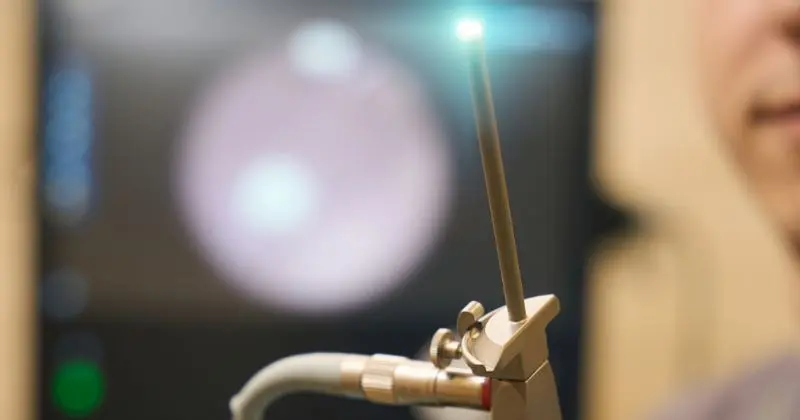
Endoscopic surgery is a modern surgical technique that uses an endoscope , a thin, flexible instrument equipped with a camera , to perform minimally invasive procedures . Instead of making large incisions, surgeons make small cuts through which they insert the endoscope and other specialized instruments. This allows for precise visualization and treatment of the affected area.
The basic principles of this technique revolve around minimizing trauma to surrounding tissue , thus minimizing postoperative pain and speeding up the patient's recovery. Endoscopy allows the doctor to visualize the internal area in detail on the monitor, making the Achilles heel surgery more precise.
Differences from traditional surgery
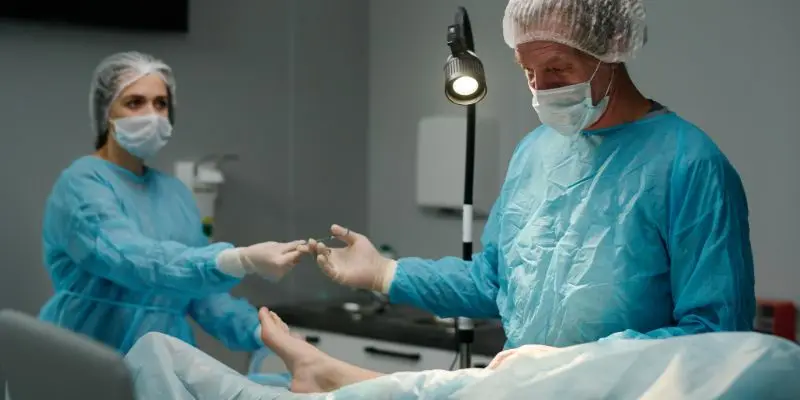
The main difference between endoscopic surgery and traditional surgery is the size of the incisions. In traditional surgery, the incisions are larger and can cause more pain, scarring, and prolonged recovery times. In contrast, endoscopic surgery uses much smaller incisions , which reduces hospital stays and promotes a quicker return to daily activities.
Furthermore, infections are rarer in endoscopic surgery. The greater precision afforded by the endoscope-mounted camera also allows for more targeted treatment with less damage to healthy tissue.
Advantages of endoscopic surgery

The advantages of endoscopic surgery are numerous, including:
- Faster recovery: Thanks to the smaller incisions, patients are able to recover more quickly than with traditional surgeries.
- Reduced post-operative pain: Less tissue damage and smaller incisions result in less pain after surgery.
- Minor scars: Scarring is minimal, making it particularly advantageous for those who care about aesthetics.
- Reduced risks: almost no infections or complications is another important advantage.
- Less dependence on post-operative medications: Less pain means reduced use of painkillers during the recovery period.
Treatment of Achilles heel with endoscopic surgery
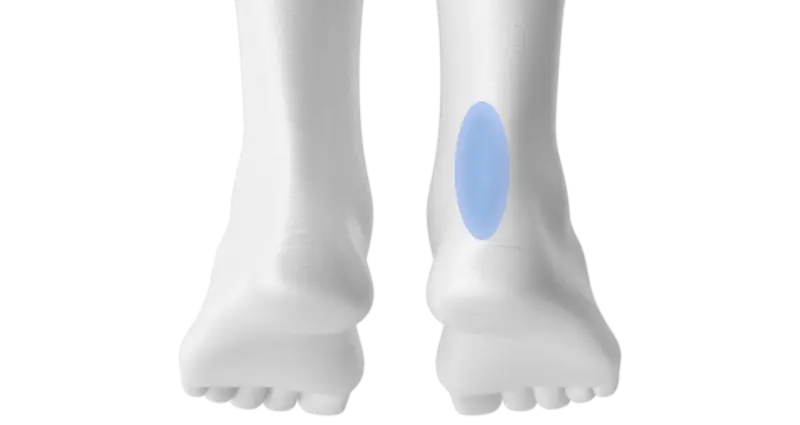
Endoscopic surgery is particularly useful in treating several conditions involving the Achilles heel, including:
- Achilles tendonitis: It is a common inflammation among athletes and active individuals.
- Calcifications and bone spurs: These are abnormal bone growths that can cause pain and limit mobility.
- Partial tendon rupture: These are incomplete lacerations that require repair without invasive surgery.
These conditions, and similar ones, can be resolved without complications through endoscopic surgery.
Endoscopic Achilles heel surgery: the procedure

Achilles heel surgery using endoscopic surgery is performed in several phases:
- Pre-operative evaluation: at this stage, the following are carried out: clinical and diagnostic tests to determine the nature and extent of the injury.
- Preparation for surgery: Patients are informed about the details of the procedure and prepared according to surgical needs.
- Performing endoscopy: The surgeon makes small incisions through which he introduces the endoscope and the surgical instruments needed to treat the affected area.
- Closing the incisions: the small incisions are closed so that minimize scarring and speed up healing.
Tools and technology used
The success of endoscopic Achilles heel surgery depends largely on the advanced technology and instruments used. These include:
- Endoscope: allows the surgeon to visualize the surgical area on high definition screen.
- Microsurgical instruments: designed to perform precise cuts and manipulations without damaging surrounding tissue.
Book your visit with SmartHallux

Discover the benefits of endoscopic surgery for Achilles heel treatment with SmartHallux . This cutting-edge technique, which is less invasive than traditional methods, results in less visible scarring, minimal post-operative pain, and a quicker return to daily activities. Using sophisticated instruments, SmartHallux surgeons can operate with precision through small incisions, maximizing the preservation of surrounding tissue.
Endoscopic surgery significantly reduces recovery time and the risk of infection, ensuring targeted treatment that is less damaging to healthy tissue. With SmartHallux, you can rest assured that you're working with experienced professionals who use the most advanced technologies for your well-being. Book your procedure now using the booking form on our website.