
Information about the little toe
The little toe, or pinky toe, is medically known as the fifth toe (digitus quintus). Its anatomy, the problems it can develop and when to see a specialist.
By Dr. Luigi ManziUpdated on
Although officially accepted terminology calls it the “fifth toe” (or, in Latin, digitus quintus ), the last toe is universally recognized as the little toe. In this article entitled “Information about the little toe,” we will talk about its anatomy and common problems.
The little toe is located on the lateral end of the foot. Like the other toes, it plays an important role in everyday life, allowing us to walk, run, and jump. Although it doesn't actively participate in walking, the smallest of the five toes plays a fundamental role in the biomechanics of the foot, contributing to stability and balance and properly distributing our weight across the lower limbs.
Anatomy of the little toe
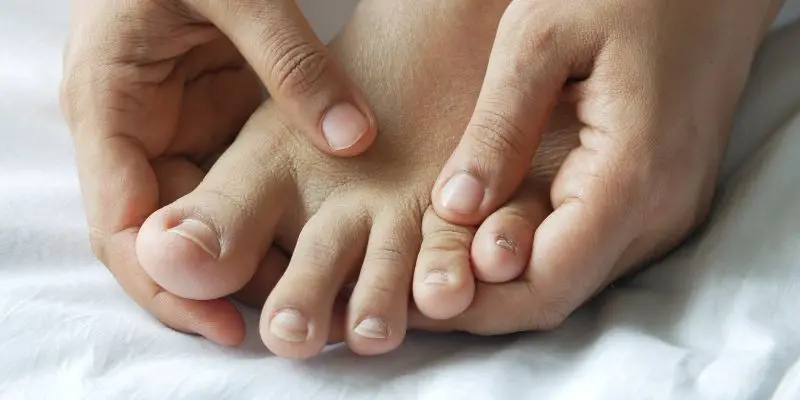
The little finger is composed of three small bones called phalanges. The proximal phalanx is the largest and articulates with the metatarsal bone. The middle phalanx is smaller and articulates with the proximal phalanx. The distal phalanx is the smallest of the three phalanges and articulates with the middle phalanx and supports the nail.
The phalanges are held together by joints. The joint between the proximal phalanx and the metatarsal bone is called the metatarsophalangeal (MTP) joint. The joint between the proximal and middle phalanges is called the proximal interphalangeal (PIP) joint. The joint between the middle and distal phalanges is called the distal interphalangeal (DIP) joint.
The muscles that control the movement of the little toe are located on the sole of the foot. These muscles help flex (bend), extend (straighten), and rotate the little toe. The little toe is innervated by the lateral plantar nerve and the lateral dorsal digital nerve. It is supplied by the lateral plantar artery and the lateral dorsal digital artery.
The functions of the little toe

The little toe provides a base of support for the foot, helping the body maintain balance when standing and walking. The fifth toe, in fact, helps stabilize the foot during walking. It acts as a support point for the foot muscles, which help control the foot's movement and also provide the power needed to propel the body forward during propulsion.
Common pinky toe conditions

- Fractures of the little finger – This is a very common injury, caused by direct trauma and by the fact that the finger is particularly vulnerable. The fracture is often accompanied by sharp pain, swelling, and bruising on the affected area.
- Little finger dislocations – These occur when the bones of the little finger are displaced from their normal position. They generally cause noticeable deformity, as well as pain and swelling.
- Tendinitis – This inflammation of the tendons surrounding the little toe is often caused by wearing improper footwear. It causes pain and sometimes swelling in the inflamed area. Symptoms may occur at rest and more frequently during movement.
- Osteoarthritis – This is a degenerative condition that causes the cartilage in the little toe joints to break down. Those with little toe osteoarthritis may even have difficulty walking.
- 5th toe varus – This is a bony deviation, often congenital, that causes pain and swelling. The little toe appears to be deviated inward and often overlaps with the 4th toe, resulting in the formation of a painful dorsal callus.
- Hammer toe – Although it most commonly affects the second, third, and fourth toes, this condition in which the tip of the pinky finger bends upward is not serious, but it can be annoying.
- Morton's neuroma – A neuropathy caused by inflammation of the interdigital nerve that affects the front of the foot. This condition causes pain, numbness, and tingling between the toes, including the little toe.
Treatment of pinky toe conditions

If you suffer from problems with your little toe, it's always advisable to schedule an orthopedic specialist appointment and perform any necessary instrumental tests. This will allow you to understand the overall structure of your foot.
Treatment for pinky toe conditions depends on the specific condition. When the problem is not severe, conservative treatment may be sufficient: rest or the application of ice and/or readily available medications may suffice. These solutions improve the pinky toe problem.
However, if the condition is more serious, conservative treatment may not be sufficient. In this case, surgical correction of the problem is advisable.
Little toe care

As small as it is, we've seen that the role of the little toe is significant. If you experience pain, swelling, or other symptoms related to a problem with your little toe, it's always best to consult a doctor. Once your little toe problem has been diagnosed, it's essential to follow an appropriate treatment plan to promote optimal healing.
Treatment of the pinky toe depends on the severity of the problem and the doctor's assessment. To keep the pinky toe healthy, you can follow these tips:
• Wear comfortable, supportive shoes.
• Avoid wearing shoes with high heels or narrow toes.
• Stretch your toes regularly.