
What is the function of the sole of the foot and what are the disorders?
The sole of the foot runs from the toes to the heel and supports the whole body. What it is made of, what it does and which disorders most often affect it.
By Dr. Luigi ManziUpdated on
The sole of the foot extends from the toes to the heel. In this article, we'll explore its function. It's made up of bones, muscles, ligaments, and nerves, and its complex organization performs several essential functions for our body. Thanks to the sole of the foot, not only does it support our body weight, but it also ensures balance while walking.
Precisely because of its fundamental function, it is important to understand the causes of a possible alteration in foot mechanics that can transform into pronation or supination syndromes.
Pain localized in the sole of the foot could be a sign that shouldn't be ignored. It could be a symptom of other pathologies, such as metatarsalgia.
The main functions of the sole of the foot
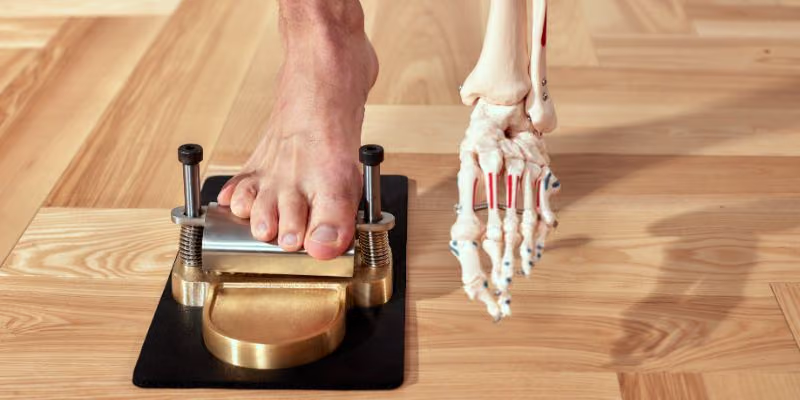
- Body support – The sole of the foot allows for optimal distribution of body weight, allowing each part of the foot to contribute to our body's balance, as it balances the body's load on a solid base, distributing weight evenly between the heel, forefoot, and toes, both when standing still and in motion, without excessively overloading any single part of the foot.
- Transports – Having a healthy foot and a balanced arch allows our body to move fluidly, without overloading the muscles and limiting the risk of injury. When the muscles and tendons in the sole of the foot work together, we can walk, run, and jump without any problems.
- Shock absorption The sole of the foot is our body's primary shock absorbing system. Thanks to its structure, it allows the foot to easily absorb contact with the ground, even the most uneven, during movement. This also protects the knee, hip, and spine joints from upward vibration transmission.
- Proprioception – The sole of the foot is equipped with numerous nerve receptors that detect even the slightest changes in the surface they rest on, including changes in pressure, inclination, and tension. This allows the brain to regulate body position, promote coordination and balance, prevent falls, and control the fine movements of the foot.
Common problems with the sole of the foot

If calluses and corns aren't particularly worrying, when you start to feel pain, it's a good idea to understand what the trigger might be.
There are several conditions that can cause pain in the sole of the foot. Sometimes the triggers are easy to identify, such as wearing uncomfortable shoes. However, it's not always easy to associate a symptom with a specific problem. For this reason, we've identified some of the most common foot problems:
1. Hallux valgus
Hallux valgus is a deformity in which the big toe slants toward the other toes. It can cause pain and difficulty moving. Treatments vary depending on the severity and range from using appropriate footwear to corrective surgery for more severe cases.
2. Plantar fasciitis
Plantar fasciitis is an inflammation of the plantar fascia, the thick band of tissue that runs along the bottom of the foot. Symptoms of plantar fasciitis include pain and stiffness in the heel and ball of the foot, which are often worse in the morning or after a period of rest. Nonsurgical treatments, such as rest, ice, and stretching exercises, can be helpful for most cases of plantar fasciitis. Surgery is rarely necessary.
3. Morton's neuroma
Morton's neuroma is a thickening of a nerve between the toes, causing pain and numbness . It is often caused by excessive pressure on the foot and can be treated with orthotics or, in more severe cases, surgery.
4. Metatarsalgia
Metatarsalgia is an inflammation of the forefoot caused by excessive load on the metatarsal bones. This condition causes pain under the ball of the foot and worsens with physical activity.
5. Achilles tendinitis
Achilles tendinitis is an inflammation of the Achilles tendon, which connects the calf to the heel. It can cause pain in the sole of the foot and requires treatment such as rest, ice, and physical therapy.
Treatments for pain in the sole of the foot
Treatment for plantar pain depends on the specific cause. A person may experience mild discomfort under the sole of the foot. In this case, a period of rest combined with the use of ice and anti-inflammatory medications may be sufficient. If the problem stems directly from the foot itself or is caused by a coordination disorder, orthopedic insoles may be recommended, which can help reduce pressure on the foot and correct bone alignment. In more serious conditions, such as bunions or Morton's neuroma, surgery may be necessary to resolve the problem.
Prevention of foot problems

To reduce the risk of developing pain in the sole of the foot , it's helpful to follow a few simple precautions. This starts with always wearing comfortable, well-fitting shoes, avoiding high heels or tight shoes. Furthermore, it's crucial to regularly perform stretching exercises to improve foot flexibility and maintain a healthy weight to avoid putting too much pressure on the soles of the feet.
When you experience even the slightest signs of what could be functional foot disorders, it's best to seek help from someone who can restore your body's balance. Dr. Luigi Manzi is an orthopedic surgeon specializing in foot disorders. With years of experience, he offers advanced diagnosis and treatment for ball of foot pain and other foot and ankle problems.
SmartHallux , with offices in Milan, Rome, and Naples, is a center specializing in foot surgery that uses innovative techniques to ensure patients receive personalized treatment and the best possible recovery. It is possible to book a specialist visit at one of the available locations.