
Valgus foot: effective remedies to walk comfortably again
Valgus foot remedies, from insoles and supportive shoes to strengthening exercises, and when surgery is needed to realign the heel. What works and when.
By Dr. Luigi ManziUpdated on
Have you ever looked at your feet and noticed they seem to "fall" inward? Or maybe you feel pain after walking, especially on the inside of your foot? You might be dealing with foot valgus.
It's a problem I see often in my office. The other day, a woman came to me and said, "Doctor, I feel like my feet aren't supporting me like they used to." This phrase perfectly sums up what many patients experience when they have valgus foot.
Let's see together what we're talking about and, above all, what can be done.
What exactly is valgus foot?
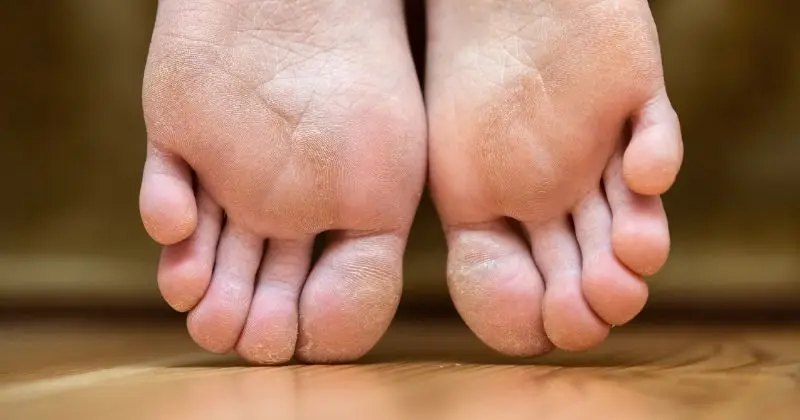
Valgus foot is a deformity in which the foot tends to "fall" inward. Imagine looking at someone from behind as they walk: if you have valgus foot, you'll see that the heel tilts inward and the arch of the foot is lowered.
It's different from flat feet, although they're often confused. Flat feet primarily lack a longitudinal arch. Valgus foot, on the other hand, features a characteristic inward rotation that affects the entire foot.
To be honest, when I talk to my patients, I often use the example of a building with a crooked foundation. If the foot—our base of support—is misaligned, everything above it suffers. This is why those with valgus foot often complain of ankle, knee, or even back pain.
The causes: why does it happen?
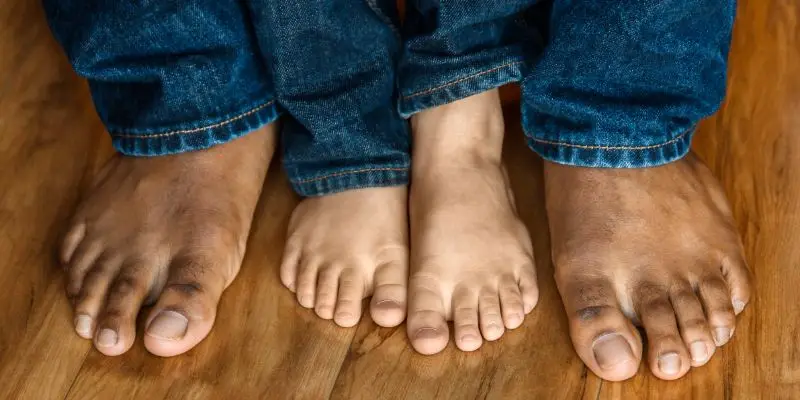
There are many causes of foot valgus. There's a genetic component—"Doctor, my mother had feet like that too" is a phrase I hear very often. Then there are biomechanical factors: if you have a particular conformation of the bones in your foot, or if some muscles are weaker than others, this deformity is more likely to develop.
On the other hand, we mustn't forget about lifestyle. Wearing the wrong shoes for years can make the situation worse. I'm thinking of high heels with narrow toes, or completely flat shoes with no support. Being overweight doesn't help—more weight means more strain on the feet.
Then there are more specific causes. Some connective tissue diseases, neurological problems, or even trauma that has altered the foot's muscular balance.
Symptoms: What you notice first

Pain is often the first warning sign. Many patients describe a dull ache on the inside of their foot, which worsens with walking or prolonged standing.
Others notice that their shoes are wearing out strangely—more on the inside. Or they notice that their ankle seems to "give" inward when they walk. Some have trouble finding shoes that fit well.
In more advanced cases, the foot can become stiff and painful even at rest. I've seen patients who couldn't climb stairs without pain.
How do I diagnose?
When a patient comes to me suspecting they have valgus foot, the first thing I do is observe them walking. It's amazing how much information you can glean simply by observing how a person places their feet.
Then I have him stand and check the heel alignment. In valgus foot, the heel "falls" inward relative to the leg. I also check the flexibility of the foot—can I correct it manually, or has it become stiff?
X-rays provide valuable information about the angles between bones. Sometimes more in-depth tests, such as a CT scan, are necessary, especially if we're considering surgery.
The remedies: what can we do?

Here comes the interesting part. There are several options for foot valgus, and the choice depends on the severity of the problem and how much it bothers you.
Conservative remedies
Specific exercises are often the first step. Strengthening the muscles that support the arch of the foot can make a difference. Exercises like standing on tiptoe, walking on your heels, or picking up small objects with your toes. They seem simple, but if done consistently, they can help a lot.
Corrective insoles are another valuable tool. I'm not talking about the generic ones you find at the supermarket, but custom-made insoles that correct the position of the foot. When they work, they really make a difference—some patients tell me it's like "walking on a cloud."
Appropriate footwear is essential. Shoes with good arch support, sufficiently wide, and a maximum 2-3 cm heel. I know, it's not always easy to find the right balance between aesthetics and functionality, but foot health comes first.
When intervention is needed
If conservative measures aren't enough, surgery is an option. Traditional surgery involves bone and soft tissue corrections. Recovery times are longer, but in severe cases, it's still necessary.
Minimally invasive surgery with the SmartHallux technique represents a significant innovation. Through small incisions, the alignment of the foot can be corrected with less tissue trauma and faster recovery.
Recovery: What to Expect
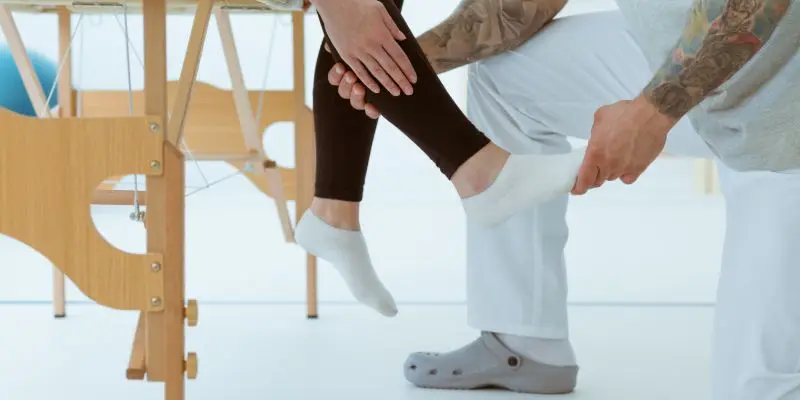
After valgus correction surgery, patience is essential. Patients usually start walking within the first few days after surgery, but swelling can last for several months.
With the minimally invasive SmartHallux technique, many patients return to daily activities in 2-3 weeks, but for sports and more strenuous activities it may take a few months.
SmartHallux: Where we can help you

Here at SmartHallux, we specialize in foot and ankle surgery. Dr. Luigi Manzi, who has extensive experience in this field, provides each patient with a personalized treatment plan using the most advanced techniques, including minimally invasive SmartHallux surgery for the correction of foot valgus.
The SmartHallux team treats conditions such as hallux valgus , Morton's neuroma , and other deformities that cause foot pain. Providing comprehensive support throughout the treatment process, SmartHallux can be a winning choice for effective treatment tailored to your needs. Book your specialist consultation with the SmartHallux team now (opens in a new tab).
Questions you ask me ofteno
Doctor, does valgus foot always get worse with age?
Not necessarily. With the right measures—exercises, insoles, appropriate shoes—you can significantly slow down progression. It's like car maintenance: if you take care of it, it lasts longer.
Is it possible to eliminate hallux valgus without surgery?
It depends on the severity. In early cases, conservative treatments can yield excellent results. When the deformity is more severe, surgery is often necessary for complete correction.
How much does it cost to treat valgus foot?
Costs vary greatly depending on the type of treatment. Custom-made insoles cost a few hundred euros. For surgery, prices depend on the technique and structure. It's best to evaluate each case individually.