
When walking becomes painful: causes, symptoms, and treatments for Morton's Neuroma
When walking becomes painful and it feels like a pebble in your shoe, the cause may be Morton's neuroma. The symptoms, the causes and the treatment options.
By Dr. Luigi ManziUpdated on
Have you ever felt like there's a pebble in your shoe, making walking painful, even though you've checked a thousand times and there's nothing wrong? Or a sudden, stabbing pain between your toes, like an electric shock?
It could be Morton's neuroma. It's one of those conditions you initially underestimate—"It's probably the new shoe"—but then it really gets to you. In my office, I see patients who describe this pain in very different ways, but there's always one common thread: surprise. No one expects foot pain to be so bothersome.
Morton's neuroma, which some also call Civinini Morton neuroma after the doctors who first described it, is more common than you think.
What exactly is happening in your foot?
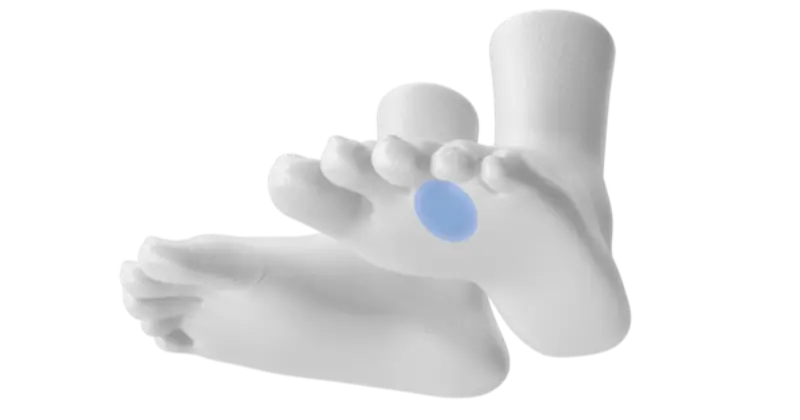
Let's start with the basics. Nerves run between the bones of the foot (the metatarsals) and lead to the toes. These nerves are thin and delicate. Morton's neuroma develops when one of these nerves—usually the one leading to the third and fourth toes—becomes thickened and inflamed.
"Neuroma" technically means a thickening of nerve tissue. It's not a tumor, don't worry. It's more like the nerve, stressed by constant pressure and friction, decides to "swell" to protect itself. Only, by doing so, it makes things worse.
The most affected area? The space between the third and fourth toes. Although, truth be told, it can also happen between the second and third. Why exactly there? Simple: it's the spot where the nerve is most vulnerable, most exposed to pressure.
The causes of this problem

There is no single cause that triggers Morton's neuroma. Rather, it is the result of a series of factors that accumulate over time.
Shoes play a crucial role—and I'm not just talking about the sky-high heels I see my patients wear. Even seemingly comfortable shoes can cause problems if they're too tight at the front of the foot. A narrow toe box compresses nerves, chafing them, and irritating them. It's like constantly pressing on a nerve: sooner or later, it rebels.
High-impact sports often contribute. Running, tennis, soccer—all activities involve repetitive impacts on the forefoot. I've worked with several runners who developed this condition after increasing their weekly mileage too rapidly.
And then there are foot conformations that predispose to the problem. Those with flat feet or bunions often have an altered weight distribution. The result? More pressure on certain points, more stress on the nerves. Sometimes it's a question of genetics—some patients tell me their mothers or grandmothers also had similar problems.
Symptoms You Can't Ignore

The pain of Morton's neuroma is unique. My patients describe it in very creative ways: "like stepping on a nail," "like an electric shock," "like someone is squeezing my fingers in a vice."
The main symptom? It's a pain that worsens with pressure and improves when you take off your shoe. Many patients tell me, "Doctor, when I'm barefoot at home I feel fine, but as soon as I put my shoes on..." Well, that's a typical symptom.
Tingling is another common symptom. It can affect the toes—usually the third and fourth—and sometimes extends to the sole of the foot. It's that annoying, numbing sensation that doesn't go away when you shake your foot like you would with your hand.
That foreign body sensation I mentioned earlier? It's real for those who experience it. The brain interprets the nerve irritation as the presence of something under the foot. It's a trick of the nervous system, but it's very annoying.
How do I diagnose?

When a patient comes to me with these symptoms, we always start with a chat. They tell me when the pain started, what shoes they wear, what activities they do. This information is invaluable—the diagnosis can often be gleaned from the history.
Then I move on to examining the foot. There's a special test I always do: I press between the metatarsal bones while compressing the foot on the other side. If there's a neuroma, this movement triggers the typical pain and often also a "click" that can be heard and felt.
Sometimes an ultrasound is needed to confirm the diagnosis and see the size of the neuroma. I use MRI less frequently—usually only when I have diagnostic doubts or before possible surgery.
X-rays? They're used to rule out other conditions, such as stress fractures or joint problems, but the neuroma itself can't be seen on X-rays.
Treatment options
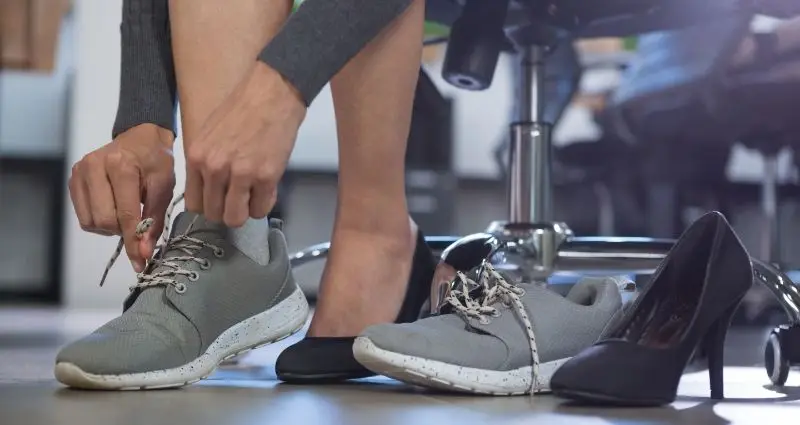
The good news is that in most cases, surgery isn't necessary. The first approach is always conservative, and it often works very well.
Changing shoes makes a huge difference. Shoes with a wider sole, low heels (maximum 3-4 cm), and soft materials. My patients are often reluctant at first—"But doctor, I can't always wear sneakers!"—but once they experience relief, they quickly change their minds.
Insoles and metatarsal pads are a great help. The idea is to redistribute the load on the forefoot, taking pressure off the inflamed nerve. They're not all the same—some patients need custom-made insoles, others are fine with standard ones.
Anti-inflammatory drugs can provide relief, especially in acute phases. I always use them sparingly—they're not a long-term solution, but they can help break the pain-inflammation cycle.
Cortisone injections are an option when conservative therapies aren't enough. They're effective in many cases, although the effect may not be permanent. It's important to administer them at the right time and in the right location.
I consider surgery when all else has failed and the pain is seriously compromising the patient's quality of life. The operation involves removing the neuroma—technically called a neurectomy. The results are generally good, although it's important to be honest: the operated area will remain partially numb.
What to expect from recovery

With conservative therapies, many patients see improvements within the first few weeks. It's not always a linear process—there can be better days and worse days, especially at the beginning.
If surgery is necessary, the recovery time varies. The foot must rest for the first two weeks, then walking normally resumes gradually. Full recovery usually takes 2-3 months.
One thing I always tell my patients: patience is key. The foot is a complex and delicate structure, and the body's rhythms must be respected.
How to prevent Morton's neuroma

Prevention begins with the right shoes. I'm not saying you should completely give up heels, but use them wisely. They're fine for special occasions, but not for walking all day.
Be careful with sports, too. If you run, gradually increase your mileage. If you play tennis, make sure your shoes are suitable for your feet and the type of court.
If you have flat feet, bunions, or other foot conditions, regular checkups can help catch problems before they become symptomatic.
SmartHallux: Where we can help you

Here at SmartHallux, we specialize in foot and ankle surgery. Dr. Luigi Manzi, who has extensive experience in this field, provides each patient with a personalized treatment plan using the most modern techniques.
The SmartHallux team treats conditions such as hallux valgus , Morton's neuroma , and other deformities that cause foot pain. Providing comprehensive support throughout the treatment process, SmartHallux can be a winning choice for effective treatment tailored to your needs. Book your specialist consultation with the SmartHallux team now (opens in a new tab).
Questions you often ask me
Can Morton's neuroma come back after surgery?
If we surgically remove the neuroma, it cannot return. However, it can develop in other spaces between the toes if predisposing factors, such as improper footwear, are not corrected.
Is it true that the surgery leaves the foot numb?
Yes, the area innervated by that nerve will remain partially numb. However, most patients prefer this slight loss of sensation to the constant pain they had before.
How long should I wait before considering surgery?
There's no hard and fast rule. Generally, I always try conservative therapies first for at least 3-4 months. If I don't see significant improvements during this time and the pain is compromising my quality of life, then we'll discuss surgery.
Do infiltrations hurt?
The prick itself is like a regular injection. It may feel uncomfortable for a few hours afterward, but nothing unbearable. I always use a local anesthetic to reduce the discomfort.