
Achilles tendon surgery: why is it necessary?
When is Achilles tendon surgery necessary? A mythological symbol of vulnerability, it represents a cornerstone for many athletes.
By Dr. Luigi ManziUpdated on
When is Achilles tendon surgery necessary ? The Achilles tendon, a mythological symbol of vulnerability and flexibility, is a cornerstone for many modern athletes. Big names in sports like Zanetti and Beckham have suffered serious injuries to this tendon, especially late in their careers. This is because the Achilles tendon, also known as the Achilles heel, is the longest and most stressed tendon in our body. Therefore, it is vulnerable to injury and rupture.
Achilles Tendon Rupture: Why Does It Happen?

Unlike other tendons, such as the tibialis posterior , the Achilles tendon does not have adequate vascular support . In fact, it is surrounded only by a thin layer called the " peritenonion ," whose vascular support is quite limited.
This insufficient nourishment contributes to chronic degeneration of the tendon approximately 3-4 cm from its insertion into the calcaneus, which is the part furthest from any vascular support. In these cases, the patient presents with a thickened and painful tendon . In these cases, Achilles tendon surgery is necessary.
Achilles Tendon Surgery: First-Step Therapies
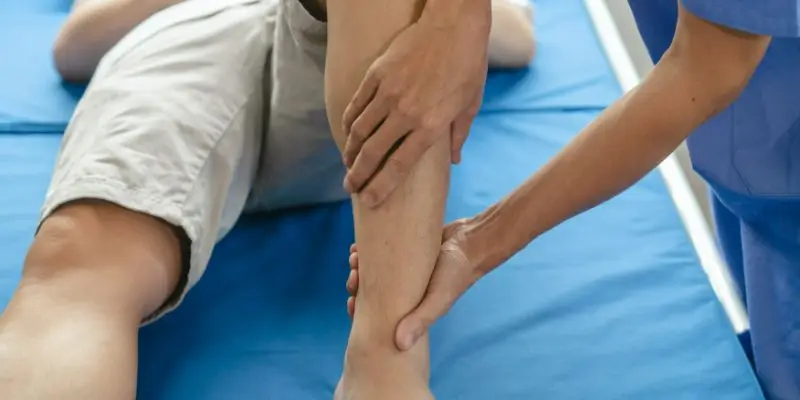
During the initial phase, Tecar Therapy and shock waves are used to improve vascularization and relieve pain . The problem is that these therapies rarely stop the degenerative process , increasing the risk of rupture. As the degeneration of the Achilles tendon progresses, Achilles tendon surgery is inevitable.
Orthobiology: the new frontier
Orthobiology is becoming an innovative resource for halting chronic degeneration before any surgical intervention. PRP , or growth factors, are extracted from the patient's blood through simple centrifugation and then injected into the tendon. Another technique involves the use of totipotent cells from adipose tissue, collected and then filtered for intratendinous injection.
Treatment, prevention, early diagnosis and surgery of the Achilles tendon

If these techniques fail, the tendon could rupture. This often happens due to a minor trauma perceived by the patient. This means that the degenerative disease is already underway. Beckham's experiences at AC Milan are an example: many serious injuries occur without any apparent external trauma.
In these cases, early diagnosis is essential . If done promptly, it helps minimize the retraction of the tendon stumps . After a complete rupture, the muscle tends to contract and shorten. The situation then worsens. Clinical diagnosis is usually supported by imaging tests such as ultrasound or MRI.
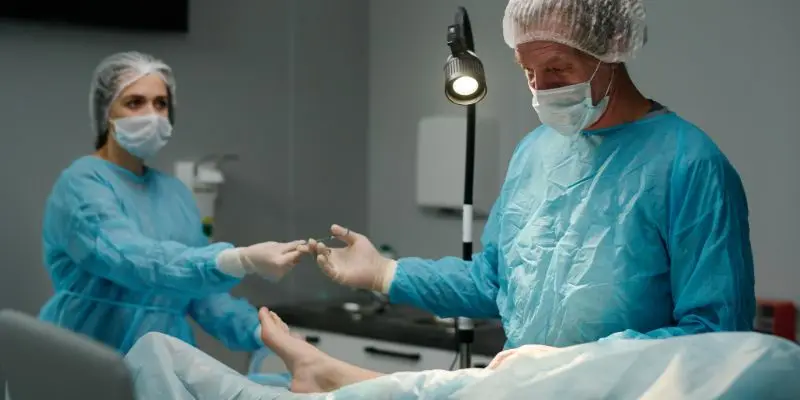
After early diagnosis, prompt Achilles tendon surgery is necessary to restore tendon length. Minimally invasive techniques are the best because they reduce the risk of postoperative complications . Furthermore, they promote faster healing. These techniques also limit stress on the soft tissues and allow for faster rehabilitation.
The detractors of minimally invasive surgery
Some specialists criticize minimally invasive techniques. They believe they compromise the stability of the repaired tendon. However, studies conducted at Duke University have demonstrated the effectiveness and stability of these methods. Indeed, it has been shown that 90° immobilization in the initial stages leads to correct tendon length.
Therapies in case of failure to diagnose and return to activities

In 20% of cases, Achilles tendon injury can be diagnosed early. In these cases, direct repair of the tendon retraction is not an option. Instead, tendon transfers are required.
There are innovative techniques, such as the " allograft technique ," minimally invasive techniques often supported by the use of stem cells that allow for stable and minimally invasive reconstruction. Recovery times are the same as those for simple repairs.
Regarding return to activity, patients will need to remain immobilized at 90° for 40 days . Full recovery occurs approximately two months after surgery , while returning to sports requires between 7 and 9 months . In conclusion, Achilles tendon surgery is almost always necessary. Fortunately, surgery and innovative therapies always resolve injuries, even the most serious ones.