
Achilles Tendon Bursitis: How to Best Treat It
Achilles tendon bursitis is inflammation of the fluid sac between the tendon and the heel bone, causing pain behind the heel. The causes and how it is treated.
By Dr. Luigi ManziUpdated on
Have you ever felt pain behind your heel, perhaps after a hard day of sports or simply while walking? You may have developed Achilles tendon bursitis. It's a problem I see often in my practice, and I must say that many patients come to me confused because they don't know exactly what's wrong with their foot.
Achilles tendon bursitis is one of those conditions that may seem trivial at first, but if left untreated, can become truly bothersome. After all, we're talking about the most powerful tendon in our body—the one that allows us to walk, run, and jump. When the small fluid sac that protects it (the bursa) becomes inflamed, it spells trouble.
What exactly happens when this area becomes inflamed?

Think of the Achilles tendon as a thick cable connecting the calf muscle to the heel bone. The bursa is a small fluid-filled sac that cushions the tendon and the heel bone. When this becomes inflamed, bursitis occurs.
It's a protective mechanism gone haywire. The bursa should normally slide smoothly, allowing the tendon to move without friction. But when it gets irritated, it swells and hurts. A lot, actually.
I've noticed that many patients confuse bursitis with actual Achilles tendinitis. They're different things, even though they often go hand in hand.
Why does this bursitis occur?

The causes? Well, it's usually a combination of factors; there's never a single reason.
Overuse is the big culprit. I see tons of runners, tennis players, and soccer players. But also very normal people who maybe took a longer walk than usual or started a new sport without gradually preparing. Our bodies need time to adapt, and if we push them too quickly, they complain.
The wrong shoes are another huge problem. Shoes that are too stiff at the back, with the heel counter pressing on the tendon area. Or shoes that are badly worn, which alter the foot's position. The other day, a patient came to me who had developed bursitis after wearing a pair of new, very stiff safety shoes for weeks. "Doctor, how is this possible?" he asked. Very possible, unfortunately.
Then there are flat feet. When the foot doesn't have a normal arch, the Achilles tendon has to work differently, often with greater tension. It's as if it has to work overtime every day.
How do you know if you have bursitis?
Pain is the first warning sign. It usually starts as a dull ache behind the heel, perhaps in the morning when you get out of bed. "The first steps are the worst," almost all my patients say. Then, as you walk, the pain may subside, but it returns if you overdo it.
The area may swell slightly. It's not always very obvious, but if you compare the two heels, you might notice the difference. To the touch, the area often feels warmer and more tender.
What always strikes me is how many people underestimate these early signs. "I thought it would go away on its own," they tell me. But no—bursitis tends to get worse if not treated properly.
How do I make the diagnosis in the office?

When a patient comes to me with these symptoms, the first thing I do is listen to their story. They tell me when the pain started, what they were doing during that time, what shoes they were wearing. These details are crucial.
Then I move on to the physical exam. I gently palpate the Achilles tendon area, checking for swelling and warmth. I move the foot in different directions to determine exactly where it hurts and how much.
Sometimes I request an ultrasound to better assess the condition of the bursa and tendon. It's a simple, non-invasive test that provides valuable information. An MRI is rarely necessary, only if I suspect something more complicated.
How is this Achilles tendon bursitis treated?

The good news is that in most cases it resolves without surgery. Rest is key, I always say. It doesn't mean staying completely still, but reducing the activities that cause pain. If you run every day, you need to stop for a while. I know it's frustrating, but it's the only way to allow the inflammation to heal.
Ice helps a lot, especially in the early stages. Fifteen minutes, three to four times a day. But be careful not to apply it directly to the skin—always use a cloth between the two.
As for medications, anti-inflammatories can provide relief. Ibuprofen, diclofenac, the classic ones, in short. But don't overdo it, and always take them on a full stomach. If you have gastritis or ulcers, it's best to consult your doctor first.
Immobilization is sometimes necessary. This can be done with a brace, kinesiology tape, or even simply with more shock-absorbing shoes. The idea is to reduce stress on the tendon while it heals.
Physiotherapy is often very helpful. A good therapist can teach you specific exercises to stretch and strengthen the tendon, improving ankle flexibility. I've seen excellent results with manual therapy and mobilization techniques.
In more stubborn cases, I sometimes administer cortisone injections directly into the inflamed bursa. This is a procedure I perform in my office, using a thin needle. It's not pleasant, but it can provide significant relief when other treatments aren't enough.
What if it doesn't go away? When is surgery necessary?
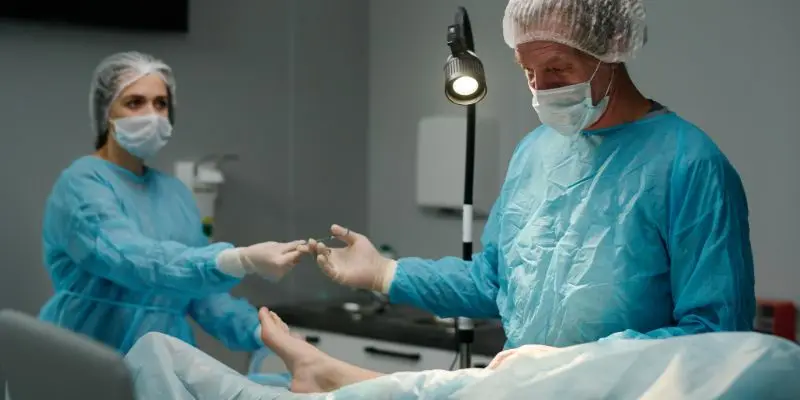
Fortunately, surgery is only necessary in a small percentage of cases, usually when symptoms persist for months despite all conservative treatments.
The operation may involve removing the inflamed bursa or slightly lengthening the tendon to reduce tension. These are relatively simple procedures, often performed as an outpatient procedure.
Recovery after surgery requires patience. A few weeks of brace use, followed by gradual physical therapy. Patients typically return to normal activities after 2-3 months, but each case is different.
How to prevent Achilles tendon bursitis?
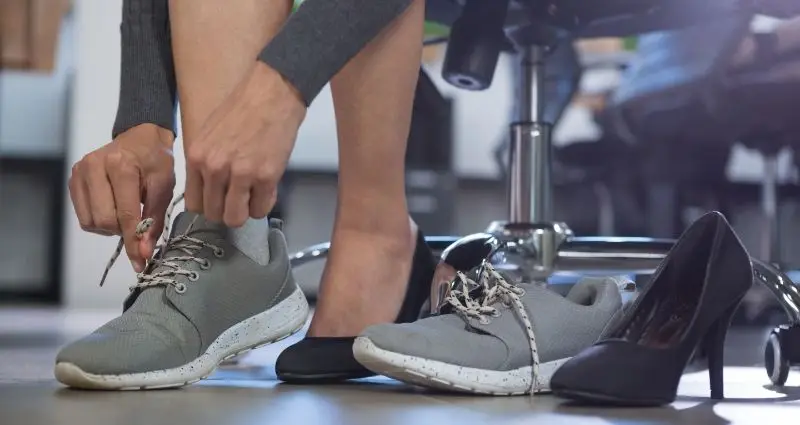
Prevention is always better than cure, right? Here's the advice I always give my patients.
Choose appropriate shoes. They should have good cushioning at the back, not be too stiff. If you play sports, change your shoes regularly—running shoes should be replaced every 500-800 kilometers.
Gradually increase the intensity of your physical activity. Don't go from zero to 100 in a week. Our bodies need time to adapt to new workloads.
Stretch regularly, especially your calf muscles. A flexible tendon is less prone to inflammation. Spend a few minutes stretching before and after physical activity.
If you have flat feet, consider custom orthotics. They can make a huge difference in redistributing loads and protecting the Achilles tendon.
SmartHallux: Where we can help you

Here at SmartHallux, we specialize in foot and ankle surgery. Dr. Luigi Manzi, who has extensive experience in this field, provides each patient with a personalized treatment plan using the most modern techniques.
The SmartHallux team treats conditions such as hallux valgus , Morton's neuroma , and other deformities that cause foot pain. Providing comprehensive support throughout the treatment process, SmartHallux can be a winning choice for effective treatment tailored to your needs. Book your specialist consultation with the SmartHallux team now (opens in a new tab).
The questions you ask me most often
Doctor, how long does it take to heal from Achilles tendon bursitis?
It depends a lot on the severity and how long it's been present. In mild cases, with proper rest and appropriate treatment, I see improvements after just 2-3 weeks. However, some patients may require 2-3 months for complete recovery. The important thing is to take your time and follow the treatment plan.
Can I continue to play sports if I have bursitis?
This is one of the questions I hear most often, especially from runners. My answer is always the same: it depends on the pain. If the activity causes pain, you should stop. You can temporarily replace it with activities that don't stress the tendon, like swimming or cycling. But forcing it when it hurts is counterproductive.
Is it true that surgery may be necessary?
Surgery is only necessary in a small percentage of cases, when conservative treatments have failed after several months. The good news is that most cases of Achilles tendon bursitis heal without surgery, with patience and the right treatment.