
How to Protect Your Achilles Tendon: A Prevention Guide
How to protect your Achilles tendon: warm-up and stretching, gradual training loads, suitable footwear and the warning signs that should not be ignored.
By Dr. Luigi ManziUpdated on
Let's find out together how to protect the Achilles tendon and maintain its proper and essential function.
For those who practice sports especially, but also for people between the ages of 30 and 50, pathologies, injuries and traumas to the Achilles tendon are possible and probable problems that one may encounter.
Being one of the most vulnerable parts of the body, the Achilles heel or rather Achilles tendon often requires special care and prevention , in order to avoid such problems.
But how do we care for our Achilles tendon? How can we prevent our heel from becoming injured or suffering from disease without resorting to surgery or other treatments?
What is the Achilles tendon and why is it so important?
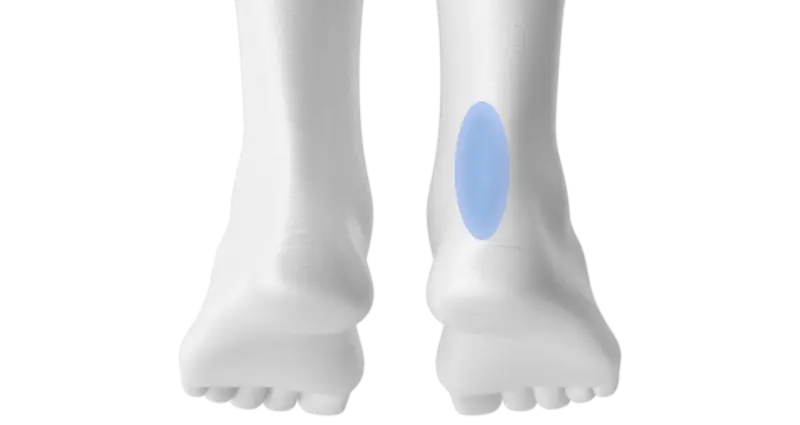
Let's first focus on what the Achilles tendon is and why it is so important in everyday life.
Considered the most important tendon in the body , the Achilles tendon connects the heel bone to the calf muscles. This simple yet fundamental task allows our body to move, walk, run, jump , and play sports.
Precisely because of its great functionality, the Achilles tendon often suffers from the stress to which it is subjected every day. Even though it is strong and long , precisely because of this daily stress, the Achilles tendon is vulnerable and at risk of injury.
Due to its invaluable functionality, which is accompanied by this vulnerability, caring for the Achilles tendon is essential to avoid the risk of injury, which would significantly reduce the quality of life.
Main causes of Achilles tendon injuries
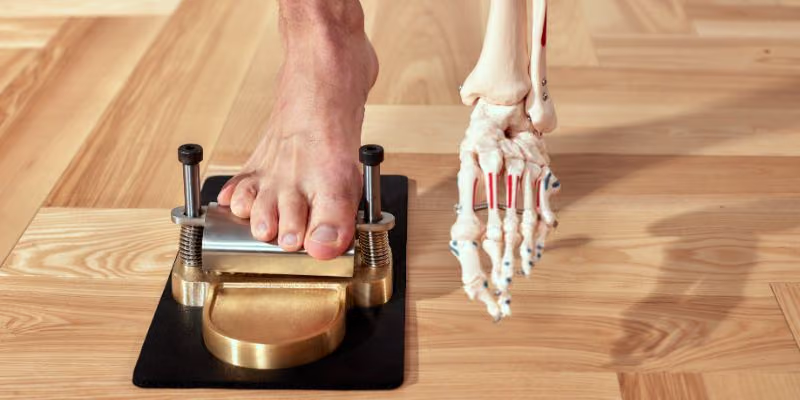
As mentioned, daily stress can weaken the Achilles tendon, increasing the likelihood of injury and rupture.
But it's not just everyday stress that causes injuries.
Among the various factors that contribute to Achilles tendon injury , it is worth mentioning:
- The use of uncomfortable and inappropriate shoesAs with other foot conditions, wearing shoes that don't provide adequate heel support leads to poor posture, which ultimately leads to poor foot alignment. This increases the likelihood of tendon inflammation and injury.
- La bad posture: also due to the aforementioned use of uncomfortable shoes, an incorrect posture stresses the Achilles heel even more, overloading it with an unevenly distributed weight.
- Lack of stretching and warming up before physical activityStarting to play sports without first warming up properly, including stretching, can put particular strain on the tendon, even causing it to become inflamed.
- Il muscle overloadIf subjected to excessive stress, the tendon is at risk of microtrauma. Long, intense, and excessively prolonged training sessions, for example, can increase this risk. Microtraumas are particularly harmful and dangerous for the Achilles tendon because, if not treated properly and promptly, they can develop into serious injuries.
Prevention Strategies: How to Protect Your Achilles Tendon

Having analyzed the causes that could damage and undermine the health of the Achilles tendon, let's see how to prevent this from happening.
To keep your Achilles heel healthy and avoid injuries and trauma, it's always best to choose shoes that fit your feet . We've already seen the consequences of wearing inappropriate shoes; it's therefore essential to choose comfortable shoes that provide heel support, not only for the health of your Achilles heel, but also for your feet, legs, joints, and back.
For those who practice sports, it's advisable to avoid excessively long and tiring workouts . Avoid abruptly increasing your sporting activity and workout duration, preferring a gradual and progressive approach . It's advisable to plan your workouts by alternating more strenuous activities with lighter ones, so as not to overload and stress the tendon.
Along with sports training, don't underestimate stretching and warm-up activities . Incorporating these types of exercises into your exercise program helps keep the Achilles tendon strong and elastic.
Last but not least, it's always good to learn to listen to your body . When you experience discomfort or pain in your Achilles heel, don't ignore or minimize it, but rather identify and recognize it as a warning sign and, above all, avoid further stressing the tendon. A simple inflammation, in fact, under continuous strain, could turn into something more serious.
When to see a specialist

Even the most preventative and health-conscious person, however, can suffer a serious injury or trauma to the Achilles tendon.
If, in fact, you notice persistent pain, stiffness of the tendon, swelling and inability to walk, the situation could be complicated.
So, what should you do in these cases? Should you consult a specialist? And if so, who should you contact for Achilles tendon health?
By visiting the SmartHallux website , you can find useful and valuable advice for foot and ankle care, as well as contact information for specialists who are always ready to help and resolve any Achilles heel problems.
Book your appointment with SmartHallux specialists

Thanks to years of experience, cutting-edge technologies, and the professionalism of its team of specialists, SmartHallux ensures maximum expertise and assistance from the earliest stages of problem detection.
Led by Dr. Luigi Manzi , SmartHallux specialists not only follow all the treatment phases and progression of the pathology step by step, but also ensure you get the best results in the shortest time possible.
Don't underestimate the health of your Achilles heel and book your first visit at SmartHallux now.
Thanks to SmartHallux, taking care of your feet has never been so easy.