
Achilles Tendon Calcification: What It Is, Why It Forms, and How to Treat It
If you experience persistent pain in the back of your ankle, you may be dealing with a common condition: Achilles tendon calcification.
By Dr. Luigi ManziUpdated on
If you experience persistent pain in the back of your ankle, especially when walking or climbing stairs, you may be dealing with a more common condition than you think: Achilles tendon calcification.
While it's not a serious condition in itself, it can become debilitating if left untreated. Here's what you need to know to recognize it, treat it, and, most importantly, prevent it.
What is this?

Achilles tendon calcification is a degenerative process in which calcium deposits form where the tendon inserts into the heel bone. This condition is often called insertional calcification of the Achilles tendon and is one of the most common forms of Achilles enthesopathy.
It often occurs in those who practice high-impact sports, but also in those who have had previous episodes of insertional Achilles tendinitis or suffer from rheumatic diseases.
Symptoms to watch for

Symptoms vary depending on the size of the calcification and the tendon's inflammatory response. Among the most common:
- Pain in the back of the heel, especially in the morning or after exertion
- Visible swelling or hardening in the tendon area
- Stiffness, with limited movement
- Sensitivity to touch in the calcified area
Over time, the tendon can become less elastic and more fragile, with an increased risk of rupture.
How is it diagnosed?

It all starts with a clinical assessment. A physical examination and medical history are essential, but to confirm the presence of calcification at the insertion of the Achilles tendon , X-rays, ultrasound, or, in more complex cases, MRI are used.
Available treatments
Conservative approach
In most cases, we start with non-invasive treatments:
- Rest and reduce activities that aggravate the pain
- Applying ice and taking anti-inflammatories
- Targeted stretching and physiotherapy
- Appropriate footwear and insoles to reduce tension on the tendon
In some cases, the use of shock waves or regenerative therapies with stem cells is evaluated , such as those proposed by SmartHallux in the emergency service.
Surgical treatment
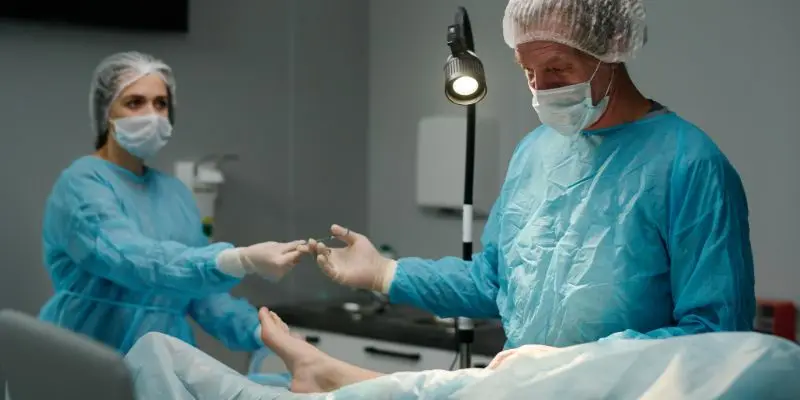
If pain persists despite conservative treatments, surgery is considered. Surgery for Achilles tendon calcification involves removing the calcified deposit and, if necessary, reconstructing the tendon.
Rehabilitation and recovery

After surgery or even in conservative treatment, rehabilitation is essential. Stretching and muscle-strengthening exercises help restore tendon flexibility and prevent further recurrences. Recovery times vary from a few weeks to a few months, depending on the initial severity and the patient's response.
Possible complications
Not addressing calcification in time can lead to:
- Achilles tendon rupture
- Chronic pain that limits mobility
- Post-operative infections in surgical cases
The SmartHallux Approach: Achilles Tendon Surgery

Achilles tendon calcification may seem like a simple inflammation, but it carries a real risk of mobility limitations and long-lasting pain. Early intervention with tailored treatment makes all the difference between a rapid recovery and a chronic condition.
The SmartHallux team treats conditions such as hallux valgus , Morton's neuroma , and other deformities that cause foot pain. Providing comprehensive support throughout the treatment process, including post-operative recovery, SmartHallux can be a winning choice for effective treatment tailored to your needs. Book (opens in a new tab) your specialist consultation with the SmartHallux team now.
FAQ
Is Achilles tendon calcification dangerous?
It is not a serious condition in itself, but it can limit functionality and cause chronic pain.
What tests are needed for diagnosis?
X-ray, ultrasound, or MRI, depending on the case.
Is there an alternative to surgery?
Yes, conservative treatments always begin. Surgery is only considered in cases of persistent symptoms or very extensive calcifications.