
The Achilles Tendon: Everything You Need to Know About Anatomy, Problems, and Treatment
The Achilles tendon joins the calf muscles to the heel bone and bears heavy loads. Its anatomy, the problems that affect it and how they are treated.
By Dr. Luigi ManziUpdated on
Have you ever felt that characteristic pain behind your ankle? Maybe in the morning when you get out of bed, or after a run? It could be your Achilles tendon that's causing you problems.
This tendon also has an interesting history in Greek mythology. Achilles, the famous warrior son of Peleus and the nymph Thetis, was invulnerable in all areas except his heel—the very spot where his mother had held him when she dipped him in the River Styx. That's why we still call it "Achilles' heel" when referring to someone's weak spot. It's a perfect metaphor, isn't it?
But let's get back to medicine. The Achilles tendon isn't just a mythological curiosity—it's a fundamental structure of our body that deserves attention.
What exactly is the Achilles tendon?
The Achilles tendon is the largest and strongest tendon in the human body. It connects the calf muscles (gastrocnemius and soleus) to the heel bone, the calcaneus. Think of this tendon as a biological steel cable that allows you to walk, run, and jump.
When you contract your calf muscles, the tendon tightens and pulls your heel upward. This movement allows you to lift your foot off the ground. Without this mechanism, walking would be impossible.
The interesting thing is that this tendon can withstand enormous loads—up to ten times your body weight during running. Pretty impressive, right? Yet, despite this strength, it can also be surprisingly vulnerable.
Why does the Achilles tendon get sick?
There are several causes of Achilles tendinopathy. The most common? Overuse.
I often see patients who tell me they started running too enthusiastically. "Doctor, I decided to get back in shape and ran every day for a week." Now, this is a perfect recipe for tendon problems. The tissue needs time to adapt to the new loads.
But it's not just athletes who suffer. The wrong footwear can also cause problems. Shoes that are too stiff, high heels worn for hours, worn-out sneakers that no longer provide the right support.
Excess weight plays a significant role. More weight means more strain on the tendon with every step. And then there are factors that many don't consider: certain conditions like gout or rheumatoid arthritis can weaken tendons. Certain antibiotics (fluoroquinolones) can also increase the risk of rupture.
Age is another factor to consider. After 30, the tendon becomes less elastic and more rigid. It's not that we should stop moving—quite the opposite! But we should be more careful about gradually increasing physical activity.
How to recognize if you have an Achilles tendon problem
The symptoms are quite characteristic. Pain is the first warning sign.
"Doctor, it hurts especially in the morning when I get out of bed." This is a phrase I hear often. Morning pain is typical because the tendon shortens a little during the night, and the first steps "stretch" it, causing discomfort.
Then there's the stiffness. Does your ankle feel "locked"? The inflamed tendon loses elasticity. Many patients tell me their calf feels "tight" or they can't bend their foot upward properly.
Swelling may be present, although it isn't always obvious. Sometimes it can only be felt, as a thickening behind the ankle.
But be careful: if you feel a sudden "cracking" followed by severe pain and the inability to walk on tiptoe, it could be a complete rupture. This is a surgical emergency.
The difference between tendonitis and rupture is substantial. Tendinitis is an inflammation that heals with time and appropriate treatment. A rupture is a tear in the tissue that often requires surgery.
How do I diagnose in my office?

When a patient comes to me with suspected Achilles tendon problems, the first thing I do is listen to their history. When did the pain start? What makes it worse? Has there been any trauma?
Then I move on to the physical exam. I watch how he walks, I note if there's any swelling or redness. Palpating the tendon tells me a lot: if it's thickened, if it's painful to press on, if there are nodules.
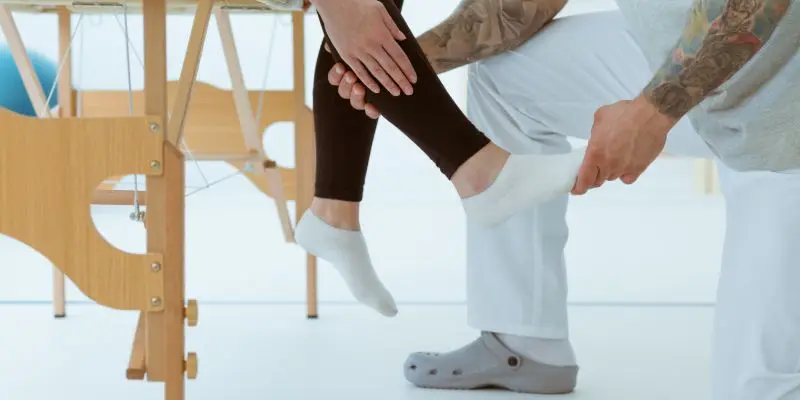
There's a specific test I always do: the Thompson test. The patient lies face down with their feet off the table, and I squeeze their calf. If the tendon is intact, the foot automatically moves downward. If it's torn, nothing happens.
Sometimes instrumental tests are needed. Ultrasound is very useful for seeing inflammation and assessing the tendon structure. I request an MRI when I have doubts about the diagnosis or to plan a possible surgery. X-rays? Rarely useful for the tendon, but they can show calcifications or associated bone problems.
What are the treatment options?

For tendonitis, we usually start with conservative approaches. Rest is key—it doesn't mean staying immobile for weeks, but avoiding activities that trigger the pain.
Ice helps immediately, especially after physical activity. Apply for no more than fifteen minutes, wrapped in a cloth to avoid burning the skin.
Anti-inflammatories can provide relief, but I don't see them as a long-term solution. It's better to use them to get through the most painful acute phase.
Physical therapy is incredibly important. Eccentric exercises—those where the muscle lengthens while contracting—have proven highly effective. An experienced physical therapist can guide you through your recovery journey.
Shockwave therapy is an interesting option for more stubborn cases. It doesn't always work, but when it does, the results are good.
For a complete tendon rupture, the story is different. Surgery is often necessary, especially in active patients. Modern techniques allow for highly effective repairs with reasonable recovery times.
Recovery: Realistic Expectations
How long does it take? This is the question all patients ask me.
For mild tendinitis, we're talking a few weeks with proper treatment. For more serious problems, it can take months. Surgical rupture requires at least 3-6 months for full recovery.
The important thing is not to rush. I've seen too many patients relapse because they returned to strenuous activity too soon. The tendon heals, but it takes time.
How to prevent problems
Prevention is always better than cure. Any practical advice?
Increase your physical activity gradually. If you want to start running, don't go from couch potato to 10k in a week. Your body needs to adapt.
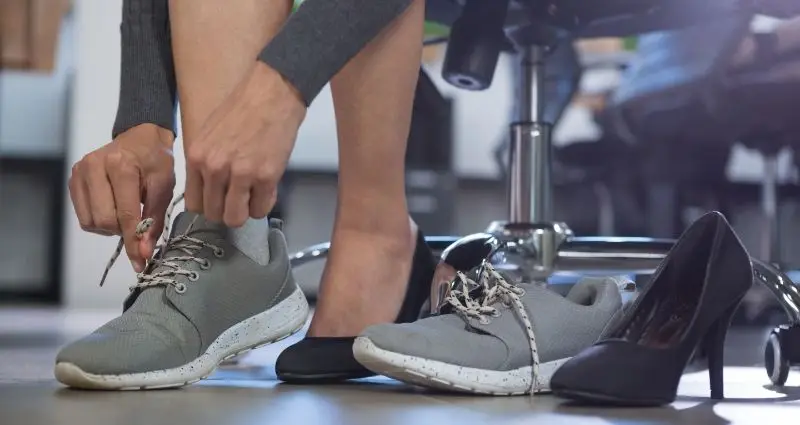
Choose shoes that are appropriate for the activity you do. And replace them when they're worn out—don't wait until they're completely broken in.
Regular calf stretching. A few minutes a day can make a difference.
Maintain a healthy body weight. Every pound you lose is less strain on your tendons.
SmartHallux: Where we can help you

Dr. Luigi Manzi, who has gained specific experience in this field, follows each patient with a personalized path using the most modern techniques.
The SmartHallux team treats conditions such as hallux valgus , Morton's neuroma , and other deformities that cause foot pain. Providing comprehensive support throughout the treatment process, SmartHallux can be a winning choice for effective treatment tailored to your needs. Book your specialist consultation with the SmartHallux team now (opens in a new tab).
We also offer a 24-hour emergency service for acute Achilles tendon ruptures. In these cases, prompt intervention can make a real difference in the final outcome.
FAQ
Doctor, can I continue playing sports with tendinitis?
It depends on the severity. Low-impact sports like swimming can often be continued, but it's best to temporarily suspend activities like running and tennis.
Is it true that the Achilles tendon never heals completely?
No, that's not true. With proper treatment and enough time, the tendon can heal completely. The problem is when you return to strenuous activity too soon.
Is surgery always necessary for a rupture?
Not always. In elderly or inactive patients, conservative treatment with immobilization can sometimes be attempted. But in young, active patients, surgery usually yields better results.