
Calcaneal hyperostosis: when your heel really hurts
Calcaneal hyperostosis is a thickening of the heel bone, often with a spur, that causes pain on the first steps of the day. Causes, diagnosis and treatment.
By Dr. Luigi ManziUpdated on
Have you ever gotten out of bed in the morning and felt a sharp pain in your heel as soon as you put your foot down? Well, that could be your first encounter with calcaneal hyperostosis. A confusing name for a problem that, unfortunately, is far from uncommon.
In my office, I often see patients who arrive limping, with that peculiar gait of someone trying not to put too much weight on their heel. "Doctor, it's like I have a nail under my foot," they often tell me. And indeed, they're not far off with this description.
Calcaneal hyperostosis—which you may have also heard called heel spur or heel spur—is essentially an abnormal growth of bone tissue in the area of the calcaneus, the heel bone. Imagine a small, spur-like protrusion (hence the name) that forms where the tendons and plantar fascia attach.
But what exactly is this “thorn”?
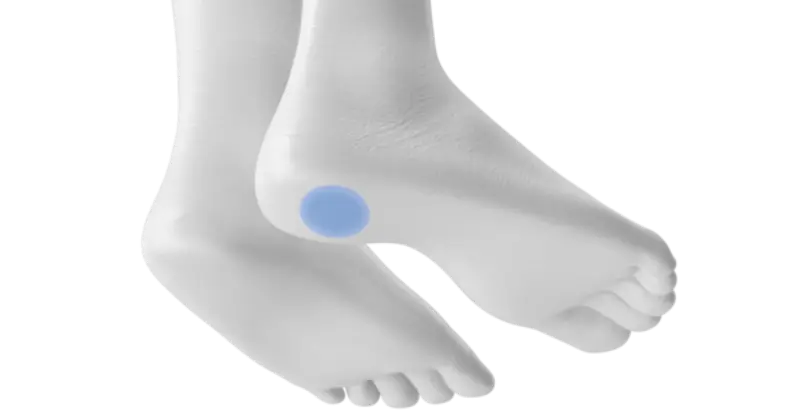
When I discuss calcaneal hyperostosis with my patients, I always explain that it's not just an extra piece of bone growing haphazardly. Our bodies, in their wisdom, always try to adapt to stress.
Heel spurs form as our body's response to excessive and repetitive stress. It's a bit like a callus forming on the hand of someone who uses a hoe a lot: the body tries to protect itself by strengthening that area. Only in this case, instead of thickened skin, we have extra bone.
The plantar fascia, the band of tissue that runs under the foot from the heel to the toes, attaches to the heel bone. When this fascia is overstressed—for various reasons we'll see—it can become inflamed, and in an attempt to "repair" the area, our body begins to deposit calcium, forming the infamous spur.
Why does this damn thorn come?

The causes are varied, and often cumulative. After all, the foot supports our entire body weight, taking thousands of steps a day.
I've noticed that many of my patients with calcaneal hyperostosis have something in common: they're often active people, who walk a lot or play sports. This is no coincidence. Intense physical activity, especially on hard surfaces, places constant stress on the plantar fascia. But be careful: those who lead a very sedentary lifestyle can also develop the problem, because the muscles and tendons of the foot lose elasticity.
Body weight plays a significant role. Every extra pound multiplies the impact on the foot three or fourfold while walking. That's why I often advise my patients to lose a few pounds if necessary—not just for heel spurs, but for overall foot health.
Inappropriate footwear is another common cause. Shoes that are too flat, without arch support, or heels that are too high, alter the biomechanics of the foot. I've seen symptoms of plantar heel spur develop in women who wore high heels every day for years, as well as in men who worked on construction sites wearing inadequate safety shoes.
Age also matters. After 40-50, tissues lose elasticity and repair more slowly. The plantar fascia becomes less flexible and more prone to microtrauma.
Symptoms: when the heel "talks"
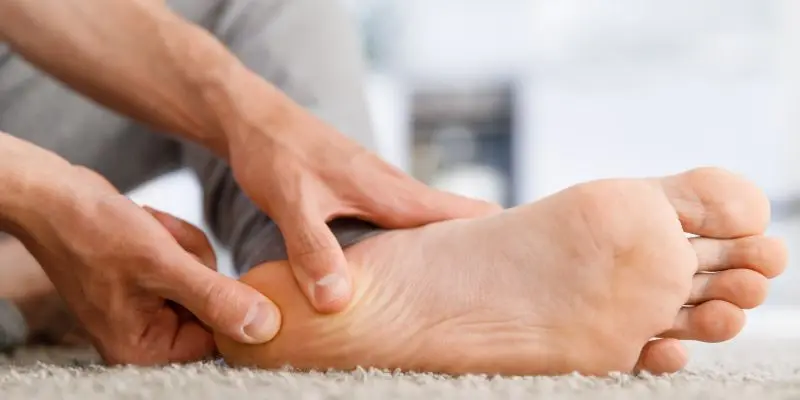
Heel spur pain has very specific characteristics that make it easily recognizable. The main symptom is a sharp pain in the heel, usually localized on the inner and lower part of the heel.
But here's the interesting thing: this pain has its "favorite moments." It's typically worse in the morning, during the first steps after resting. My patients often describe the feeling of "having to warm up the engine" before they can walk normally.
The pain can be so severe that it forces you to limp. After some movement, it often improves, only to return after sitting or standing still for a while. It's as if the foot has to "re-accustom" itself each time.
Some patients tell me about morning stiffness, as if their heel were "rusty." Others describe a burning or stinging sensation. The area may also become sensitive to touch—sometimes even touching it hurts.
In more severe cases, the pain can extend across the entire sole of the foot or up toward the calf. Walking becomes a problem, let alone running or playing sports.
How do I diagnose?

When a patient comes to my office with these symptoms, the diagnosis begins as soon as they enter the room. I observe how they walk, if they limp, and how they place their foot.
The actual examination begins with a medical history: when the pain began, under what circumstances, what job they do, what sports they practice, what shoes they wear. All this information is crucial to understanding the overall picture.
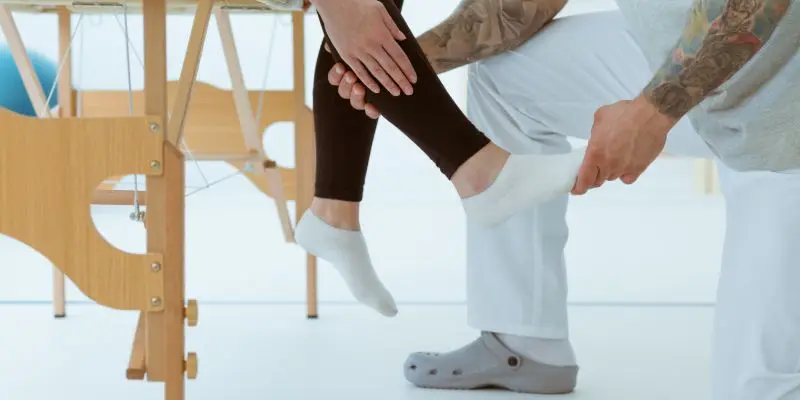
Then comes the physical examination. I palpate the heel to pinpoint the exact location of the tender spot—in most cases, pressure at the insertion of the plantar fascia triggers the typical pain. I also assess the flexibility of the ankle and the plantar fascia itself.
But for definitive confirmation, a foot X-ray is needed. The heel spur is clearly visible on the x-ray—it appears as a small bony projection, similar to a beak or a spur. Sometimes patients are surprised: "It's so small, yet it hurts so much!"
In some cases, if I suspect soft tissue problems or want to rule out other conditions, I may request an ultrasound or MRI. But in most cases, a history, physical examination, and X-rays are sufficient.
How to treat it: the options we have

The good news is that calcaneal hyperostosis can be treated. The less good news is that it requires patience—it's not a problem that can be solved overnight.
The first approach is always conservative. Relative rest—this doesn't mean standing still like a statue, but avoiding activities that trigger the pain. Ice helps a lot, especially after physical activity: 15-20 minutes, several times a day.
Anti-inflammatories are useful for controlling pain and reducing inflammation. But be careful—they're not a permanent solution; they're there to allow other treatments to work better.
Custom insoles are often the key to success. Not the ones you buy at the pharmacy, but the ones made to measure after studying your gait. They redistribute pressure and support the arch, reducing stress on the fascia.
Physical therapy is essential. Specific stretching exercises for the plantar fascia and Achilles tendon can work wonders. I always teach my patients some exercises to do at home—they're simple but must be done consistently.
When conservative treatments aren't enough, we can resort to cortisone injections. They're effective, but they must be used sparingly—no more than 2-3 injections per year.
Surgery is the last option, when all else has failed and the pain is debilitating. It involves removing the heel spur and, often, partially freeing the plantar fascia. It's a procedure that yields good results, but as always, I prefer to avoid the scalpel whenever possible.
Recovery: What to Expect
Recovery times vary greatly. Some patients feel better in a few weeks, others take months. It depends on many factors: how long the problem has been present, the patient's age, their activities, and their consistency in following the treatments.
I usually tell my patients to be patient for at least 2-3 months. Improvement is gradual—first the morning pain subsides, then the pain during the day, and finally, normal activities return.
It's important not to give up as soon as you feel a little better. I've seen too many patients stop stretching and therapy as soon as the pain subsides, only to find themselves back where they started a few weeks later.
How to prevent: better to avoid than to cure
Preventing calcaneal hyperostosis depends primarily on the right footwear. Shoes with good arch support, adequate cushioning, and—for athletes—specifically designed for the activity being performed.
Body weight is a factor we can control. Maintaining a healthy weight helps not only the heel, but the entire musculoskeletal system.
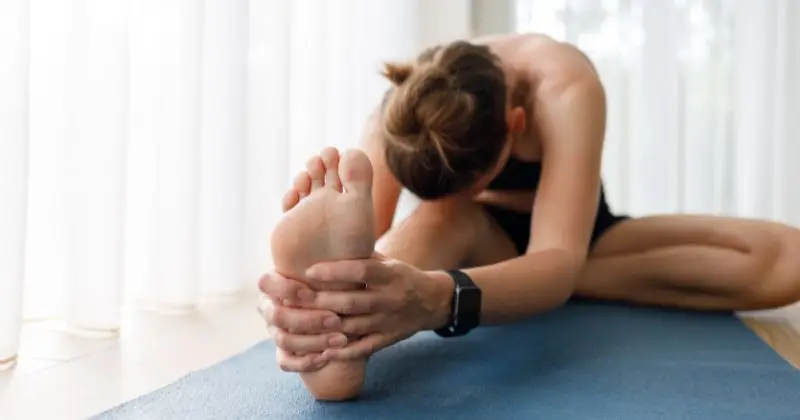
Regular stretching is invaluable. Just 5 minutes a day of plantar fascia and Achilles tendon exercises is enough to maintain tissue elasticity.
If you play high-impact sports, alternate between hard and soft surfaces when possible, and don't neglect your pre-workout warm-up and post-workout cool-down.
SmartHallux: Where we can help you

Here at SmartHallux, we specialize in foot and ankle surgery. Dr. Luigi Manzi, who has extensive experience in this field, provides each patient with a personalized treatment plan using the most modern techniques.
Our philosophy is always to favor a conservative approach whenever possible, reserving surgery for cases that do not respond to other treatments.
The SmartHallux team treats conditions such as hallux valgus , Morton's neuroma , and other deformities that cause foot pain. Providing comprehensive support throughout the treatment process, SmartHallux can be a winning choice for effective treatment tailored to your needs. Book your specialist consultation with the SmartHallux team now (opens in a new tab).
Questions you often ask me
Doctor, can heel spurs occur in both feet?
Yes, it can happen. In fact, if there's a predisposition or biomechanical issues, it's quite common for the problem to manifest on the opposite side as well. This is why it's important to correct predisposing factors.
Once a thorn has formed, can it disappear?
The bone spur usually remains, but the symptoms can disappear completely. The key is to reduce inflammation and modify the factors that caused it. Many of my patients live very well with their spur; it simply doesn't bother them anymore.
Is it true that you have to have surgery?
Absolutely not! The vast majority of cases resolve with conservative therapies. Surgery is reserved only for cases resistant to all other treatments.
Can I continue to play sports?
It depends on the type of sport and the stage of the problem. During the acute phase, it's best to avoid high-impact activities. Once the pain has resolved, you can gradually resume, perhaps with a few additional precautions.