
Flat Feet in Children
Flat feet in children are common and usually flexible, often correcting with growth. When they need attention, the signs to watch and the treatments.
By Dr. Luigi ManziUpdated on
The condition of flat feet is, unfortunately, very common in children.
Influencing the normal development of the arch of the foot, flat feet are initially a normal, transitory condition which, however, if persistent, becomes problematic.
Since it is considered a debilitating disease, it is essential to diagnose it early and begin treatment as soon as possible to avoid compromising the children's well-being.
Let's find out together what causes flat feet in children and how to help them live with this discomfort and eliminate it.
What is Flat Foot?
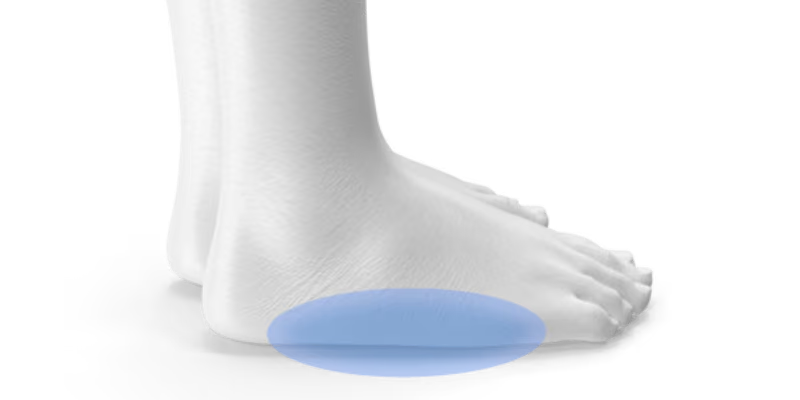
Flat foot affects the arches of the foot.
How?
A healthy foot has the main plantar arches (longitudinal and transverse arches), as the definition itself suggests, in the shape of an arch . This conformation serves to better distribute the body's weight and absorb shock.
The arches of a flat foot , however, lack the arched shape they should have. Hence the term "flat foot" or "flatness . "
A flat foot, for example, has almost no arches and the sole of the foot, which should be flat on the ground but not completely, instead touches the ground almost entirely . This leads to poor weight distribution, as well as poor posture and consequent problems with the knees and spine.
Flexible Flat Foot and Rigid Flat Foot
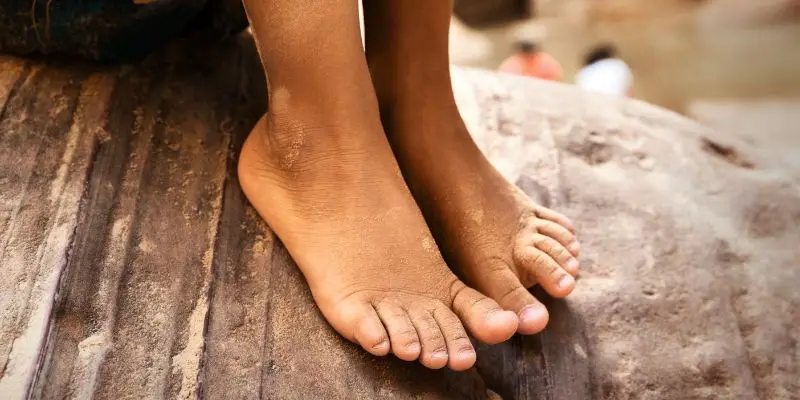
There are two types of flat foot : flexible and rigid.
Flexible flatfoot , which is the most common type in children , visually presents the arch of the foot when it is raised; when the foot rests on the ground, however, the arch disappears, causing the sole of the foot to adhere completely to the ground.
Flexible flat foot is the most common and also the least harmful , because it tends to resolve itself as the child develops and grows.
Rigid flat feet , on the other hand, are characterised by the absence of the plantar arch , both at rest and when standing.
Less common than flexible flatfoot, rigid flatfoot is more difficult to manage and does not resolve with the child's normal physical development. In fact, this more complex type of rigid foot usually requires surgery.
It is very important to know the difference between flexible flat foot and rigid flat foot, not only to obtain a correct diagnosis but also to best intervene and defeat this pathology.
Causes of Flat Feet in Children
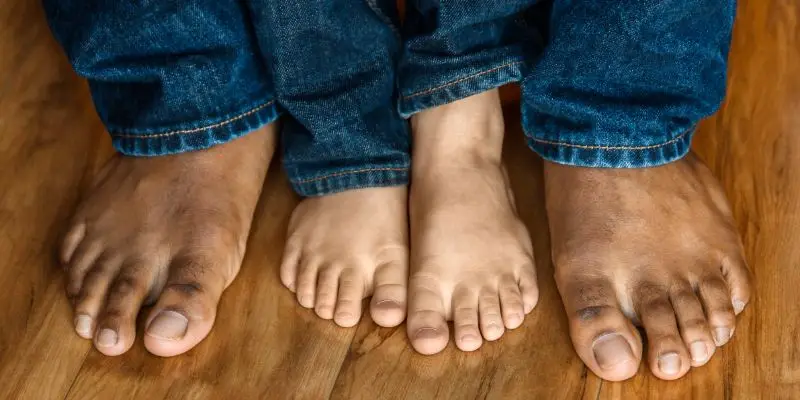
The main causes responsible for the development of flat feet in children can be divided into: congenital factors and environmental factors.
Congenital factors include genetic predisposition and heredity.
Genetic predisposition is based on one's family history: if the child's parents, or other family members, have flat feet, there will be a high probability that the pathology will also occur in the child.
Consequently, heredity also influences the structure of the foot, helping to determine the shape of the arches and the consequent development of flat feet.
What are defined as environmental factors , on the other hand, are those that include habits and lifestyle.
For example, wearing uncomfortable and inappropriate shoes is an environmental factor that can aggravate flat feet. In fact, wearing unsuitable shoes hinders and hinders the normal development of the arches.
Another environmental factor is weight . In fact, if body weight is excessive, the pressure exerted on the foot is greater , and this also negatively affects the normal development of the plantar arches.
Even uncontrolled physical activity without adequate support is not a panacea for foot health.
All these causes contribute to the development of flat feet in children , and it is therefore essential to constantly monitor the health of children's feet from an early age.
Symptoms and Diagnosis

The symptoms of flat feet in children are similar, if not exactly the same, as those experienced by adults.
Experiencing widespread pain in the feet , ankles and legs and fatigue after sports resulting in difficulty walking are the most common and well-known symptoms of flat feet.
Especially in children, the symptoms mentioned above may also be accompanied by poor posture , which is especially noticeable when walking; in fact, children often begin to walk with their feet turned inward to tolerate the pain and be able to move, which highlights their irregular gait.
As with adults, it is essential for children to get a diagnosis as early as possible.
To diagnose flat feet, you'll need to see a doctor for a physical exam. The physical exam allows you to observe both the appearance and mobility of the foot.
We will then proceed by taking foot impressions , which help us understand and analyze the distribution of body weight on the foot; this will further help the doctor understand any abnormalities in the plantar arch.
Sometimes, to be sure of the diagnosis, x-rays may be requested to observe the bone structure of the foot.
Diagnosing flat feet in children is essential for taking prompt action to resolve the problem and prevent it from worsening.
Conservative Treatments and Interventions for Children
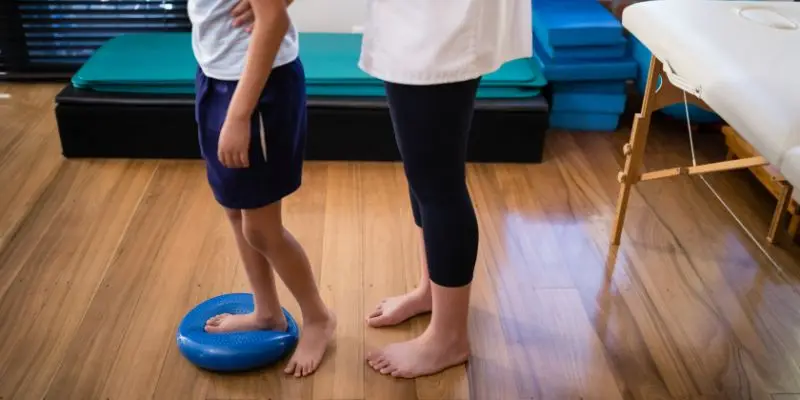
For adults, after flatfoot is diagnosed, it's recommended to begin treating the condition with nonsurgical approaches . For obvious reasons, this is also done, especially with children.
Among the non-surgical approaches, called conservative treatments , the most recommended for children are:
- specific exercises to strengthen the foot muscles;
- physiotherapy for better posture and mobility;
- targeted exercises to improve the functionality of the plantar arches;
- use of orthopedic insoles to relieve pain and provide the right support.
If conservative treatments do not achieve the desired results , and the flat foot condition is so serious that it seriously compromises the child's quality of life, even the most scrupulous doctors will recommend surgery.
Among the most common and practiced surgical procedures are: correction of the position of the bones of the foot , fusion of some joints and repair of the tendons.
If the condition is diagnosed and treated early, a non-invasive procedure can be performed that involves placing a small screw or endorthesis inside the foot, which corrects the child's foot by exploiting the residual growth of the foot.
For a child, however, any type of surgery is invasive and traumatic, which is why before deciding to opt for surgery, the doctor and parents must carefully and thoroughly evaluate the child's condition and the various available therapies.
Prevention and Daily Care
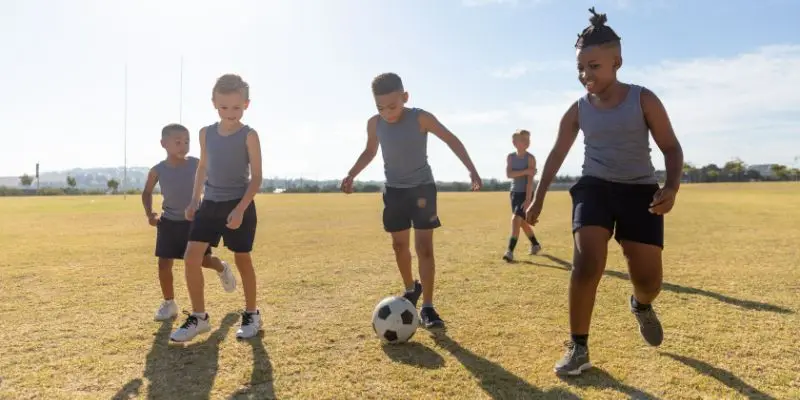
In light of what has been said, therefore, prevention and daily care become more essential than ever for the health of children's feet.
There are basically 3 useful and functional things to prevent the onset of flat foot or, at least, try to prevent it from getting worse.
- do moderate physical activity and non-stressful: outdoor games that work the feet in a healthy and moderate way;
- always wear comfortable shoes are recommended and with a flexible sole to give good support to the arch;
- keep as much as possible ideal weight: so as not to put pressure on the feet and not make the situation worse.
For obvious reasons, children cannot manage these activities on their own, and therefore the presence and role of parents is crucial.
Not only should parents encourage these habits , but they should also constantly monitor their children's foot health to understand whether prevention is working or whether another approach is necessary.
Finally, to ensure proper and controlled prevention , it will be useful and necessary to schedule foot check-ups , to check that the foot is developing as expected and to avoid future complications.
SmartHallux: The solution to flat feet in children

If you are looking for specialists to take care of your children , know that relying on SmartHallux is the best choice you can make.
In fact, SmartHallux, in addition to following step by step all the fundamental moments for the child's care, from diagnosis to treatments to be carried out, ensures maximum professionalism and more.
SmartHallux , thanks to the study of innovative techniques , the use of latest-generation instruments and the professionalism of its surgeons , has also developed minimally invasive surgical techniques.
As already explained, it's not common to immediately opt for surgery for flat feet in children. With SmartHallux, however, you can rest assured that your child, should he or she undergo surgery, will be in the expert hands of SmartHallux specialists , led by Dr. Luigi Manzi.
SmartHallux's innovative techniques will ensure that the surgery is non-invasive for your child and recovery times are short.
What are you waiting for?
Book a visit with SmartHallux and ensure the best possible care for your child.