
Heel Spur: When the Heel Says Enough
A heel spur is a bony growth under the heel bone that can make every first step painful. How it forms, how it is diagnosed and the treatments that work.
By Dr. Luigi ManziUpdated on
You get out of bed in the morning and… ouch! A sharp pain in your heel that makes you see stars.
If you recognize yourself in this situation, you've probably encountered what we orthopedists call a heel spur. It's a condition I see quite often in my office, and it can truly ruin the days of those who suffer from it.
But let's proceed in order. What exactly is this blessed spur? And above all: can anything be done to feel better?
Heel Spur: It's Not What You Think

Many patients come to me convinced that their heel pain is caused by a "thorn" growing in the bone. This is partly true, but the story is more complex.
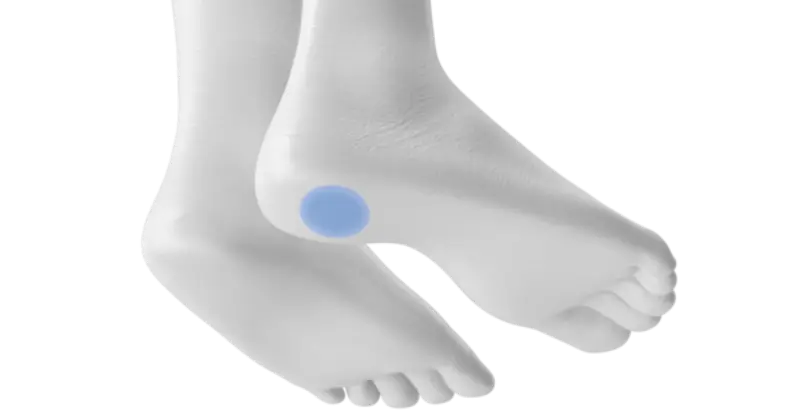
A heel spur—also called a heel spur—is actually a small bony growth that forms on the heel bone. Think of it as a small parrot's beak sticking out of the heel bone. Cute as a picture, less cute when you walk on it.
But here's the interesting point: often the spur isn't the real culprit of the pain.
The real problem, in most cases, is **plantar fasciitis**. The plantar fascia is the band of fibrous tissue that runs under the foot, from the heel to the toes. When it becomes inflamed, it hurts like hell. And over time, this inflammation can lead to the formation of the spur itself.
Why do heel spurs appear?
After all, our bodies don't do anything by chance. If a spur forms, there's always a reason.
The most common cause? Repetitive stress on the plantar fascia. This can happen for a variety of reasons. Maybe you've started running after years of couch potato use. Or you work on your feet all day. Or you're simply getting older—yes, that counts too—and the tissues become less elastic.
The other day, a 55-year-old teacher came to see me. She told me that ever since she'd changed schools and had to stand for hours on hard floors, she'd started having this terrible pain in the morning. "Doctor, it feels like someone's hammering a nail into my heel!"
Well, this is a description I hear often. And it's no coincidence that the pain is worse in the morning: during the night, the plantar fascia "shortens" slightly, and when you put your foot down in the morning... well, it's like stretching a stretched rubber band.
Other factors that can contribute? Excess weight (more strain on the feet), flat or arched feet, improper footwear, and advancing age. In short, a combination of factors that ultimately make our poor heels say "enough."
Symptoms: When your foot sends you signals
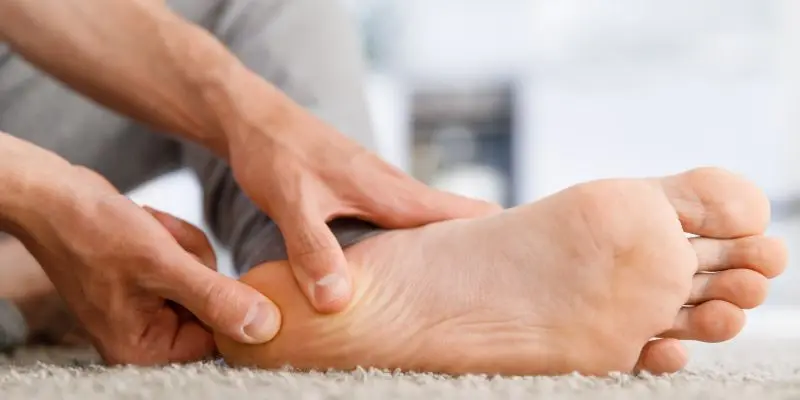
The main symptom is clear: **heel pain**. But not just any pain.
My patients usually describe it to me like this: "It's worse in the morning, when I put my foot out of bed. Then, after a few steps, it gets a little better. But if I sit for a while and then get up, it starts again."
This pattern is typical of plantar fasciitis associated with heel spurs. The pain can be sharp, stabbing, or dull but persistent. Some patients tell me they feel like they're walking on a sharp rock.
Sometimes there's also swelling around the heel, and the area may become tender to the touch. It's not uncommon for patients to start walking differently to avoid the pain—which can eventually lead to further problems.
How do I diagnose?

When a patient comes to me with these symptoms, the first thing I do is listen. The story they tell me often tells me a lot.
Then I examine the foot. I press on specific points to see where it hurts the most. I watch how the patient walks and check the flexibility of the foot and ankle. Sometimes I ask the patient to stand on tiptoe or flex their toes.
But to be sure, an **X-ray** is often needed. It's the simplest test to see if there actually is a spur. I must say, sometimes patients are surprised: "Doctor, I'm not in pain, and the X-ray shows a spur!" or "I'm in terrible pain, but I can't see any thorns!"
This is why it's important to understand that heel spurs and pain don't always go hand in hand. In some cases, an ultrasound may also be useful to assess the condition of the plantar fascia.
Treatments: What can we do together?

The good news? In the vast majority of cases, heel spurs can be treated without surgery.
The first approach is almost always conservative. Relative rest—not meaning bed rest, but avoiding activities that worsen the pain. Ice is used to reduce inflammation, especially after prolonged standing.
Anti-inflammatory drugs can help in acute phases. But be careful: they are not a long-term solution.
Physical therapy is often the key to success. Specific stretching exercises for the plantar fascia and Achilles tendon can make a difference. I've seen patients improve dramatically with just a good, consistent stretching program.
Orthotic insoles—the famous "insoles"—can be very helpful. Not the ones you find at the supermarket, mind you. I'm talking about custom-made supports that redistribute the load on your foot.
In the most resistant cases, there are other options: shock waves, injections, advanced physical therapies. Surgery? It's the last resort, reserved for cases that simply don't respond to anything else after months of conservative treatment.
What you can do
Prevention is always better than cure, right? Here are some practical tips I always give my patients.
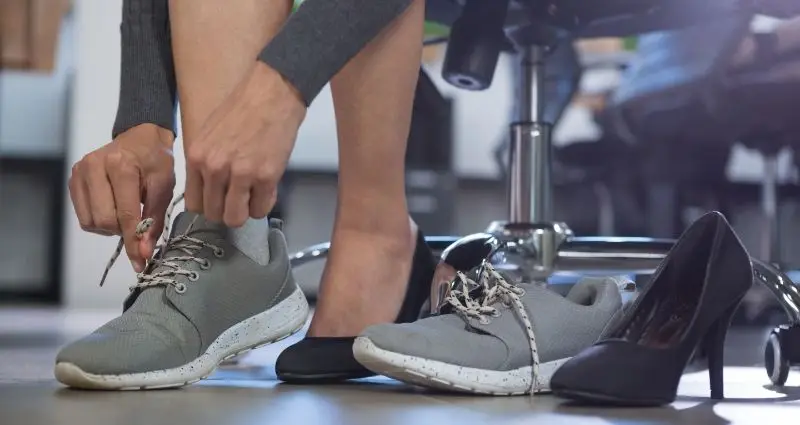
First: shoes. Extremely important. Shoes with good arch support and a small heel (2-3 cm) are ideal. Avoid completely flat shoes or very high heels.
Second: Maintain a healthy body weight. I know, it's easier said than done, but every pound you lose means less stress on your feet.
Third: daily stretching. Before getting out of bed in the morning, flex your foot toward you for a few seconds. Repeat several times. It's a small gesture that can prevent that morning twinge.
And if you play sports? Gradually increase the intensity of your workout. Your body needs time to adapt.
SmartHallux: Where we can help you

Here at SmartHallux, we specialize in foot and ankle surgery. Dr. Luigi Manzi, who has extensive experience in this field, provides each patient with a personalized treatment plan using the most modern techniques.
Our approach? First, a comprehensive assessment to understand exactly what's happening. Then, a customized treatment plan, always favoring the least invasive options whenever possible.
The SmartHallux team treats conditions such as hallux valgus , Morton's neuroma , and other deformities that cause foot pain. Providing comprehensive support throughout the treatment process, SmartHallux can be a winning choice for effective treatment tailored to your needs. Book your specialist consultation with the SmartHallux team now (opens in a new tab).
Questions you often ask me
Doctor, can the spur be reabsorbed?
A bone spur rarely disappears completely once it forms. But the good news is that the pain often resolves even without the spur disappearing.
Do I have to have surgery?
Absolutely not! Surgery is only necessary in a small percentage of cases, when all conservative treatments have failed.
How long does it take to get better?
It depends on many factors, but with the right treatment, improvements are usually seen within 4-6 weeks. More stubborn cases may take a few months.
Can I continue to play sports?
It depends on the type of sport and the severity of the symptoms. The important thing is not to make the situation worse. I often recommend low-impact sports like swimming or cycling during the recovery phase.