
Talonavicular Joint: What It Is, Symptoms, and Available Treatments
Foot pain can have many causes, but when it involves deep structures like the talonavicular joint, it is important to act promptly.
By Dr. Luigi ManziUpdated on
Foot pain can have many causes, but when it involves deep structures like the talonavicular joint , it's important to address it promptly. In this article, we explain simply but accurately what the talonavicular joint is, the most common problems it causes, and how to treat it effectively.
Anatomy of the talus and scaphoid
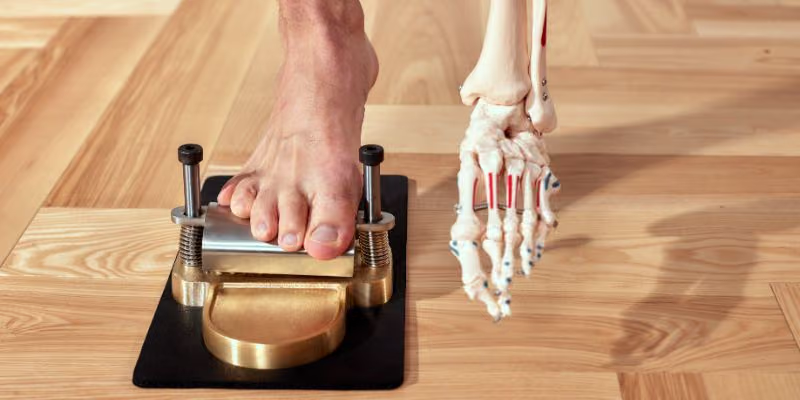
The talus is a bone located at the back of the foot. It articulates superiorly with the tibia and fibula (forming the ankle) and anteriorly with the navicular , another small tarsal bone.
The talonavicular joint plays a crucial role in the mobility and stability of the foot, especially in twisting and ground-hugging movements. It is supported by strong ligaments and muscles of the leg and foot.
Talonavicular Fracture: Causes and Symptoms

A fracture of the talus or scaphoid may result from:
- Direct trauma (falls, sports accidents)
- Violent twisting of the foot
- Repetitive stress in runners or athletes
Symptoms
- Sharp, localized pain
- Swelling
- Difficulty walking or putting your foot down
- Joint stiffness
The diagnosis is confirmed with X-rays or MRI, which are necessary to assess the extent of the damage.
Treatment
- Conservative: rest, braces, ice, physiotherapy
- Surgical: in the most severe cases or with joint decompensation
Proper post-fracture management is essential to avoid complications such as osteoarthritis.
Talocalcaneal osteoarthritis: when wear and tear hurts

Osteoarthritis is a degeneration of the articular cartilage that can also affect the joint between the talus and scaphoid. Over time, the joint becomes stiff and painful.
Risk factors
- Old age
- Previous fractures
- Repetitive loads and incorrect postures
- Systemic diseases (rheumatoid arthritis, gout)
Symptoms
- Chronic pain on the back or inside of the foot
- Stiffness upon waking or after activity
- Restriction of movement
- Swelling and instability
Available treatments
- Anti-inflammatory drugs
- Physiotherapy
- Custom-made insoles
- Local infiltrations
- Surgery in advanced cases
Clinical consequences that should not be underestimated

A problem with the talonavicular joint can cause:
- Persistent pain
- Lameness or altered gait
- Impaired balance
- Limitation in daily and sports activities
Athletes and active people are particularly exposed to this condition.
Innovative therapies and new perspectives

Thanks to advances in orthopedics, there are now advanced treatments for talonavicular pathologies:
- Minimally invasive surgery
- Injections of stamina cells e growth factors
- Personalized post-surgery rehabilitation
These techniques allow for quicker recovery and better long-term functionality.
SmartHallux: the specialist answer to your joint pain

SmartHallux , with Dr. Luigi Manzi, is the reference center for foot and ankle pathologies. It offers:
- Advanced technologies for diagnosis and treatment
- Minimally invasive approaches
- Restoration telemedicine
- Achilles tendon surgery, osteoarthritis, and ankle replacement
The SmartHallux team treats conditions such as hallux valgus , Morton's neuroma , and other deformities that cause foot pain. Providing comprehensive support throughout the treatment process, SmartHallux can be a winning choice for effective treatment tailored to your needs. Book your specialist consultation with the SmartHallux team now (opens in a new tab).
FAQ
What is the talonavicular joint?
It is the joint between two bones of the foot: the talus and the navicular. It plays a key role in the stability and biomechanics of the foot.
What can cause problems in this area?
Trauma, osteoarthritis, inflammation such as arthritis or metabolic diseases such as gout.
What are the most common symptoms?
Pain, swelling, stiffness, difficulty moving.